
How to Choose the Right Cosmetic Packaging for Your Beauty Product

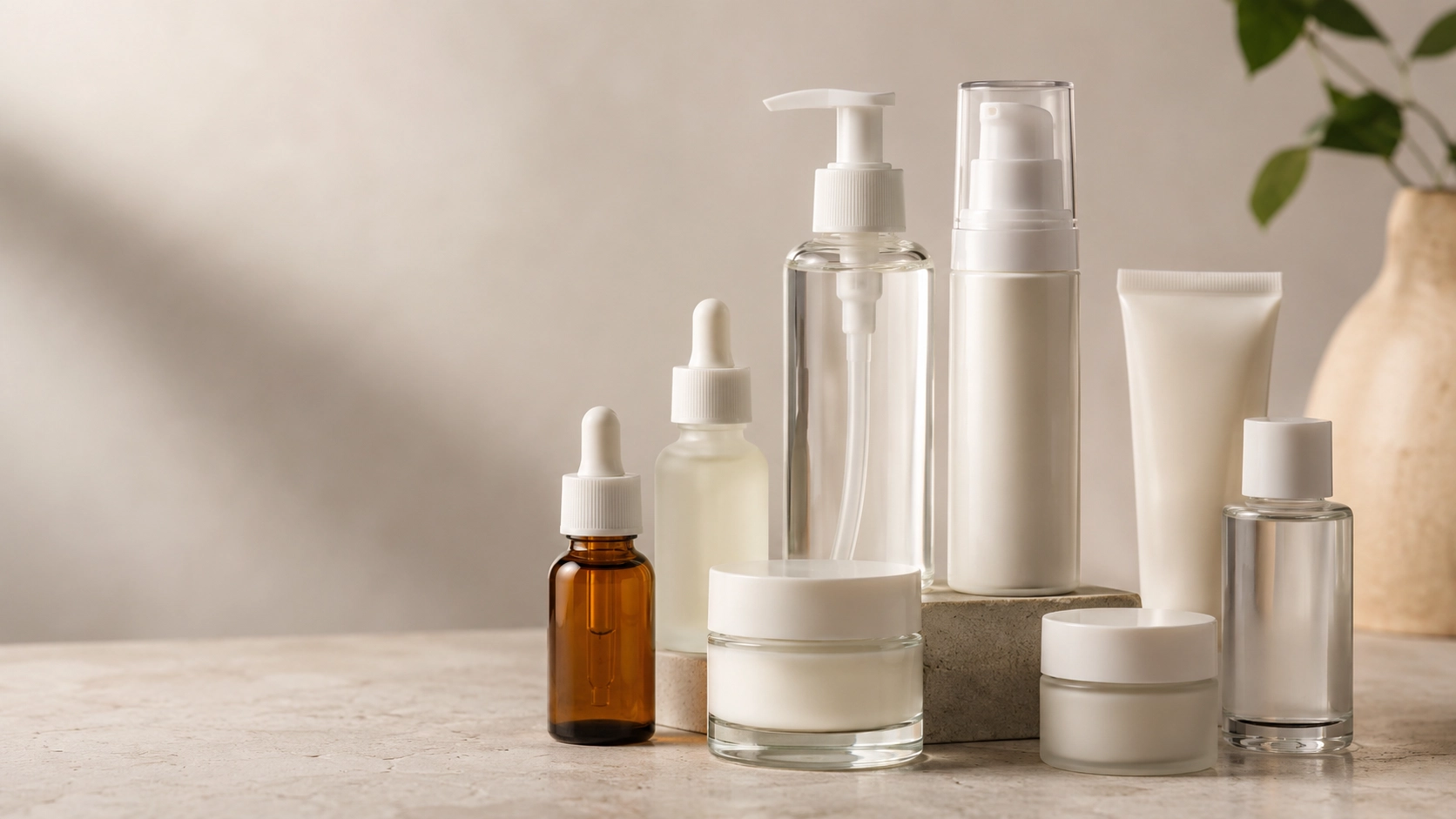
Choosing the right packaging for a cosmetic product is rarely just a design decision. For buyers, it is a procurement decision that affects formula stability, shipping cost, compliance, and how customers perceive the brand. The package has to perform on the shelf and in the warehouse, whether for a new skincare launch or a replenishment of a proven seller.
Start With Your Product Formula
The first question is not “what looks good” but “what is inside the bottle.”
Compatibility With the Container
Some formulas react with certain plastics or metal components. Essential oils, strong acids, and specific actives can interact with closures or liners. Before committing to a format, verify that the material and inner components are compatible with your formula. If you are unsure, request compatibility guidance from your supplier and, where possible, run a stability test with the actual package.
Viscosity and Dispensing
A thick cream and a watery essence need different dispensing approaches. Pumps, droppers, airless bottles, and tubes each handle viscosity differently. Matching the dispenser to the formula prevents leaks, wasted product, and returns.
Match the Packaging to the User Experience
Packaging is part of how a customer uses the product every day.
For Skincare and Serums
Serums and lotions often benefit from airless pumps or droppers that protect the formula from air and give controlled dosing. Jars are common for thicker creams but expose the product to air with each open.
For Makeup and Color Cosmetics
Lip products, compacts, and mascaras each have their own mechanism. A precise applicator and a secure closure matter more than the outer decoration. Think about how the product is held, opened, and reapplied.
Material Choices: Glass, Plastic, and Beyond
Glass reads as premium and is inert for most formulas, but it is heavier and breakable, which raises both shipping cost and damage risk. It remains a strong choice for serums, perfumes, and high-end skincare.
Plastic is light and cost-efficient for large runs. PET and PP cover many cosmetic applications. Recycled-content options, often called PCR, are increasingly requested by brands with sustainability goals. Ask the supplier to state the recycled-content percentage and provide supporting documentation before making sustainability claims.
Aluminum is light, recyclable, and works for certain creams and balms, though it is not appropriate for every formula. Other materials appear for specific product types and should be evaluated case by case.
Browse our packaging by material and format to compare the options side by side.
Closure and Dispenser Options
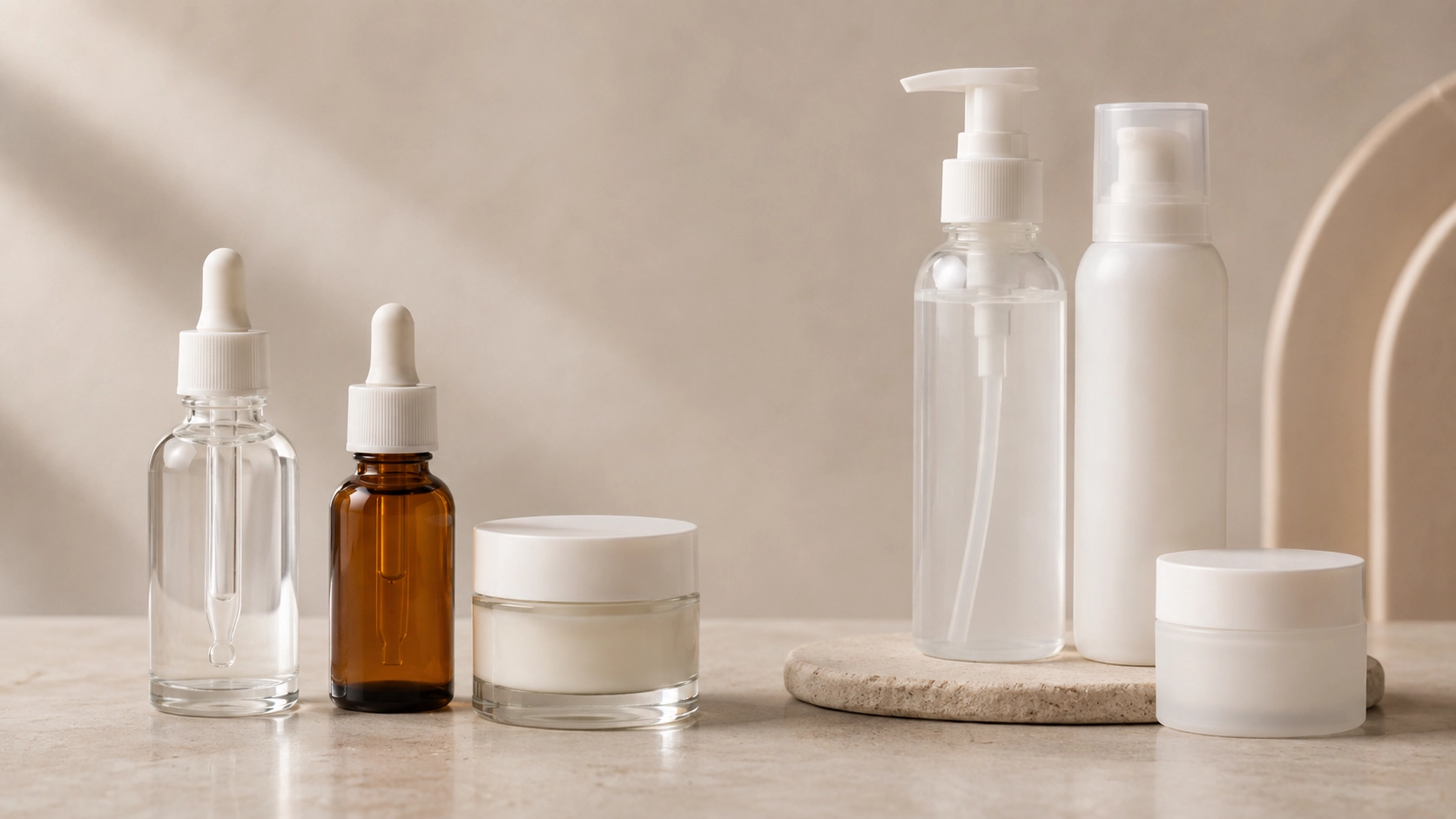
A reliable closure is essential for daily use and transport. A weak thread, a noisy pump, or a cap that loosens in transit quickly turns into a customer complaint. Evaluate samples for feel, seal, and consistency across a batch. For international shipping, closures should survive temperature changes and handling.
Think About Volume and Format
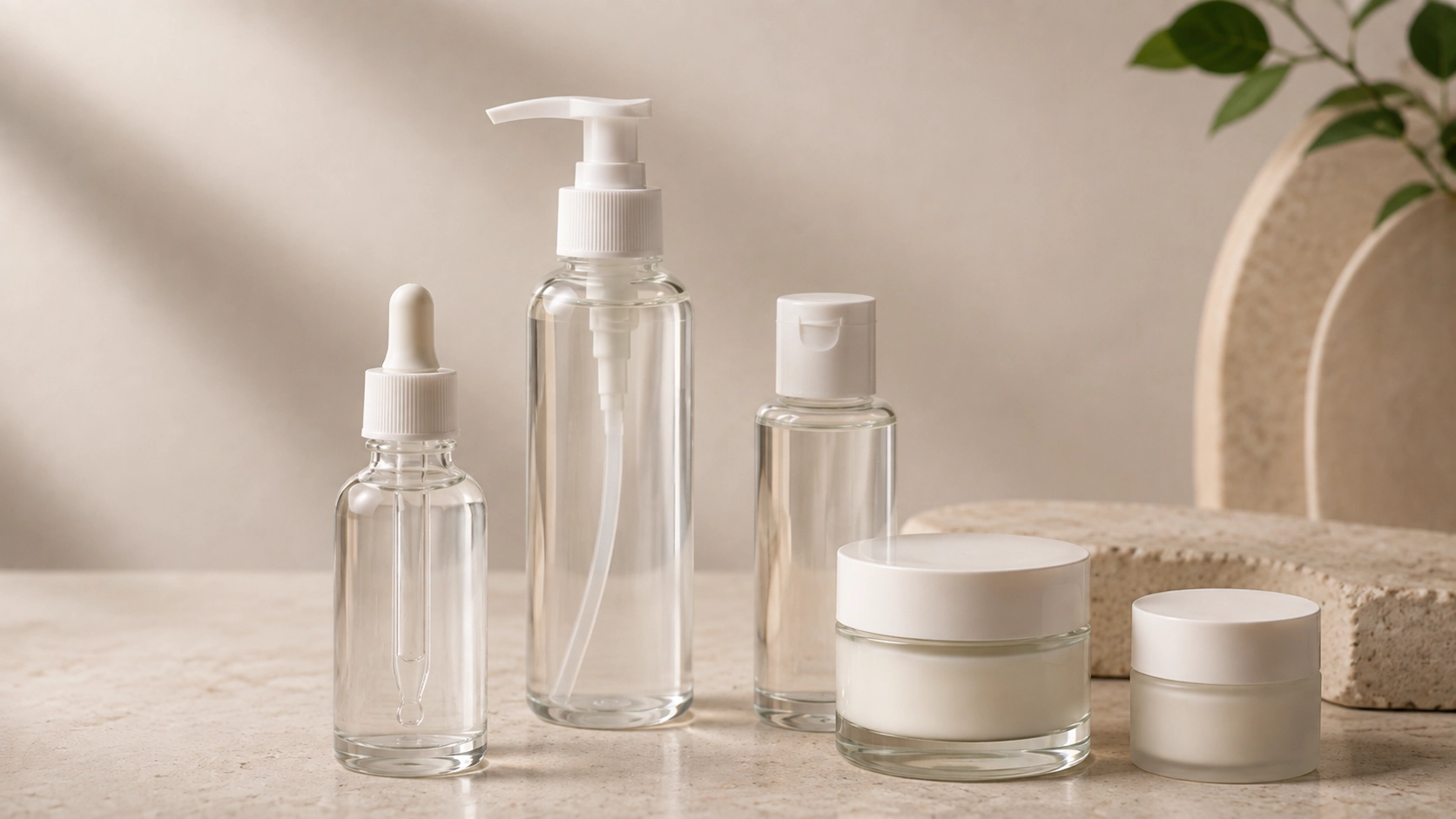
Common capacities such as 30 ml, 50 ml, and 100 ml are familiar to buyers, but the best size depends on product use, filling equipment, shipping, and market requirements. Unusual sizes can differentiate a brand but may complicate filling and shipping. Check that your contract filler or in-house line can handle the chosen format before ordering.
Compliance and Safety Considerations
Different markets have different rules for materials that contact cosmetics. Requirements may cover heavy metals, recycled content, and labeling. Documentation requirements vary by destination market and product type. Verify the applicable requirements with a qualified compliance partner before placing an order.
Venturove supports buyers by coordinating with manufacturing partners and helping gather the documentation needed for a given market. We do not operate our own factory, and we recommend that buyers validate regulatory claims with a qualified compliance partner for their target region.
Balancing Order Quantity and Budget
Packaging cost is rarely just the unit price. Tooling, decoration, and minimum order quantities shape the real total.
Larger orders usually lower the unit cost but increase upfront capital and storage. Smaller runs reduce risk for a new launch but may limit decoration options. Discuss both scenarios with your supplier early so the quote reflects your actual plan.
Venturove works with both bulk buyers and small-batch customers, including startups and sample programs. Minimum order quantities vary by packaging format, material, decoration, and stock availability. Ask for the current minimum for each product before requesting a quotation.
Working With a Sourcing Partner
Sourcing packaging across borders involves more than picking a photo from a catalog. Lead times, quality consistency, and communication all affect the outcome.
As a procurement and supply chain integration service, Venturove helps brands compare options and coordinate samples, specifications, and order details before production and shipment.
A Practical Shortlist Before You Order
Before placing an order, check these points:
- Formula compatibility with the container and closure
- Dispensing method suited to the viscosity
- Material and any recycled-content claims
- Required compliance documentation for your market
- Realistic order quantity and lead time
- Sample evaluation across a small batch
Taking these steps early prevents costly rework after production starts.
Frequently Asked Questions
How do I know if a material is safe for my formula?
Request compatibility information from the supplier and run a stability test with the actual package and formula when possible. For regulated markets, verify documentation with a compliance specialist.
What is the typical lead time for custom packaging?
Lead time varies with stock availability, decoration, tooling, order quantity, and shipping method. Request a current production and shipping schedule before finalizing an order.
Can I order small quantities for a new launch?
Some stock packaging formats may support smaller orders, while custom decoration or tooling usually requires higher quantities. Availability must be checked for each product.
Do you manufacture the packaging yourself?
No. Venturove is a procurement and supply chain integration service that works with a network of manufacturers. We help source and coordinate rather than produce in our own facility.
Get Started
Request a Packaging Quote
Tell us your product type, formula, target volume, and market. We will help outline options that fit.
Explore Ready-to-Ship Packaging
Browse stock formats that can shorten your timeline. Ready-to-ship formats may reduce lead time and may support smaller orders, depending on current availability.