
Cosmetic Packaging Pre-Shipment Inspection: A Buyer’s QC Checklist

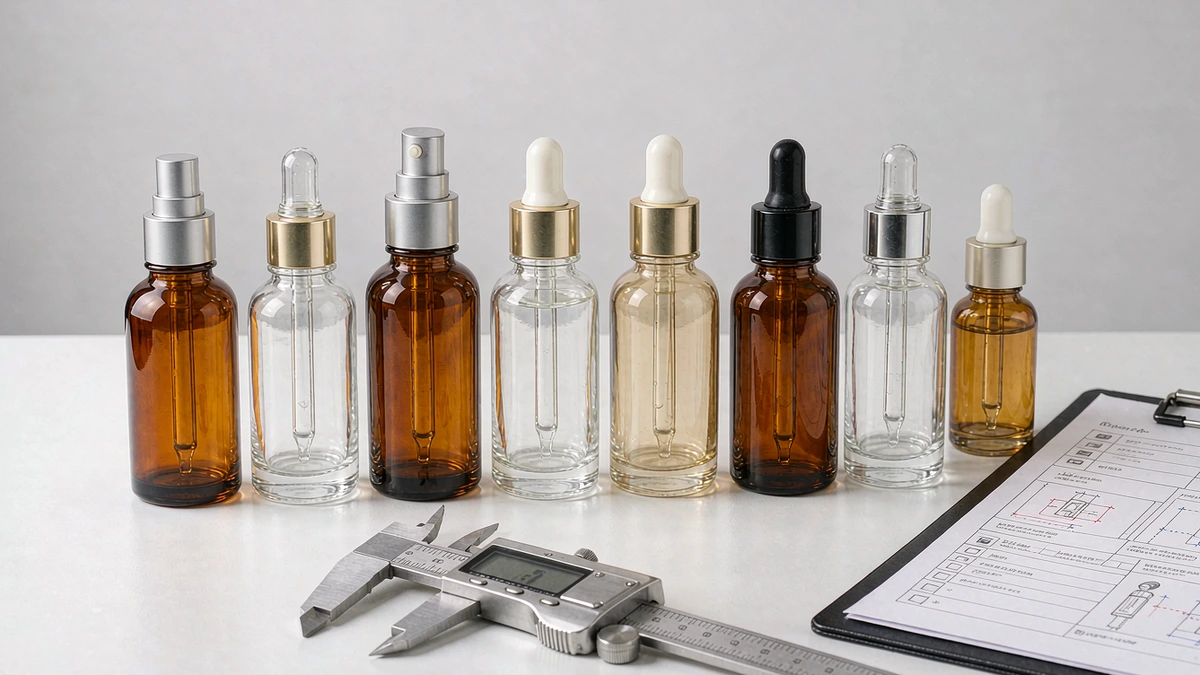
You approved the pre-production sample, signed the order, and the factory says the lot is ready. The step most brands skip is the one that protects the money: a pre-shipment inspection (PSI) of the actual production lot before it leaves the warehouse. A PSI is the highest-leverage quality check in cosmetic packaging procurement because it happens at the only moment you still hold leverage — the final balance is unpaid, the lot is complete and physically inspectable, and the freight has not yet mixed production defects with transit damage.
This guide gives you a practical, spec-driven QC checklist you can hand to a factory or a third-party inspector. It covers the AQL sampling framework, the exact points that fail in bottles, jars, pumps and closures, and how to read the report so you know whether to ship, hold, or reject. We keep Venturove-specific claims out of the technical sections; where a decision depends on what we can actually document and certify, we point you to the place to confirm it rather than guess.
Key Takeaways
A pre-shipment inspection is the last moment you can stop a bad lot — before you pay the supplier in full and before the freight leaves the warehouse.
Use AQL sampling under ANSI/ASQ Z1.4 (ISO 2859-1): Critical defects at zero tolerance, Major around AQL 2.5, Minor around AQL 4.0, at Inspection Level II.
Check the items that actually fail in cosmetics: dimensional tolerance, neck-finish and closure seating with torque, pump function, seal and leak integrity, glass and decoration defects, label and barcode.
The sample must be genuinely random across the lot, not pulled from cartons the factory staged for you.
Book a third-party inspection (SGS, Bureau Veritas, QIMA) 7–10 days before the ship date so one remediation round is still possible.
Require photo evidence and a graded report with a clear ship / hold / reject call; segregate defects immediately and re-inspect after rework.
Why Pre-Shipment Inspection Is the Leverage Point
Three things make PSI the moment that matters. First, the financial milestone lines up with quality: final balance is usually the supplier’s last payment trigger, so they have direct reason to fix what fails. Second, the lot is complete — during-production checks sample partial output that cannot give a statistically valid read on the whole run. Third, freight has not shipped; once goods leave the warehouse, a leak caused in transit looks the same as a leak caused in production, and blame gets muddy. Skip PSI and you have bundled “pay the supplier,” “trust the supplier,” and “absorb whatever shows up at receiving” into one decision.
Build the Checklist From Your Spec Sheet
A PSI only works if the criteria are measurable. Vague instructions like “check the quality” give the inspector nothing to pass or fail against. Translate the approved spec — usually the brief you already sent the supplier (see our guide to briefing a packaging supplier) — into testable lines: “barcode scans first-pass with a standard scanner,” “label legible at 30 cm,” “carton survives a 1.2 m drop test,” “neck finish seats the closure without force.” If you approved a pre-production sample first (our sample approval guide covers that step), the PSI then verifies the production lot matches the approved sample, not just the drawing.
The AQL Sampling Framework
AQL stands for Acceptable Quality Limit, defined in ANSI/ASQ Z1.4 (the US version of ISO 2859-1). It is a statistically-based acceptance sampling plan — and the single most misunderstood number in procurement. AQL is NOT a quality target; it is the maximum percent defective you are willing to accept in the lot. Specifying AQL 2.5 for major defects means you accept up to about 2.5% defective major units, not “99% perfect.”
Defects are sorted into three tiers:
| Class | AQL | Example in packaging |
|---|---|---|
| Critical | 0 (zero tolerance) | Regulatory mark missing, safety hazard |
| Major | 1.0–2.5 | Dimensional out-of-tolerance >±1 mm, leak, mis-seated pump, unscannable barcode |
| Minor | 2.5–4.0 | Ink streak, foil lift, cosmetic scratch within tolerance |
Sampling uses Inspection Level II by default (Level I for trusted repeat suppliers, Level III for risky or high-value lots). At Level II, a lot of 3,201–10,000 units calls for a 200-unit sample; the acceptance numbers then come from the AQL table. The point is statistical defensibility, not a handful of units — ask any inspector you book to state the standard, level, and AQL they apply.
What to Check: Dimensions and Weight
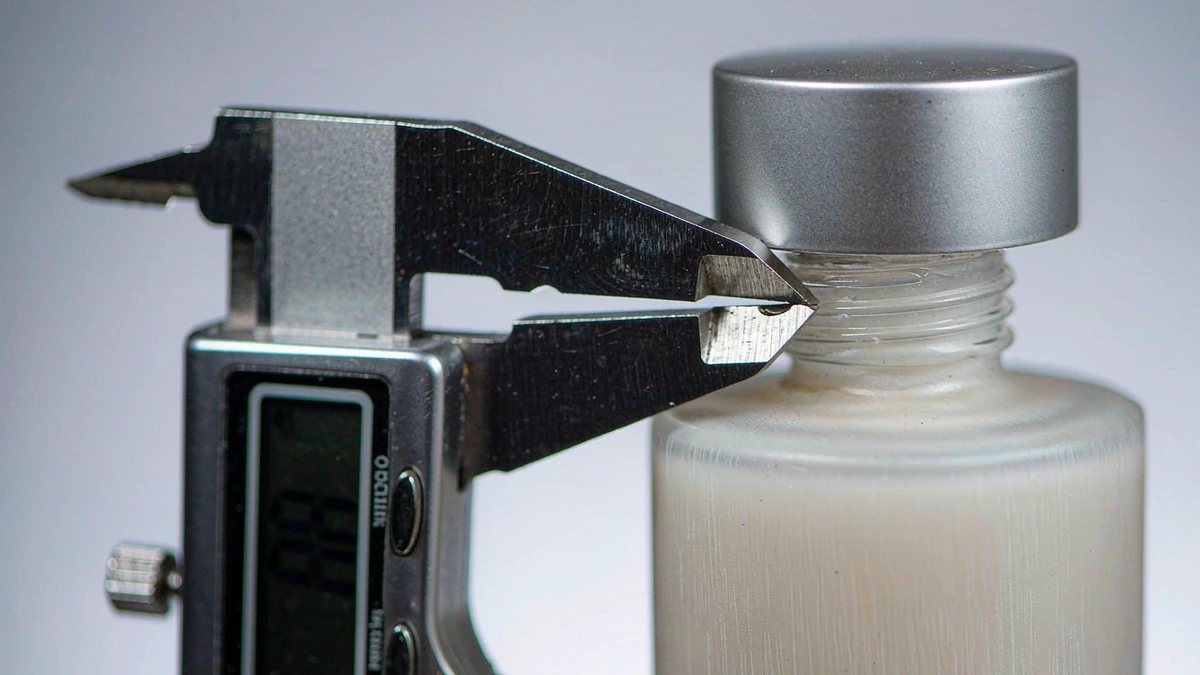
The cheapest defects to miss and the most expensive to receive are dimensional. Measure bottle height, diameter, and wall thickness against the drawing with a caliper (0.02 mm precision is common). Out-of-tolerance beyond about ±1 mm is typically a Major defect because it breaks filling-line setup, labeling registration, and carton fit. Weigh a sample for consistency — a drifting weight signals a resin or fill change. These tolerances are exactly why the neck-finish match (our neck sizes guide) has to be verified on the production lot, not assumed from the drawing.
Neck Finish, Closure Seating and Torque
The closure must seat the bottle neck finish, or the pump, cap, or dropper will not seal. Verify the finish on sampled units and then check torque: too loose and the unit leaks on the shelf or in transit; too tight and the consumer cannot open it. This is where closure liner integrity matters — a torn or missing liner (covered in our bottle closures guide) is a leak path even when torque looks right. Record both seating feel and measured torque on the report.
Pump and Dispenser Function
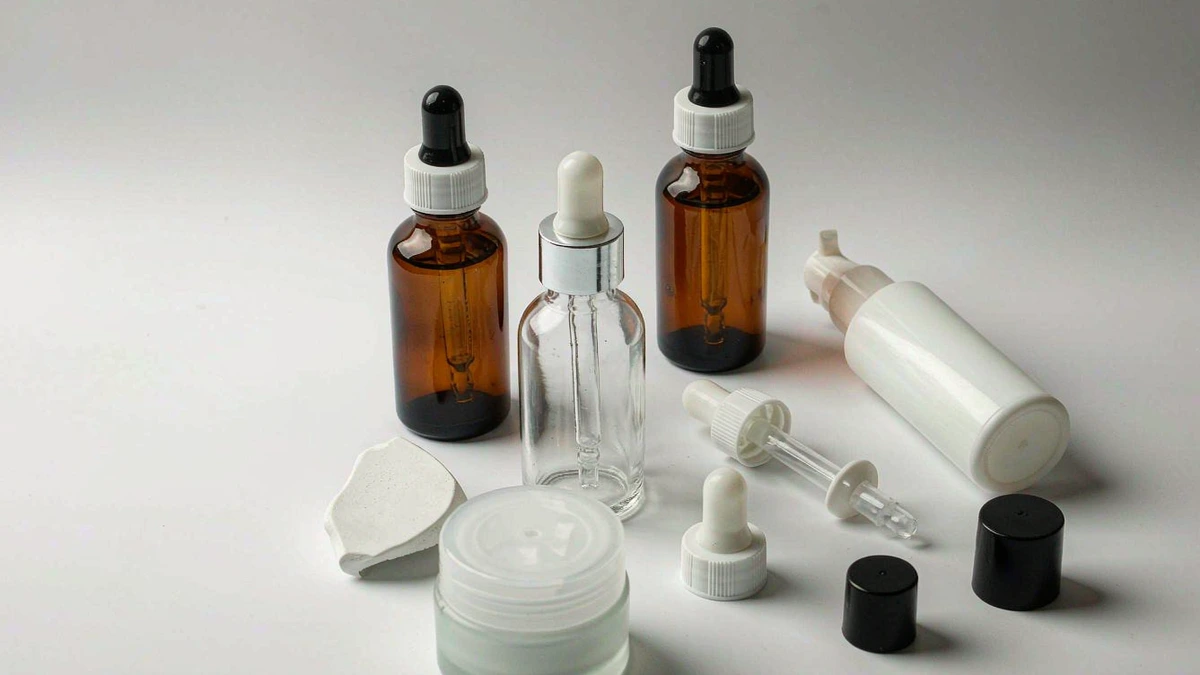
For any pump, sprayer, or dropper, function-test sampled units: dip-tube alignment to the bottle bottom, the locking mechanism, stroke volume, and freedom from air locks. A miscut dip tube or a weak spring shows up only under a filled, locked unit — the same reason a leak check should run on filled product, not an empty sample. If your formula is aggressive or fragrance-heavy, pair this with a documented compatibility test before committing the run, because material choice in the pump path drives both function and corrosion risk.
Seal Integrity and Leak Testing
Seal integrity is the checkpoint that protects your brand at the retailer. Run a positive/negative pressure leak test on sampled filled units and confirm induction or liner seals hold. For export and air freight, pressure and temperature swings can open a loose actuator or a weak seal, so verify after fill and lock, not on an empty shell.
Glass, Surface and Decoration Defects
For glass and decorated parts, check for bubbles, mold lines and seams, wall-thickness uniformity, print/foil registration, and color drift. Color is graded against the contracted Pantone reference — a ΔE2000 above about 5 is typically a Major defect, not a preference. Foil lift and embossing missing on a panel are Minor but accumulate; log them so the trend is visible across lots.
Labeling, Barcode and Marks
Confirm every required mark is present and correct: UPC, batch, expiry or period-after-opening, and any regulatory symbol for the destination market. Scan the barcode first-pass with a calibrated scanner on sampled units — an unscannable code is a Major that triggers import and recall problems. Check label alignment, adhesion, and legibility at reading distance.
Carton Packing and Drop Test
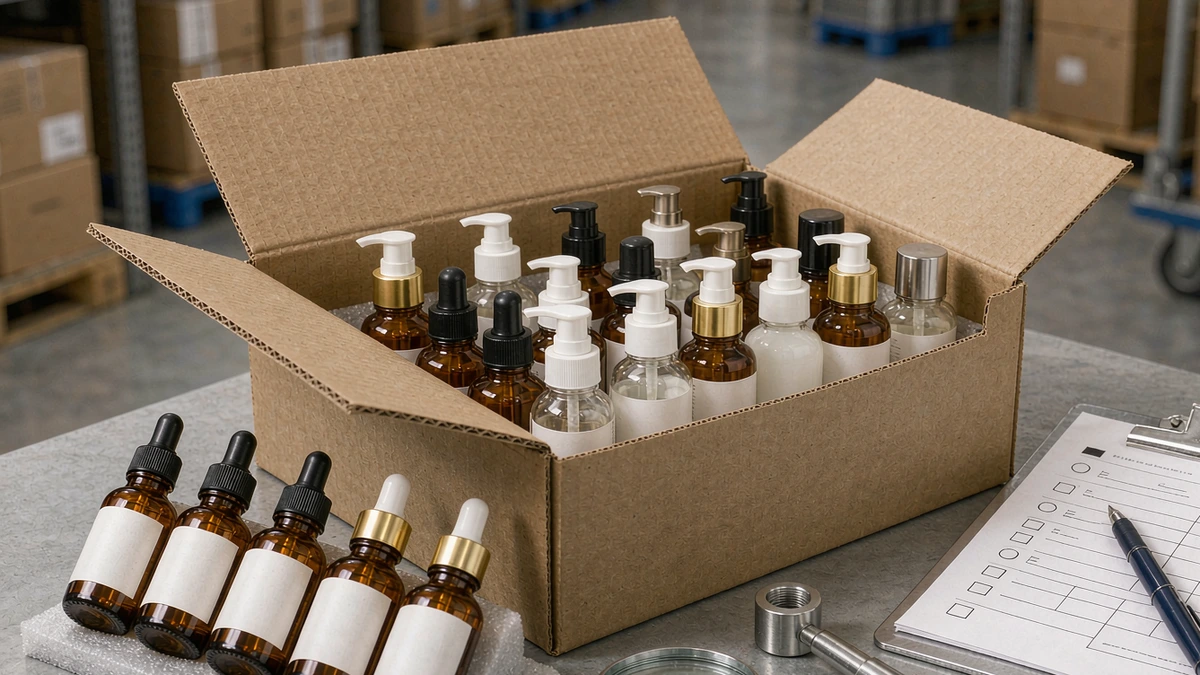
Finally, verify packing: inner/outer carton integrity, packing ratio (units per inner, inners per master), and shipping marks. Request a drop test (often ~1.2 m, flat/edge/corner) on a sampled carton and a compression check if the lot will stack in transit or storage. Short counts and crush damage are common and cheap to catch at the warehouse, expensive to discover at receiving.
Defect Classification and Disposition
Every finding is recorded by type, location, severity, and count, with a photo. Defective units are segregated immediately so they cannot be mixed back into the accepted batch. If the Major count exceeds the AQL acceptance number, the batch fails and cannot ship without rework and re-inspection; Minors under the limit may ship with a documented corrective-action request to the factory. The report should end with one clear recommendation: ship, hold, or reject.
Third-Party vs In-House, and Timing
For first-time suppliers or orders above a threshold, a third-party inspector (SGS, Bureau Veritas, QIMA, Asia Inspection) is among the highest-ROI spends in the process — typically a few hundred to around fifteen hundred dollars per inspection. Book it 7–10 days before the planned ship date so one remediation round fits before the container closes. For trusted repeat suppliers, an in-house or Level I check against the same spec sheet is usually enough. Either way, require real-time photos and a graded report, not a generic “appearance OK” line.
Need a Packaging Partner Who Documents Quality?
Send us your spec sheet, target volumes, and destination market. We will match the bottle, closure, and minimum order quantity to your product, and confirm what inspection documentation and quality records we can provide per shipment.
FAQ
What is a pre-shipment inspection in cosmetic packaging?
A PSI is a quality check of the completed production lot, performed after production finishes and before the goods leave the supplier’s warehouse. It verifies quantity, dimensions, function, seals, decoration, labeling, and packing against your approved spec, using AQL sampling so the pass/fail call is statistically defensible.
What AQL level should I use for cosmetic packaging?
The common importer setting is Major defects at AQL 2.5 and Minor at AQL 4.0, under ANSI/ASQ Z1.4 at Inspection Level II. Luxury tiers often tighten to Major 1.0 / Minor 2.5. Critical defects (safety or regulatory) are held at zero tolerance. State the standard, level, and AQL when you book the inspection.
How many units get inspected?
Sample size follows the AQL table from your lot size at the chosen inspection level. At Level II, a lot of 3,201–10,000 units calls for a 200-unit sample; the acceptance numbers then come from the AQL table. The sample must be drawn randomly across the whole lot, not from cartons the factory staged.
What fails most often in cosmetic packaging lots?
The recurring failures are dimensional drift beyond tolerance, neck-finish and closure mismatch with wrong torque, pump dip-tube or stroke defects, seal and leak failures on filled units, decoration registration and color drift, and unscannable barcodes. Most are Major defects caught by a structured checklist rather than by eye.
How do I know what quality records Venturove can provide?
Inspection reports, certificates, and per-shipment traceability vary by SKU, market, and whether the item is stock or custom, so we confirm those per inquiry instead of publishing a fixed list. Share your spec sheet and destination market through our contact page, and for volume planning see our cosmetic packaging MOQ guide.