
Cosmetic Packaging MOQ Explained: Why Minimum Order Quantities Vary for Stock and Custom Packaging

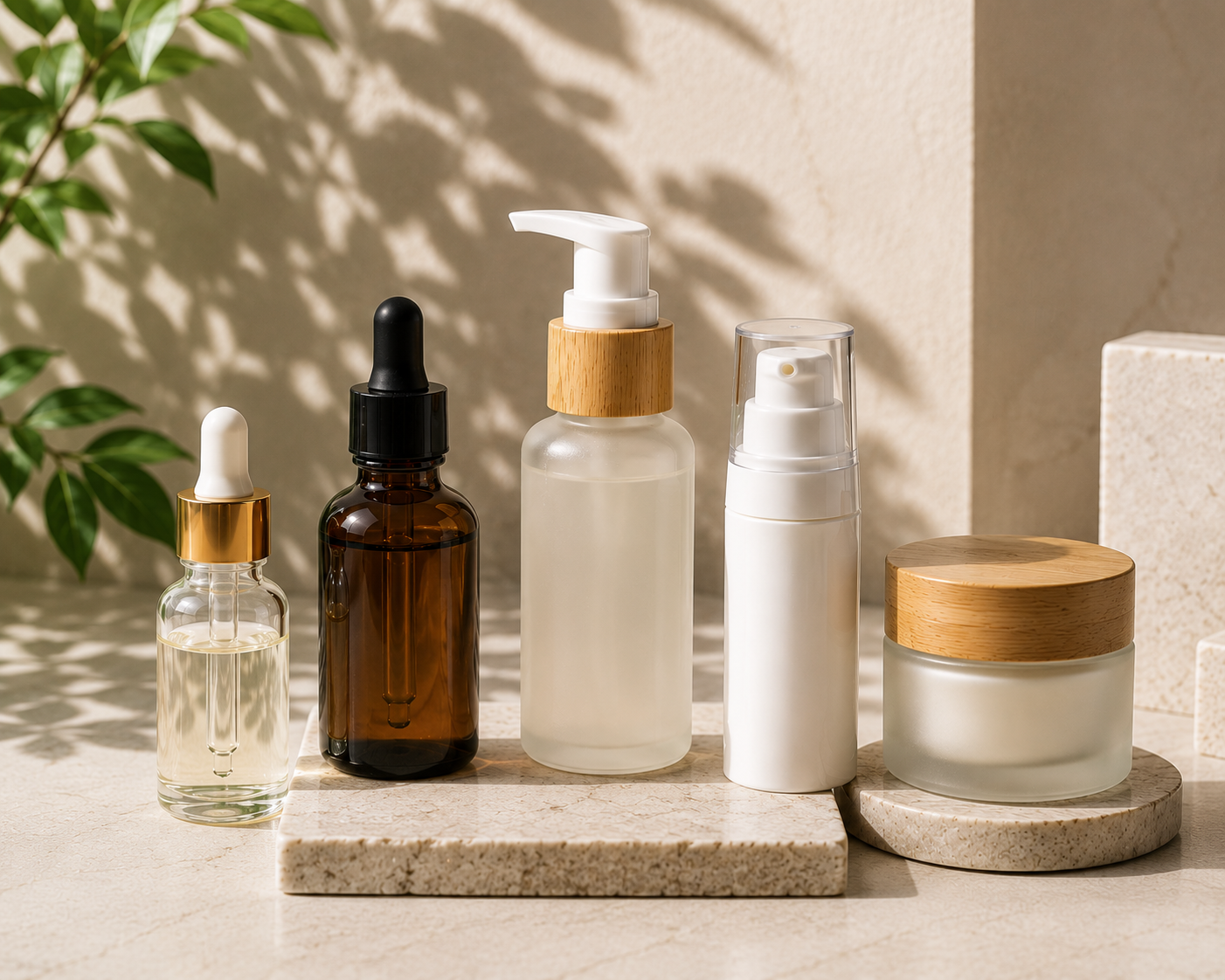
A supplier quotes an MOQ of 1,000 bottles. At first glance, the requirement seems simple.
Then you ask for a pump, a custom bottle color and a printed logo.
The bottle may still be available at 1,000 pieces, but the pump could have a higher production minimum. The custom color may require its own batch. Printing introduces another setup. If the project needs a new mold, the economics change again.
This is why MOQ in cosmetic packaging is rarely just one number.
For B2B buyers, a better question is:
What is the MOQ for every component and process required to make the finished package?
That distinction matters. It affects the real order quantity, the amount of cash tied up in packaging and how much unused inventory may be left after the first production run.
What Does MOQ Mean in Cosmetic Packaging?
MOQ stands for Minimum Order Quantity: the smallest quantity a supplier is prepared to manufacture or supply under a particular set of conditions.
Those conditions are important.
A clear stock bottle taken from an existing production line may have one minimum. The same bottle in a custom color may have another. Add printing, a special pump or new tooling, and the required quantity can change again.
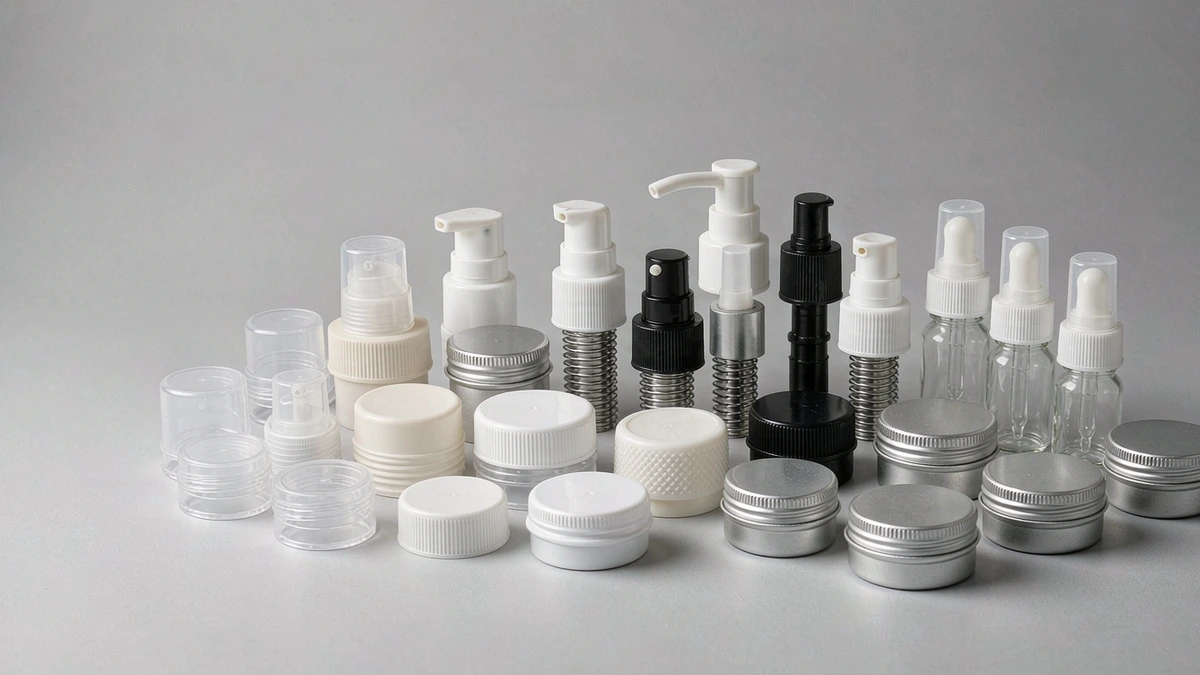
In practice, MOQ may apply separately to:
- the bottle or jar,
- the pump,
- the dropper,
- the sprayer,
- the cap,
- a custom color,
- a printing or decoration process,
- and any specially manufactured component.
To a brand, all of these parts may belong to one SKU. To the supply chain, they may represent several different production jobs that have to meet at the same point.
If you are still working through the broader product-packaging decision, start with Venturove’s guide to choosing the right cosmetic packaging.
Why Do Packaging Suppliers Set MOQs?
Most MOQs come back to production economics.
Before a factory produces the first usable component, there may already be work to do: prepare machinery, change molds, clean a line, adjust colors, set up printing equipment or inspect the first pieces.
That work still exists when the order is small.
If a production run requires similar setup whether the factory makes 500 pieces or 20,000, the smaller order carries much more setup cost per unit.
Several factors commonly sit behind the final MOQ.
Production Setup
Changing tooling, molds or production settings takes time. The factory needs enough output from the run to make that setup commercially worthwhile.
Color Changes
Custom colors can require pigment preparation, color matching, equipment cleaning and material loss during changeover. A standard color already in regular production is usually easier to accommodate than a one-off custom shade.
Raw Material Batches
The packaging manufacturer is not always the first company in the supply chain with a minimum quantity.
Glass materials, plastic resins, color masterbatch, printing inks and other inputs may be purchased or processed in minimum batches. Those upstream requirements can eventually become part of the packaging MOQ.
When material choice is still open, it also helps to compare glass and plastic cosmetic packaging because material and manufacturing method can influence order economics.
Quality Control
Each production batch still needs inspection.
Dimensions, appearance, sealing and other quality checks all require time, even when the batch itself is relatively small.
Custom Tooling
A completely new bottle or component may require a new mold or other tooling.
Once new tooling is involved, the project is no longer comparable with taking an existing bottle from a catalogue. The economics can change substantially, which is why custom molded packaging often carries very different minimums from standard packaging.
Stock Packaging and Custom Packaging Are Different Buying Decisions
One of the clearest MOQ differences appears when comparing stock packaging with custom packaging.
Stock Packaging
Stock packaging normally uses an existing design, an existing mold and a standard range of materials, colors or finishes.
The major tooling investment has already been made. In some cases, the same item is produced for many customers or is already held as inventory.
That makes smaller orders easier to support.
Industry supplier guidance often places standard stock packaging in the low-thousands range, although actual quantities vary considerably. Distributors or suppliers holding finished inventory may sometimes offer much smaller quantities.
The useful principle is not a universal number.
It is that existing tooling and existing inventory remove some of the production barriers that create higher MOQs.
Custom Packaging
Customization adds new production steps.
A project might include:
- a custom bottle color,
- a custom pump or cap color,
- silk-screen printing,
- hot stamping,
- labels,
- frosted or matte finishing,
- metallized decoration,
- a custom closure,
- or completely new tooling.
Each one can introduce a different minimum.
Public supplier guidance generally shows customized packaging moving into higher quantity ranges than standard stock packaging. Once a new glass mold or heavily customized component is involved, reported minimums vary dramatically from one manufacturer to another.
That wide range is exactly why buyers should be careful with blanket rules.
“Custom packaging requires 10,000 pieces” is not universally true.
Neither is “a custom bottle requires 50,000 pieces.”
The actual requirement depends on the component, material, process, tooling and supplier.
One Package Can Carry Several MOQs
This is where sourcing can become confusing.
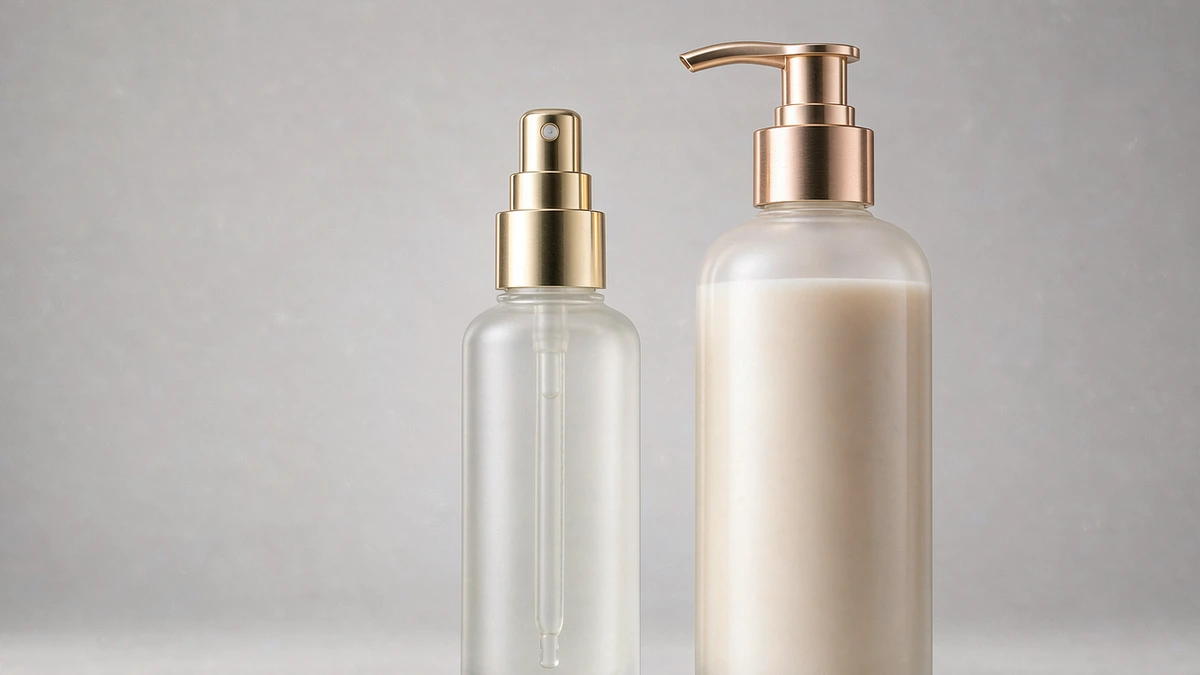
Imagine a brand developing a serum bottle with a treatment pump.
The bottle may be available at 1,000 pieces.
The pump may be produced on another line with a much larger minimum. The chosen color may require a separate production batch. Printing may have another setup requirement.
At that point, asking:
“What is the MOQ for this bottle?”
does not tell you enough.
The real question is:
“What order quantity allows the bottle, closure and decoration to come together as one finished package?”
That is the number that matters commercially.
If your project is still deciding between dispensing systems, review dropper, pump and airless packaging before locking the specification.
Bottle MOQ
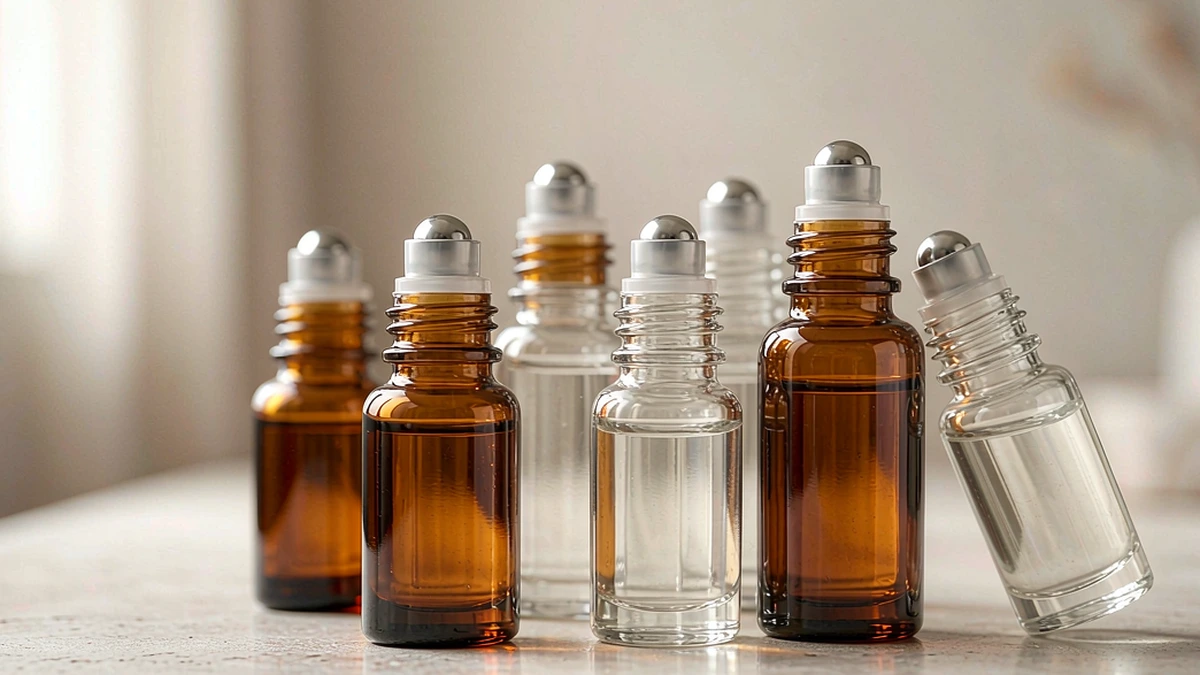
Existing glass or plastic bottles are generally easier to source at smaller quantities than completely new designs because the mold already exists.
But changing the material, color or structure may move the order out of the standard-stock category.
Pump and Sprayer MOQ
A pump is not a single simple part.
Depending on the design, it may contain an actuator, housing, dip tube, spring, seal and other internal components. These parts then have to be assembled through a dedicated production process.
That helps explain why supplier quotations for pumps and sprayers can carry higher minimums than the bottle they are designed to fit.
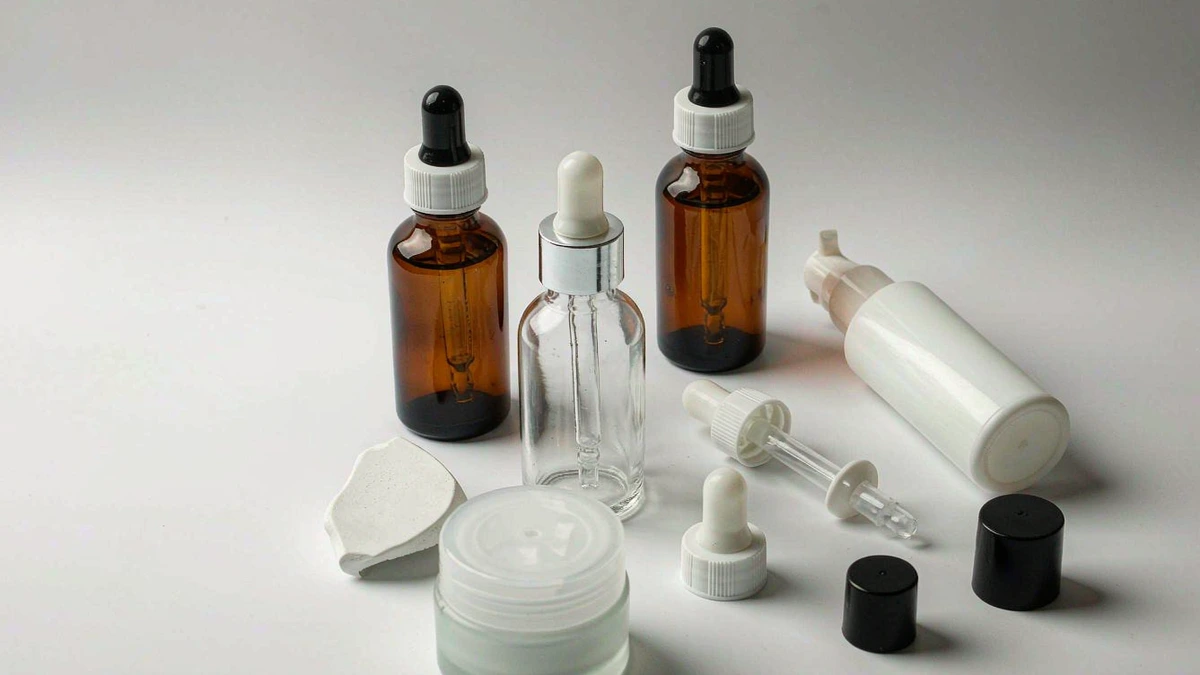
Dropper MOQ
Droppers are also assemblies.
A typical system may include the closure, bulb and pipette. Its production minimum does not automatically match the MOQ of the glass bottle underneath it.
Cap MOQ
A standard screw cap already in regular production can be relatively straightforward to source.
A custom material, color, finish or structure changes that calculation.
Decoration MOQ
Printing and finishing should be treated as production processes in their own right.
Silk-screen printing, hot stamping, labeling, frosting, coating and metallization may each have minimum quantities that differ from the container itself.
This is why an RFQ should ask for the MOQ of the finished specification, not only the undecorated bottle.
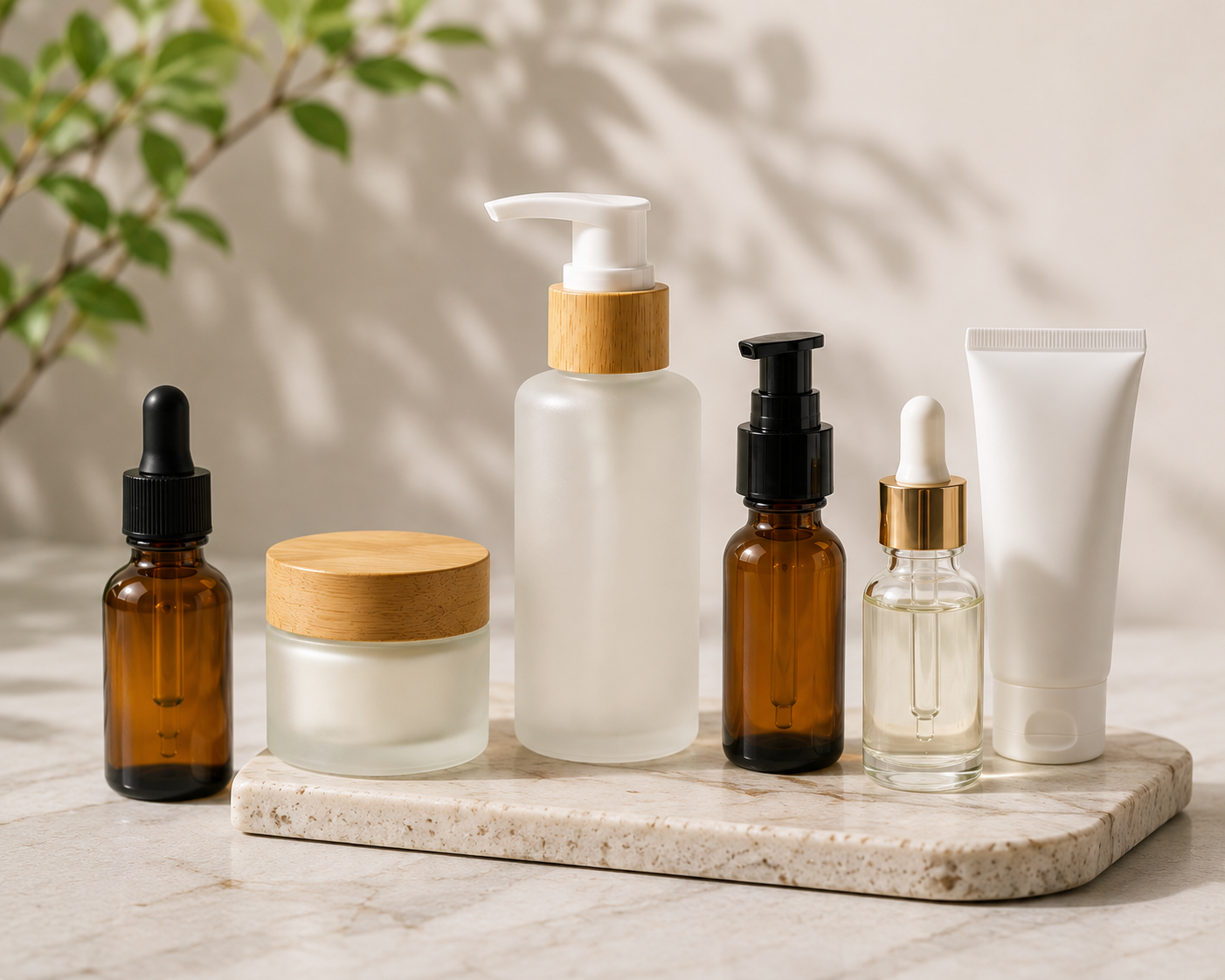
The Component-Mismatch Problem
A simple example shows how quickly MOQ can affect inventory.
Suppose a bottle is available at 1,000 pieces, while the selected pump requires a 10,000-piece production order.
Ordering 1,000 bottles does not solve the problem because the complete package still needs a pump.
Ordering 10,000 pumps creates another problem: the brand may be left with 9,000 pumps unless future production can use them.
Decoration can create the same mismatch.
A brand might want to test the market with 1,000 finished units, but its preferred decoration process may only be economical at a much larger quantity.
The bottle is technically available. The finished package may not be commercially practical at the same volume.
That is why MOQ planning belongs near the beginning of packaging development, not at the end.
Multiple SKUs Make MOQ Planning More Complicated
Launching several SKUs can create both problems and opportunities.
Imagine three products that use the same pump but different bottles.
If the pump specification is genuinely identical across all three, combined demand may help meet the pump minimum.
But now change one detail: each SKU needs a different custom pump color.
The shared-component advantage may disappear because each color could require a separate production batch.
The same issue can affect:
- printed artwork,
- bottle colors,
- cap colors,
- surface finishes,
- capacities,
- and dispensing systems.
So “10,000 total units” does not necessarily mean the same thing as “10,000 units of one specification.”
A supplier may actually be looking at several smaller production runs rather than one large run.
That should be clarified before the quotation is treated as final.
Sample, Pilot Run and Bulk Production Do Different Jobs
A first sample and a full production order are not simply smaller and larger versions of the same step.
They answer different questions.
Sample
Samples let the buyer handle the packaging, inspect the appearance, check dimensions and begin evaluating how the selected components work together.
They are also important when the actual formula needs to be assessed in the intended packaging.
For that stage, it is also useful to review cosmetic packaging compatibility testing.
Venturove’s public Custom Packaging information states that samples are available for product testing and packaging evaluation before bulk orders.
The exact sample terms depend on the individual project and should be confirmed before ordering.
Pilot Run
A pilot or trial run sits between initial sampling and full production.
Its purpose is to expose problems that may not appear in a handful of samples.
Those problems might involve:
- filling-line handling,
- assembly consistency,
- decoration quality,
- dispensing,
- leakage,
- or production yield.
Pilot quantities vary widely. Some projects use a small proportion of the expected full order; others use a separately negotiated trial batch.
There is no single percentage or quantity that makes sense for every project.
Bulk Production
Bulk production starts when the specification, commercial quantity and testing requirements have been sufficiently confirmed.
For customized packaging, this may mean coordinating several minimum quantities at once rather than simply meeting the MOQ of the bottle.
Why the Lowest MOQ Is Not Necessarily the Best Deal
For a startup, a low MOQ is understandably attractive.
It reduces the initial commitment and limits the amount of inventory that has to be purchased before the product proves itself.
But the smallest number on a quotation does not automatically produce the best purchasing structure.
A bottle with a very low MOQ may require a much larger order for the matching closure.
Another option may require a slightly larger initial quantity but use standard components that are easier to reorder and reuse across several SKUs.
So instead of asking only:
“Which supplier has the lowest MOQ?”
it is more useful to ask:
“Which packaging system gives us a practical balance between quantity, customization, inventory and future purchasing?”
For an early-stage brand, excess inventory can lock up cash that could be used elsewhere.
For a larger brand, ordering too little can create repeated production runs and unnecessary purchasing complexity.
MOQ needs to fit the commercial plan, not just the launch budget.
Ways to Reduce MOQ Risk
Brands that are not ready for a large custom production run still have options to discuss with suppliers.
One is to start with an existing stock bottle and closure rather than creating a completely new mold.
Another is to standardize components across several SKUs where the formulas and packaging requirements allow it.
Using the same pump, cap or bottle family across products can simplify purchasing, provided the component is genuinely suitable for each application.
Decoration can sometimes be introduced in stages as well.
An early launch might use an existing stock color with a label. More complex printing or finishing can be considered once sales volume supports a larger production run.
These are planning approaches, not guarantees. Whether they are practical depends on the supplier, the formula and the exact packaging specification.
Venturove’s Public MOQ Structure
Venturove’s current Custom Packaging page presents two broad order categories:
- Startup & Small Orders: 50–300 pieces
- Custom Brand Packaging: 500+ pieces
The same page lists options including logo printing, color customization and surface finishing, and states that samples are available before bulk orders.
Those figures should not be read as one fixed MOQ applying to every Venturove product and every customization process.
The actual requirement can depend on the type of packaging and the level of customization involved.
A standard item, a decorated stock bottle and a completely customized package can have very different production requirements.
Buyers should therefore confirm the quantity for the exact bottle, closure, decoration and finish included in their project.
What Should a Buyer Put in a Packaging RFQ?
The clearer the RFQ, the easier it is to understand what is actually driving the quotation.
A useful request should cover the following information.
Product Type
Explain what the package will contain: serum, lotion, oil, mist or another formula type.
Packaging Material
State whether the project is considering glass, PET, PP, PE, aluminum or another material.
Capacity
List the required capacity for each SKU rather than giving one general range.
Number of SKUs
Tell the supplier how many versions are planned and the expected quantity for each one.
Closure or Dispensing System
Specify whether the package requires a dropper, pump, fine-mist sprayer, screw cap or another closure.
If the complete neck finish has already been confirmed, provide that specification instead of using a general diameter such as “18 mm.” For more precise closure matching, see Venturove’s guide to complete bottle neck finish selection.
Customization
Break customization into individual requirements:
- bottle color,
- cap or pump color,
- silk-screen printing,
- hot stamping,
- labeling,
- frosting,
- matte or glossy finishing,
- metallization,
- and any new tooling.
This makes it easier to see which process is creating the MOQ.
Target Order Quantity
Give the supplier the quantity you hope to purchase initially and, where possible, an indication of expected future volume.
That provides more useful information than simply asking, “What is your MOQ?”
Target Market
If the project requires specific documentation, declarations or certifications for a destination market, state those requirements and ask the supplier what documentation is available.
Certification should be confirmed, not assumed.
Testing Requirements
If the project requires packaging or formula evaluation, discuss sampling and testing expectations before full production.
The actual formula should ultimately be assessed with the packaging system intended for production.
Delivery Requirements
Provide the destination and target arrival window.
Production and shipping timing should be confirmed for the specific order rather than copied from another product or an earlier quotation.
Ask for the MOQ of the Finished Package
MOQ is often presented as if it were a fixed property of a bottle.
In practice, it is the result of several things meeting at once: the container, closure, decoration, material, tooling and production process.
A buyer who asks only for the bottle MOQ may not discover until much later that the pump, custom color or printing process requires a very different quantity.
Breaking the package into components gives a clearer view of the real commitment.
Confirm the minimum for each part. Confirm the minimum for each decoration process. Then look at the quantity required to produce the finished package.
That is a much more useful number than the MOQ printed beside an empty bottle in a catalogue.
Planning Your Cosmetic Packaging Order?
Share your packaging type, capacity, closure, customization requirements and expected order quantity with Venturove. We can help you review available packaging options and prepare the information needed for your project.
FAQ
What does MOQ mean in cosmetic packaging?
MOQ means Minimum Order Quantity, the smallest quantity a supplier is prepared to manufacture or supply under a particular specification. In cosmetic packaging, different components and processes can have different MOQs.
Why does custom cosmetic packaging usually have a higher MOQ?
Custom packaging can require additional production setup such as color matching, printing, surface finishing, special components or new tooling. These processes introduce fixed setup costs and production-batch requirements that can increase the minimum quantity.
Can the bottle and pump have different MOQs?
Yes. A bottle and its pump, dropper, sprayer or cap may come from different production lines or suppliers. Their minimum quantities do not automatically match, which is why buyers should confirm the MOQ of every component in the finished packaging system.
Is stock packaging better for small orders?
Stock packaging can be easier to source in smaller quantities because the design and tooling already exist and some items may already be held as inventory. The actual MOQ still depends on the supplier and the selected packaging specification.
Can I order samples before bulk cosmetic packaging production?
Venturove’s current Custom Packaging information states that samples are available for product testing and packaging evaluation before bulk orders. Exact sample terms should be confirmed for the specific project.
What information should I provide when requesting a cosmetic packaging quotation?
Provide the product type, packaging material, capacity, number of SKUs, closure type, customization requirements, target order quantity, destination market and delivery requirements. The more precise the specification, the easier it is to identify which component or process is driving the MOQ.