
Cosmetic Packaging Decoration: Printing, Hot Stamping or Labels?

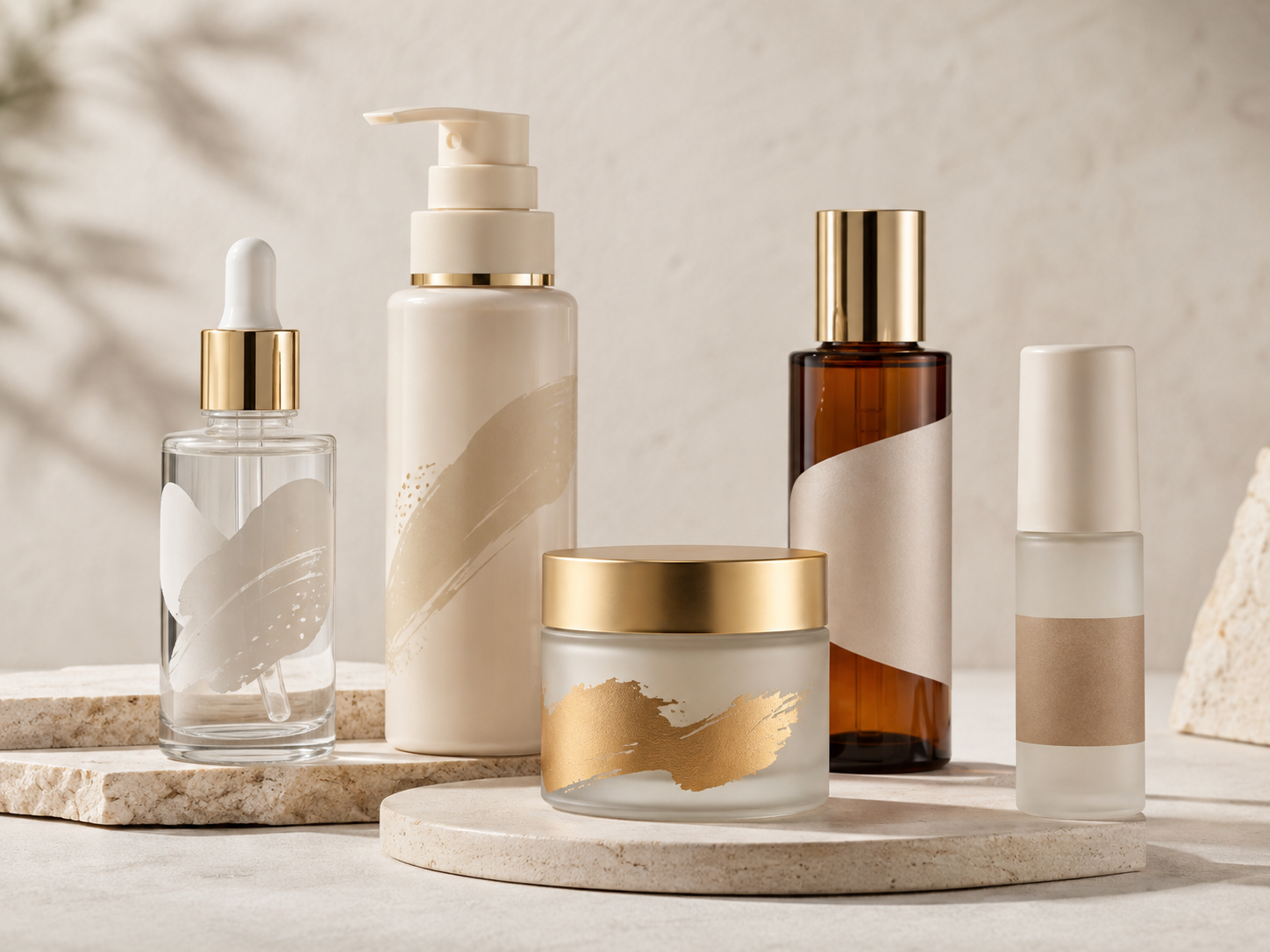
A bottle can be technically correct and still feel unfinished once it reaches the shelf. Decoration is what turns a standard container into something recognizably yours—but the choice between screen printing, hot stamping and pressure-sensitive labels is not only about appearance.
Each method behaves differently on glass, PET, PP, PE and metal. Each has its own setup requirements, limits on artwork, risks on curved surfaces and durability considerations. The right choice also depends on how the finished package will be filled, handled, shipped and recycled.
For B2B buyers, the practical question is not “Which decoration looks most premium?” It is:
Which process gives the required appearance on this specific package, at this order size, with acceptable durability and production risk?
If material selection is still open, start with our guide to glass vs plastic cosmetic packaging. Decoration decisions become much easier once the substrate is fixed.
Screen Printing, Hot Stamping and Labels at a Glance
| Decoration method | Main visual strength | Production advantage | Main limitation |
|---|---|---|---|
| Screen printing | Solid spot colors, clean logos, direct-to-container finish | Strong fit for bottles and jars, especially simple brand graphics | Setup per color; fine photographic detail is less natural |
| Hot stamping | Metallic, glossy, holographic or premium foil accents | Strong visual impact with relatively small decorated areas | Requires a die and stable pressure on the decorated surface |
| Pressure-sensitive labels | Full-color graphics, photographic detail and variable designs | High artwork flexibility and fast version changes | Adhesion, edge lift and recyclability depend on label construction and substrate |
This comparison is a starting point. Real performance still depends on the container, ink, foil, adhesive, coating, artwork and production conditions.
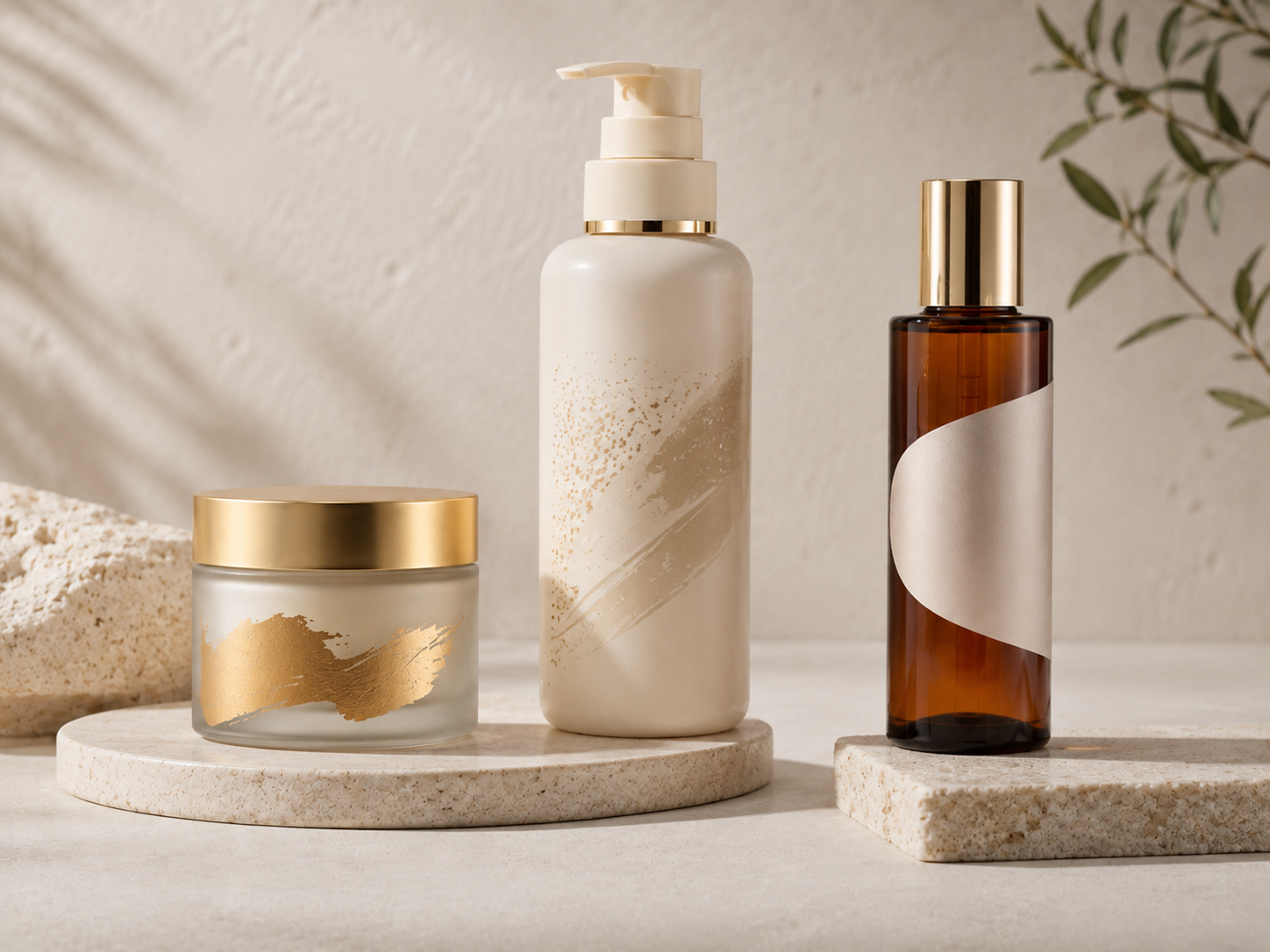
1. Start With the Packaging Material
Decoration does not sit on an abstract “bottle.” It sits on a particular surface.
Glass is a high-energy, non-porous substrate and is widely used with direct printing, foil decoration and labels. High-temperature ceramic decoration can fuse the decorative layer to glass, while lower-temperature organic or UV-cured inks use a different adhesion mechanism.
PET is also relatively decoration-friendly, but the correct ink, foil or adhesive system still needs to match the resin and surface finish.
PP and PE deserve more attention. They are low-surface-energy plastics, which generally makes wetting and adhesion more difficult. Some ink, foil and adhesive systems may need corona, flame or plasma treatment. Other systems are designed specifically for low-surface-energy plastics and may work without that extra treatment.
That is why “PP must always be treated” is too broad a rule. The correct answer depends on the exact material and decoration system, then needs to be confirmed on production-representative samples.
Metal and aluminum packaging can also accept several decoration methods, although coatings, anodizing and surface treatments can change adhesion behavior.
The material should therefore be locked before artwork is treated as production-ready.
2. When Screen Printing Makes Sense
Screen printing transfers ink through a mesh screen directly onto the packaging surface.
On cosmetic bottles and jars, its main strength is a clean direct-to-container appearance. There is no separate label edge, and solid brand colors can look crisp and intentional. It works especially well for logos, simple line art, product names and limited-color graphics.
Glass screen printing can use different ink systems. Ceramic decoration is fired at high temperature so the decorative material becomes strongly bonded to the glass surface. Organic or UV-cured inks operate at lower temperatures and offer different color and production options, but their final resistance depends on the full ink-and-substrate combination.
For curved containers, screen printing can be well suited to cylindrical and mildly tapered shapes because the package can rotate during printing. Shape consistency still matters. An oval or dimensionally inconsistent bottle can create uneven contact, registration problems or variation in ink deposit.
Screen printing becomes less attractive when the design requires frequent artwork changes, many colors or photographic detail. Each color may introduce another setup and registration step, so the economics and production complexity rise as the artwork becomes more demanding.
A B2B buyer should confirm:
- container material and surface finish,
- number of print colors,
- Pantone or approved color references,
- printable area and orientation,
- minimum line and text limits from the actual decorator,
- whether pretreatment or primer is required,
- and the required durability after filling and handling.
3. When Hot Stamping Is the Better Visual Tool
Hot stamping uses heat, pressure and a die to transfer a foil layer onto the package.
Its visual advantage is immediate: metallic gold, silver, colored foil, matte foil and holographic effects can create a premium accent that ordinary ink does not reproduce in the same way. It is often most effective when used selectively—a logo, border, cap detail or small brand element—rather than covering the entire package.
The process depends on stable contact between the die, foil and substrate. Flat and gently curved surfaces are easier to control than irregular, deeply curved or highly textured areas. Bottle ovality and surface variation can create incomplete transfer, mottling or weak edges because pressure is no longer uniform.
The foil also has to match the substrate and any coating underneath it. A foil that works well on one plastic or lacquered surface should not automatically be assumed to work on another.
Hot stamping therefore suits projects where the metallic effect is important enough to justify a dedicated die and a more controlled decoration window.
Before approval, confirm:
- foil type and finish,
- actual decorated area,
- die requirements,
- acceptable minimum line detail,
- package curvature and print position,
- adhesion on the real surface coating,
- and rub or handling resistance.
4. When Pressure-Sensitive Labels Offer More Flexibility
Pressure-sensitive labels are often the most flexible choice for graphics.
They can support full-color artwork, photography, gradients, small-batch design changes and multiple SKUs without requiring the package itself to be directly printed. Digital label printing can also reduce the setup burden for changing designs compared with processes that need a new screen or stamping die.
That flexibility does not mean labels are automatically simple.
The adhesive must match the container surface. PP and PE can be harder to bond because of their low surface energy, but specially designed low-surface-energy pressure-sensitive adhesives can improve adhesion. Surface treatment is sometimes used, but it should not be treated as a universal requirement.
Container shape matters as well. A label placed across a shoulder, tight radius or squeezable wall can experience constant stress. Edge lift, wrinkling and flagging may appear even when the same label performs well on a straight cylindrical bottle.
Label construction also affects the finished appearance. Film, paper, clear-on-clear, metallized and textured stocks produce very different results. The label adhesive and face material must also tolerate the expected filling, storage and use environment.
For projects with many SKUs or frequent artwork changes, labels can be highly practical. For a seamless “printed on the bottle” look, direct decoration may still be preferable.
5. Decoration Has to Survive the Formula and the Real Use Environment
A decoration that looks perfect on an empty sample can fail after filling.
Oils, alcohol, fragrances, acids, surfactants and other formula components can reach the outside of the package through filling spills, consumer handling or leakage. They may soften an ink, discolor a foil, weaken a label adhesive or stain a surface coating.
This is why decoration should be evaluated as part of the complete package rather than as a separate graphic exercise.
Venturove’s guide to cosmetic packaging compatibility testing explains the broader principle: the final formula should be tested with the actual packaging system intended for production. For decorated packaging, that evaluation should include the finished external surface as well.
Useful checks may include:
- adhesion after decoration,
- rubbing and abrasion,
- exposure to the actual formula,
- repeated handling,
- temperature or storage conditions relevant to the product,
- and visual change after transport simulation where appropriate.
No single test result should be assumed to apply to every substrate, ink, foil or adhesive.
6. Decoration Can Change Cost and Order Quantity
Decoration adds its own production economics.
Screen printing requires screen preparation and may require separate setup for each color. Hot stamping requires a die and foil setup. Flexographic labels can involve plates, while digitally printed labels may reduce some of those fixed setup requirements.
Other cost drivers include:
- number of colors,
- number of decorated positions,
- pretreatment or primer requirements,
- surface coatings,
- artwork complexity,
- container shape,
- registration tolerance,
- expected reject rate,
- and the quantity over which setup costs are spread.
This is why a bottle that is easy to source as a stock item may have a different commercial requirement once decoration is added.
There is no reliable universal MOQ for “screen printing” or “hot stamping.” Public supplier guidance varies widely because equipment, substrate, artwork and production model vary. Buyers should ask for the minimum and setup requirements for the exact package and artwork being quoted, rather than applying a number taken from another supplier or project.
Venturove’s Custom Packaging page distinguishes smaller startup orders from more customized brand-packaging projects and lists silk screen, hot stamping and labeling among available logo-decoration options. The exact requirement for a specific decoration should still be confirmed for the selected package.
7. Artwork Should Be Prepared for the Process, Not Just the Screen
A design file that looks correct on a monitor is not automatically production-ready.
For screen printing and hot stamping, vector artwork is normally preferred because the decorator needs clean separations and precise edges. Pantone references are more useful than relying on an RGB screen preview when a specific spot color is required.
The production file should clearly define:
- final logo or artwork,
- color references,
- decoration dimensions,
- exact position on the container,
- orientation,
- safe distance from threads, shoulders and difficult curves,
- whether the surface is clear, amber, frosted, coated, matte or glossy,
- and which parts of the artwork must align with other package components.
Minimum line width, reversed text and fine-detail limits should come from the actual decorator. These limits are equipment- and process-specific, so a number copied from one supplier should not become a universal specification.
A physical approved sample is more useful than arguing over a screen rendering. Transparent glass, amber glass, frosting and colored plastics can all change the way the same ink or foil appears.
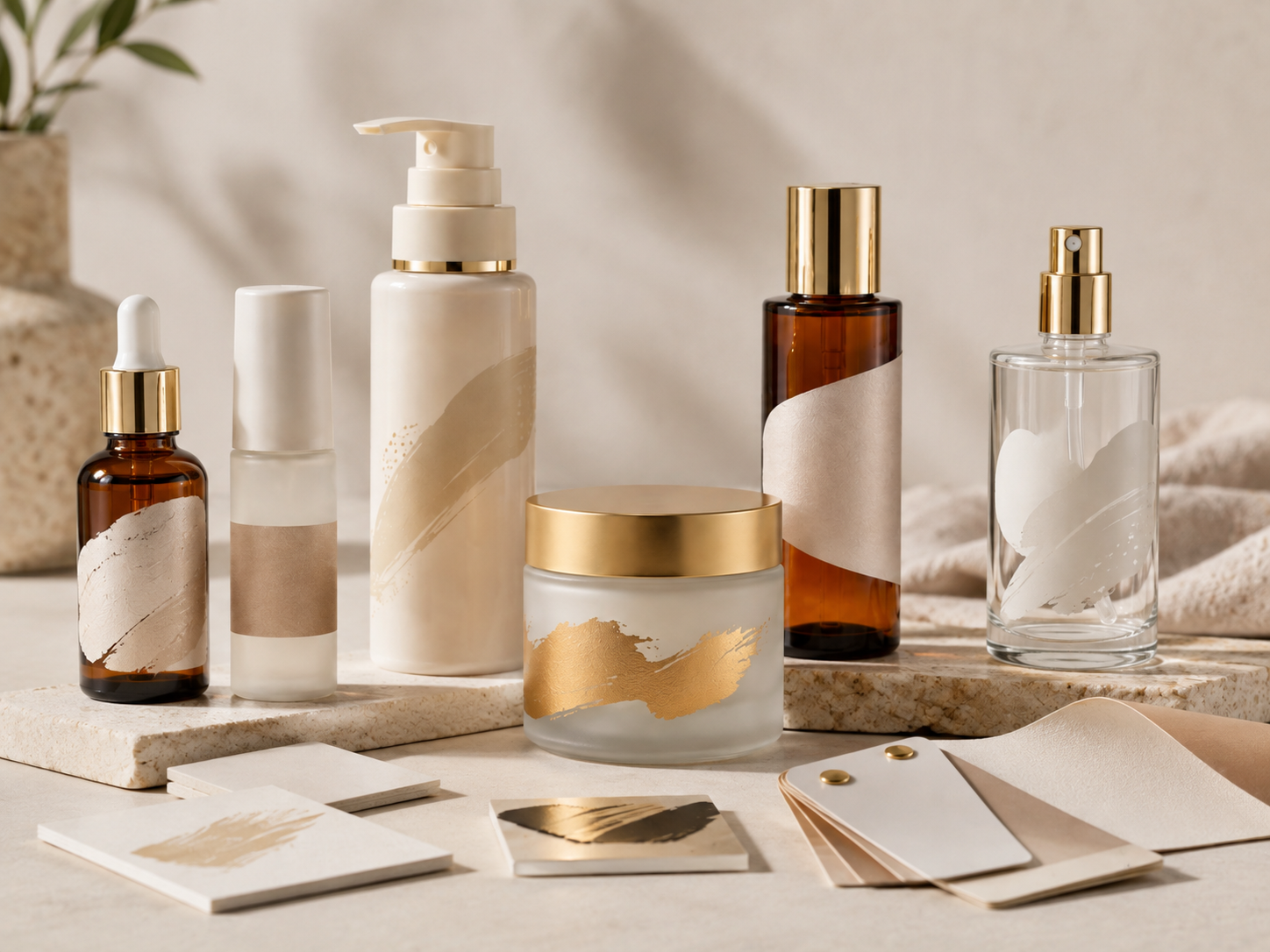
8. Compliance and Recycling Can Affect the Decoration Choice
Decoration also interacts with information requirements and recycling design.
For cosmetic products sold in the European Union, Article 19 of Regulation (EC) No 1223/2009 requires specified information to appear in indelible, easily legible and visible lettering. The regulation does not set the commonly repeated 1.2 mm or 0.9 mm character-height rule in Article 19 itself.
For buyers, the practical implication is straightforward: decoration should not make required information difficult to read or easy to lose during normal use. Market-specific regulatory requirements should be checked before artwork is finalized.
Recycling adds another design layer. Direct printing, label material, adhesive choice, metallized constructions and PVC components can affect how a PET package behaves in a recycling stream. Recycling guidance differs by market and packaging system, so recyclability claims should be based on the applicable design-for-recycling guidance rather than on appearance alone.
If recyclability is a project priority, include it in the decoration brief from the beginning—not after the artwork and label construction are already locked.
9. A Practical Selection Framework
When comparing the three main options, work through the project in this order.
Choose Screen Printing When
- a direct-to-container look is important,
- the artwork uses a limited number of solid colors,
- the container shape is suitable,
- and the project can support the required setup.
Choose Hot Stamping When
- metallic or foil impact is a priority,
- the decorated area is controlled,
- the package offers a stable stamping surface,
- and the project can support a dedicated die.
Choose Pressure-Sensitive Labels When
- full-color or photographic artwork is required,
- multiple SKUs change frequently,
- variable information is useful,
- or artwork flexibility is more important than a seamless direct-print appearance.
These are not absolute rules. Hybrid decoration is also possible—for example, a bottle may combine a coating with screen printing, or a label may use a metallic effect of its own. Every additional process should be treated as another production step that needs to be specified and sampled.
10. What to Confirm Before Bulk Production
Before approving decorated cosmetic packaging, confirm the complete specification rather than only the artwork.
A useful checklist includes:
- container material and surface finish,
- decoration method,
- final artwork file,
- Pantone or approved color reference,
- foil or label construction where applicable,
- exact decoration position and orientation,
- surface pretreatment requirements,
- sample approval criteria,
- formula-contact and handling risks,
- order quantity and decoration-specific setup requirements,
- destination-market information requirements,
- and the final approved sample used as the production reference.
Venturove’s current Custom Packaging information states that samples are available for product testing and packaging evaluation before bulk orders. Sample terms and the exact decoration configuration should be confirmed for each project.
A well-defined decoration brief reduces ambiguity before quotation, sampling and production. More importantly, it makes it possible to evaluate appearance, durability and manufacturability on the same package instead of treating them as separate decisions.
Planning Custom Cosmetic Packaging?
Share your packaging material, bottle or jar type, artwork, preferred decoration, finish and target quantity with Venturove. We can help you review available packaging options and clarify the information needed before sampling or quotation.
FAQ
What is cosmetic packaging decoration?
Cosmetic packaging decoration is the set of processes used to apply brand graphics, color, foil, labels or surface effects to bottles, jars and other packaging. Common options include screen printing, hot stamping, pressure-sensitive labels, coatings and frosting.
Is screen printing more durable than hot stamping?
Not in every case. High-temperature ceramic decoration on glass can be highly durable because the decoration is fused to the glass surface. Hot-stamping durability depends on the foil, substrate, coating, pressure and temperature. The final package should be tested rather than ranked by one universal rule.
Are labels better for smaller cosmetic packaging runs?
They can be. Digitally printed labels can reduce some of the fixed setup associated with screens or stamping dies and can make artwork changes easier. Actual minimum quantities still depend on label construction, printing method, supplier and the number of versions required.
Can screen printing be used on plastic cosmetic bottles?
Yes. Screen printing is used on plastics as well as glass, but the ink system and any required surface preparation must suit the specific resin and finish. PP and PE can be more difficult because of their lower surface energy.
Do PP and PE bottles always need surface treatment before labeling?
No. PP and PE are harder to bond than many higher-surface-energy materials, but suitable low-surface-energy pressure-sensitive adhesives may work without corona, flame or plasma treatment. The adhesive, bottle surface and final application should be confirmed with real samples.
Should decoration be tested with the actual cosmetic formula?
Yes. Filling spills, oils, alcohol, fragrances and other formula components can affect inks, foil, coatings and label adhesives. Decoration should be evaluated on the finished package under realistic filling, storage and handling conditions.
What should I provide when requesting a decoration quotation?
Provide the container material, package type, surface finish, artwork, color references, decoration area, preferred method, number of SKUs, target quantity and destination market. If possible, include a physical reference or approved sample for appearance and positioning.