
Cosmetic Roll-On Bottles: A Buyer’s Guide to Sizes, Materials & Ball Applicators

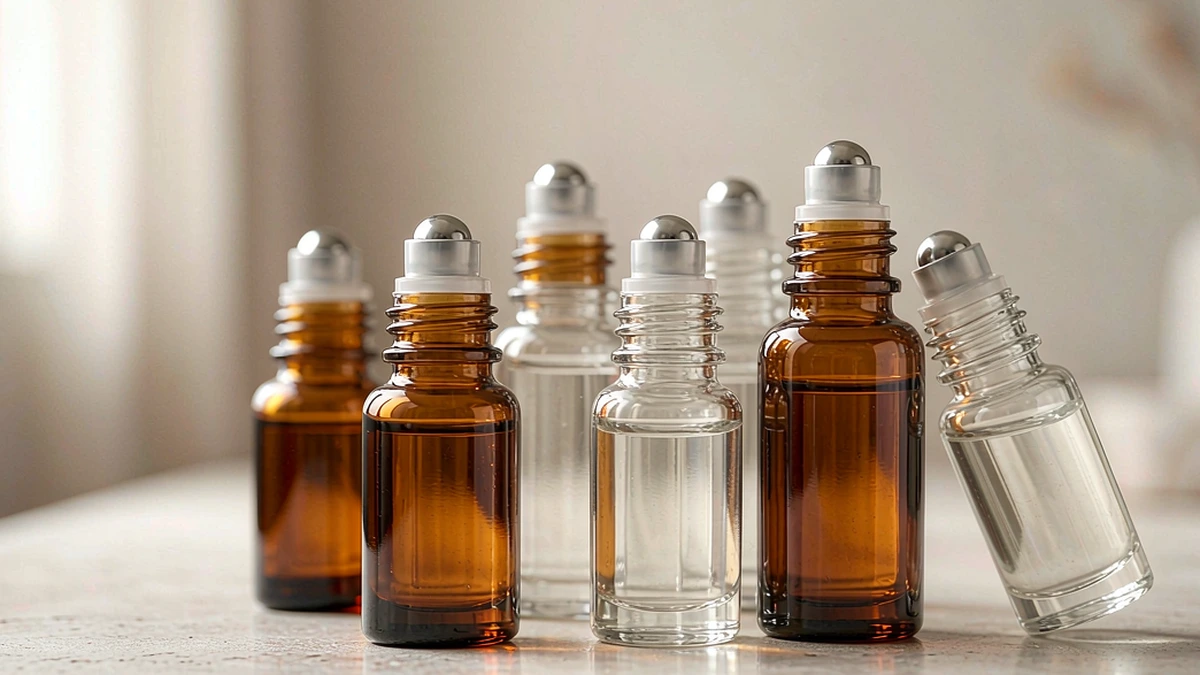
Roll-on bottles are one of the oldest and most underrated formats in cosmetics packaging. The concept is simple: a small bottle with a free-rolling ball at the neck spreads product exactly where the user wants it, without fingers touching the formula. That single mechanism makes them the right choice for a surprisingly wide range of products, from essential oils and perfume oils to deodorants, eye serums, and cooling gels. This guide walks through what a roll-on actually is, when it beats a dropper or pump, how sizes and materials differ, and what the ball applicator itself is doing for your product.
Key Takeaways
If you only take a few points away, make them these:
- A roll-on trades precise, hands-free application for dose control. The ball meters a thin film directly onto skin or pulse points, which is why it suits eye serums, underarm deodorants, and essential-oil blends.
- Capacities cluster between 5 ml and 50 ml. 10 ml is the retail standard; 3–5 ml covers samples, while 50–100 ml serves daily deodorants and body oils.
- Glass protects light-sensitive formulas; plastic cuts weight and cost. Amber or cobalt glass shields essential oils from UV, while PET, PP, or HDPE keeps large deodorant runs shatterproof and affordable.
- The ball, not the bottle, drives the feel. Stainless steel and glass balls glide cool and resist essential-oil reaction; ceramic suits sensitive skin; PP plastic is the budget workhorse.
- Sealing is a system, not a cap. A seated ball with a silicone gasket plus a neck O-ring is what keeps a roll-on leak-free in a gym bag or parcel.
- Match the bottle to the formula before you spec it. Alcohol- and essential-oil-heavy blends need an inert ball and a closure verified by compatibility testing, not assumed safe.
Anatomy of a Roll-On Bottle
Unlike a dropper or pump bottle, a roll-on is built as one fixed assembly. The bottle body holds the formula; a collar is crimped or pressed onto a specific neck; and a ball sits inside that collar, held by a small shoulder so it rolls but cannot fall out. A closure, usually snap-on or screw-on, caps the whole thing and, on many formats, doubles as the tamper-evident seal.
That fixed assembly matters for sourcing: you are not pairing a separate closure with a separate bottle the way you would with a pump. The neck, collar, and ball are specified together, so neck finish and cap matching still applies, but the ball assembly is part of the component set you approve up front.
When a Roll-On Beats a Dropper or Pump
A dropper bottle is built for measured drops and mixing into palms; a pump is built for dispensing a controlled volume of lotion or serum. A roll-on does something neither does well: it places product on an exact spot with one hand and no mess. That is why it owns certain categories.
- Essential oils and perfume oils: a thin film on wrists or pulse points, no spill. If you are deciding between a roll-on and a dropper bottle for essential oils, the roll-on wins for carry-on application and avoids oxidizing the blend on your fingers.
- Deodorants and antiperspirants: direct underarm application, no hands covered in product.
- Eye serums: a small, cooling ball lets users target the orbital bone precisely. This pairs naturally with the serum vs essence vs ampoule conversation for concentrated actives.
- Cooling gels, wellness, and massage oils: larger balls cover more skin with a light massage feel.
If your product needs to be poured, mixed, or dosed into a palm, a roll-on is the wrong tool. Reach for a dropper or pump instead.
Sizes and Capacities
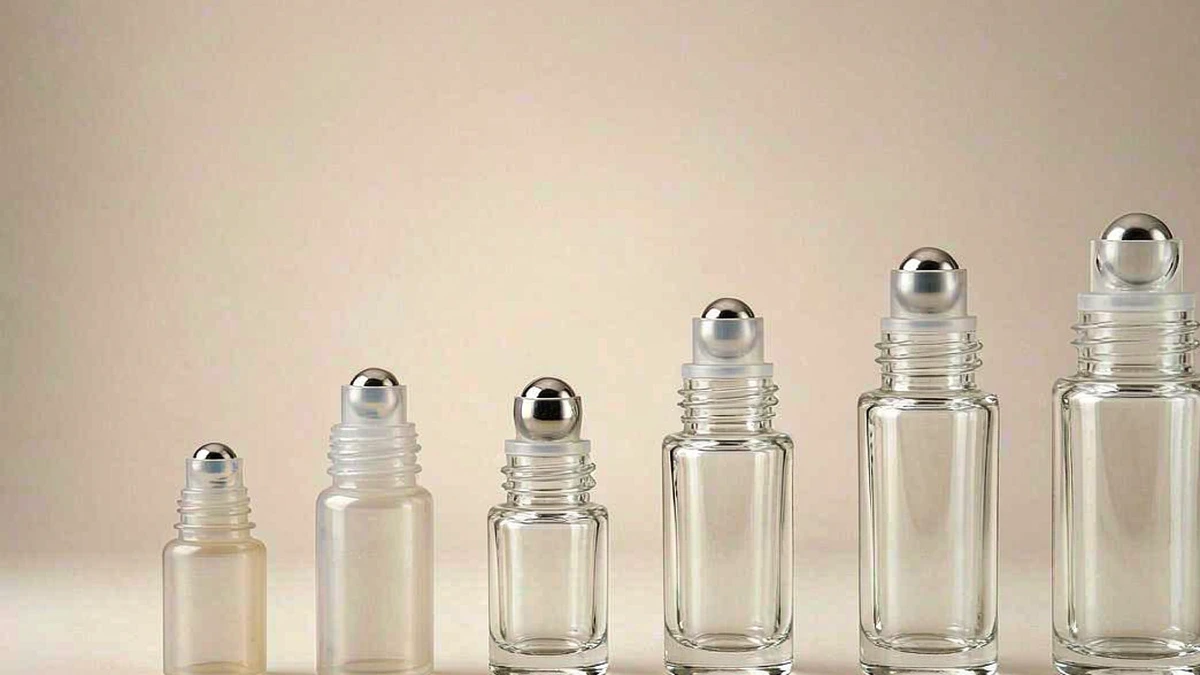
Roll-on volumes track how much product goes on per use and how often the customer repurchases. The practical range:
| Capacity | Typical use | Common material |
|---|---|---|
| 3–5 ml | Sample kits, discovery sets, perfume oils | Glass (amber or clear), PET |
| 8–15 ml | Essential oils, eye serums, retail perfume oils | Glass, PET |
| 20–30 ml | Facial oils, natural deodorants, spot treatments | PET, HDPE, glass |
| 50–100 ml | Daily deodorant, body oils, salon and massage | HDPE, PET, PP |
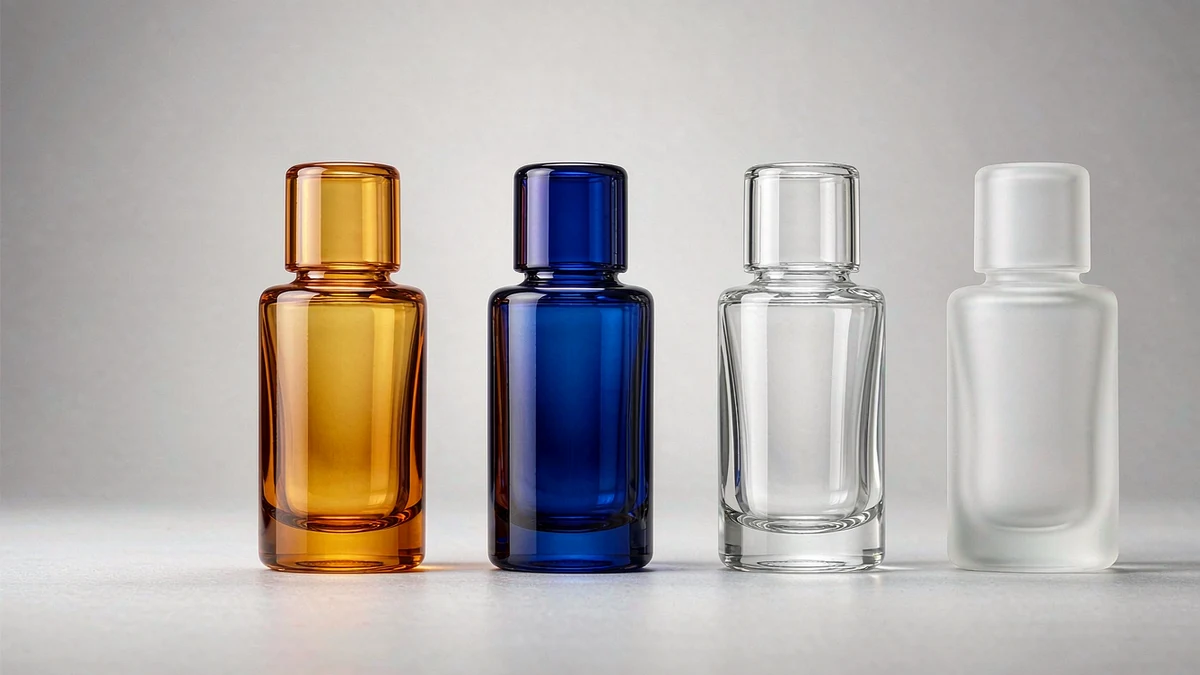
For light-sensitive oils, a 10 ml amber or cobalt glass roll-on is the default protective format. The trade-off between bottle color and UV protection is the same lever you would pull on any glass bottle.
Glass vs Plastic vs Stainless Steel
Three materials dominate the category, and each optimises for a different constraint.
| Factor | Glass | Plastic (PET, PP, HDPE) | Stainless steel |
|---|---|---|---|
| UV and light protection | Excellent if amber or cobalt; clear shows product | Varies; tinted PET helps | Total, opaque |
| Weight and freight | Heavier, breakable | Very light, shatterproof | Light, durable |
| Formula feel | Premium, inert | Practical, low cost | Premium, cool touch |
| Best for | Essential oils, perfume, eye serum | Deodorant, body oil, samples | Luxury oils, active serums |
The broader glass vs plastic decision still frames the trade-offs; roll-ons just add stainless steel as a third, fully opaque option. For amber specifically, amber vs clear glass is the usual starting point.
Choosing the Ball Applicator
The ball is the part customers feel, and it is also the part most likely to react with the formula. Four materials cover almost every line:
- Stainless steel, often 316L: the industry default. Cool to the touch, corrosion-resistant, and smooth. A natural fit for essential oils, perfumes, and facial serums where a cooling sensation adds value.
- Glass: completely non-reactive with essential oils and fragrances, and free of metal content for brands that want to avoid it. Smooth, soft glide.
- Ceramic: a luxe, naturally cool option for sensitive-skin and eye-care lines. Non-porous, so it will not absorb scent or color.
- Plastic, PP: the cost-effective choice for high-volume, disposable, or promotional sizes. Fine for mild formulas, but confirm compatibility with high-alcohol or high-essential-oil blends before committing.
Ball size is matched to the job: a small precision ball for an eye roller, a larger diameter for body and deodorant coverage. Spec the ball material and size as part of the component approval, not as an afterthought.
Closures, Seals, and Neck Finish
Roll-on bottles are built around a fixed neck, commonly referenced at 13 mm, 16 mm, or 20 mm, onto which the ball collar is set. Because the collar is part of the assembly, you approve the neck size when you approve the bottle, and you still apply the same neck finish discipline you would for any closure system.
Leak resistance comes from the seal, not the outer cap. A seated ball with a silicone gasket, backed by a neck O-ring, is what survives being dropped, shaken, or shipped in summer heat. Choose snap-on for speed and screw-on where a tighter reseal matters, and add a tamper-evident closure when retail or regulatory context calls for it. Refillable variants exist for brands building a reuse loop.
Matching the Bottle to Your Formula
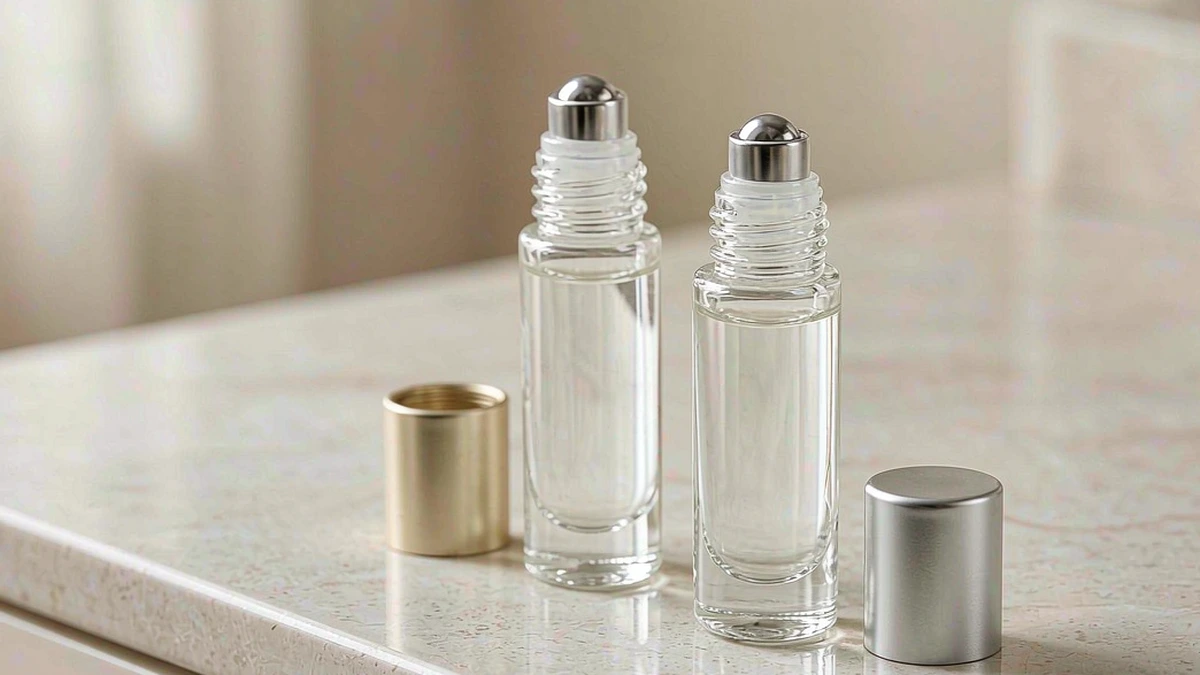
Roll-ons sit against skin and against concentrated actives, so compatibility is not optional. Alcohol-heavy toners, essential-oil terpenes, and acidic actives can all stress the wrong ball or collar over time. The safe path is to treat the bottle, ball, collar, and closure as one system and verify it:
- Pick an inert ball, stainless steel or glass, for essential-oil and high-alcohol formulas.
- Keep clear glass for products where seeing shade or fill level matters; go amber or cobalt when UV protection is the priority.
- Run the assembly through compatibility testing on your actual formula before a production run, not on a water stand-in.
Roll-On Sourcing Checklist
Before you order, walk through this with any supplier:
- Confirm the capacity and neck size, 13 mm, 16 mm, or 20 mm, for your fill and filling line.
- Choose bottle material and color for UV need and brand position: amber glass, clear glass, PET, HDPE, or steel.
- Specify the ball material and diameter, steel, glass, ceramic, or PP, for the application and formula.
- Confirm the seal design, ball gasket plus neck O-ring, and closure type, snap-on, screw-on, or tamper-evident.
- Agree decoration, screen print, hot stamp, or label, and verify it survives handling.
- Request MOQ, lead time, and sample pricing, and run a compatibility check on the real formula.
Treat the bottle, ball, collar, and decoration as one approved system. A pretty bottle with the wrong ball still leaks or reacts.
Planning a Roll-On Bottle for Your Line?
Venturove supplies cosmetic packaging across glass, plastic, and metal formats and can help you match the right roll-on bottle, ball, and closure to your formula and fill line. If you need capacities, neck sizes, or compatibility guidance, contact our team for a tailored quote.
FAQ
What size roll-on bottle should I use?
For most retail essential oils, perfume oils, and eye serums, 10 ml is the standard. Use 3–5 ml for samples and discovery sets, 20–30 ml for facial and natural deodorants, and 50–100 ml for daily deodorant and body oils.
Which roll-on ball material is best?
Stainless steel, often 316L, is the all-round default: smooth, cool, and corrosion-resistant. Glass is fully non-reactive with essential oils, ceramic suits sensitive skin, and PP plastic is the budget option for mild, high-volume formulas. Match the ball to the formula, not just the price.
Are glass or plastic roll-on bottles better?
Neither wins outright. Glass, especially amber or cobalt, protects light-sensitive oils and reads premium, but it is heavier and breakable. Plastic, PET, PP, or HDPE, is light, shatterproof, and cheap for large deodorant runs, at the cost of some premium feel and partial UV protection.
How do roll-on bottles stay leak-free?
Leak resistance comes from a seated ball with a silicone gasket plus a neck O-ring, not from the outer cap alone. Pair that seal with a snap-on or screw-on closure, and choose a tamper-evident cap where retail or regulatory needs require it.
Can I use a roll-on for essential oils safely?
Yes, provided you spec an inert ball, stainless steel or glass, and an amber or cobalt glass body for UV protection, then verify the full assembly with compatibility testing on your actual oil blend before production.