
Dropper Bottle Orifice Reducers & Inserts: Controlling Drop Size


What Is an Orifice Reducer (and Why Does It Matter)?
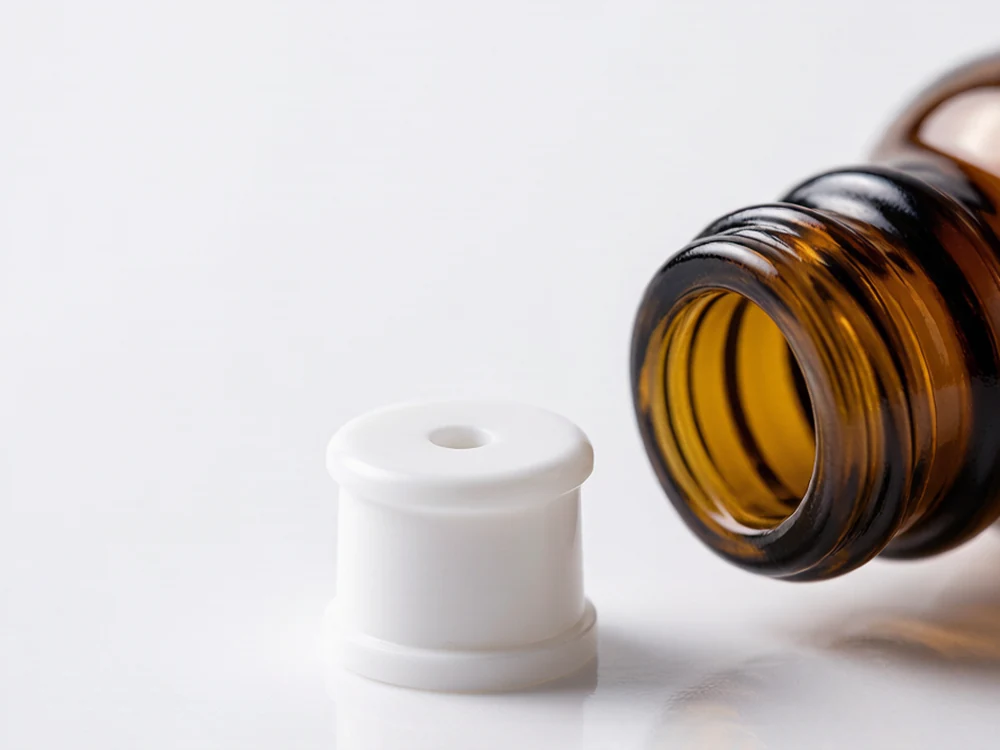
An orifice reducer — also called a dropper insert, euro dropper, or reducer cap — is a small plastic or rubber component that sits inside the mouth of a dropper bottle. Its job is simple: it shrinks the opening so the liquid comes out one drop at a time instead of pouring freely.
For essential oils, tinctures, serums and other high-value liquids, that single function drives the day-to-day experience customers actually feel. A bottle without a reducer pours too fast, wastes product, and makes precise dosing nearly impossible. With the right insert, the user gets a controlled, repeatable drop — exactly what a professional formula deserves.
The reducer is also a quality signal for your brand. A well-chosen insert makes the packaging feel finished, cuts down spillage complaints, and limits air exposure that can age your formula between uses.
How Orifice Reducers Control Drop Size
The reducer narrows the flow path to a calibrated hole. When the bottle is tilted, liquid passes through that hole, and a separate air vent lets air back into the bottle to equalize pressure. Drop size and flow speed depend on three things:
- Orifice diameter — smaller holes produce finer, slower drops; larger holes move thicker liquids.
- Air vent placement — the position of the air hole influences how easily liquid flows.
- Formula viscosity — thicker oils need larger openings; thin liquids need smaller ones.
This is why one-size-fits-all reducers rarely work across a full product line. A thin botanical extract and a thick carrier oil behave completely differently in the same bottle, and the reducer has to be matched to the formula, not just to the bottle.
Choosing the Right Orifice Size for Your Formula
Most suppliers offer reducers in a range of standard orifice diameters. The table below shows a common industry scale — confirm the exact dimensions with your supplier and test with your actual formula.
| Orifice diameter | Typical use |
|---|---|
| 0.55 mm | Thin, low-viscosity liquids (alcohol-based extracts, light essential oil blends) |
| 0.85 mm | Medium-viscosity formulas — the default for many essential oil and serum lines |
| 1.00 mm | Thicker oils and carrier blends |
| 1.15 mm | Very thick liquids (viscous carrier oils, heavier formulations) |
A few practical rules:
- When in doubt, start with a medium (0.85 mm) reducer and test with your formula.
- If customers complain about strings, over-pouring or multiple drops at once, move to a smaller orifice.
- If the formula barely flows, step up one size instead of forcing the product through the bottle.
- The same bottle can be stocked with different reducers per SKU — a practical way to serve different formulas without changing the glass.
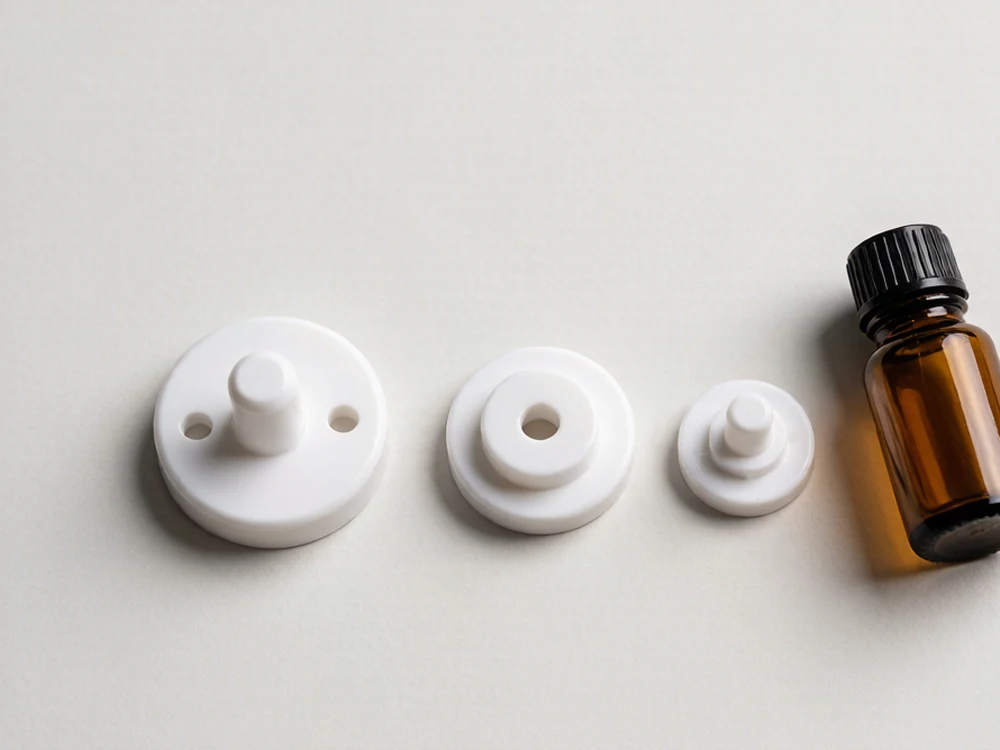
Center Stem vs Side Stem: Two Designs, One Goal
Orifice reducers come in two common geometries:
- Center stem (side drip): the central stem is the air channel, and the oil flows through the small opening between the two rings.
- Side stem (center drip): the oil flows through the center hole, and air enters through the side stem.
The design affects how the air vent should be oriented for best flow. As a general guide, thicker liquids flow better when the air channel vents freely; thinner liquids are easier to control when airflow is restricted. Some reducers can be rotated by the end user to fine-tune behavior — worth mentioning in your user instructions.
Neither design is universally better. Choice depends on your bottle neck, cap system and the viscosity range of your line.
Materials, Compatibility and Safety
Most reducers are molded in polypropylene (PP), which is rigid, low-cost, and resistant to most cosmetic and aromatherapy formulations. Some suppliers offer rubber or silicone versions that seal more softly but may interact with certain formulas.
Before committing to a reducer:
- Run compatibility tests with your actual formula — soak the insert in the liquid for several weeks and check for swelling, discoloration, or leaching.
- Check fragrance and solvent content. High-alcohol or high-fragrance formulas are the most demanding.
- Verify material certification (cosmetic-grade or food-grade) from your supplier if your product is skin-contact.
Compatibility testing is not optional for a brand that ships to retail. A swollen or degraded insert is a quality failure customers will notice immediately.
Neck Finish Compatibility and Installation
An orifice reducer only works if it fits the bottle’s neck finish. Common configurations:
- Euro dropper systems — the reducer is pre-assembled inside the cap and snaps into place as the cap is screwed on. Fast, consistent, and ideal for production lines.
- Separate inserts — the reducer is pushed into the neck manually (or with a simple tool) before capping. Common for sample vials and short runs.
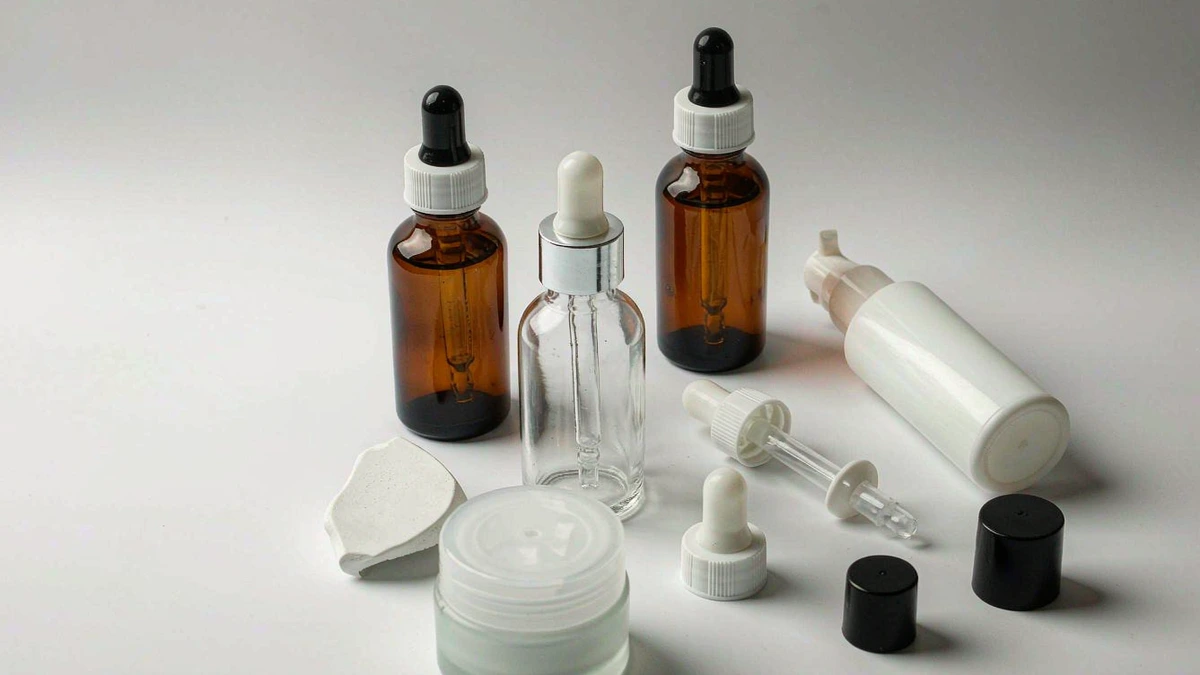
Match the reducer to the exact neck finish of your bottle (for example 18-415 or 20-410). A reducer built for a different finish may not seat correctly, which can cause leaks or a cap that does not close properly. When you order bottles and reducers from the same supplier, they are typically specified to work together — another reason to buy both from one source. If you are still comparing container options, our ready-to-ship dropper bottle options give you a baseline to spec against.
Orifice Reducer Procurement Checklist
When you brief a packaging supplier, include these points:
- Formula viscosity range for each SKU — this drives orifice diameter.
- Bottle neck finish and cap system — reducer must match both.
- Material requirement (PP standard; rubber/silicone only if tested compatible).
- Drop-size target — how many drops per ml you want (state it as a target, then validate by testing).
- Compatibility test protocol — agreed soak conditions and pass criteria.
- Sample approval — signed-off samples from the actual production batch before mass fill.
Getting these six points right at the sourcing stage prevents the most common complaints: over-pouring, inconsistent drops, and inserts that loosen during shipping.
Need the Right Dropper Bottle or Reducer for Your Formula?
Tell us your formula viscosity, target drop size, and bottle capacity — we’ll help you match the bottle, orifice reducer and cap system for your launch.
FAQ
What is the difference between an orifice reducer and a dropper insert?
They are the same component under different names. Both are the small insert in the bottle mouth that controls drop-by-drop dispensing. Some suppliers also call it a euro dropper or reducer cap.
Does a smaller orifice always mean smaller drops?
Generally yes — a smaller hole produces a finer, slower stream. But the final drop size also depends on formula viscosity, so always test with your actual product rather than relying on the hole size alone.
Can I use the same reducer for all my SKUs?
Only if your formulas have similar viscosity. Thin extracts and thick carrier oils need different orifice sizes. Using one reducer across a wide viscosity range usually means either over-pouring on thin liquids or slow, clogged flow on thick ones.
Are orifice reducers reusable?
The inserts are inexpensive and usually treated as single-use with the bottle. Reusing them across refills is possible if they remain clean and undamaged, but for hygiene and quality consistency most brands use fresh reducers with each fill.
How do I test whether my reducer fits?
Insert it into the neck, screw on the cap, and check for a snug seat with no rocking. Then fill the bottle with your formula, invert it, and confirm the drop rate and that no liquid seeps around the insert.