
Cosmetic Bottle Color Options: Amber, Cobalt, Clear, Frosted — UV Tradeoffs

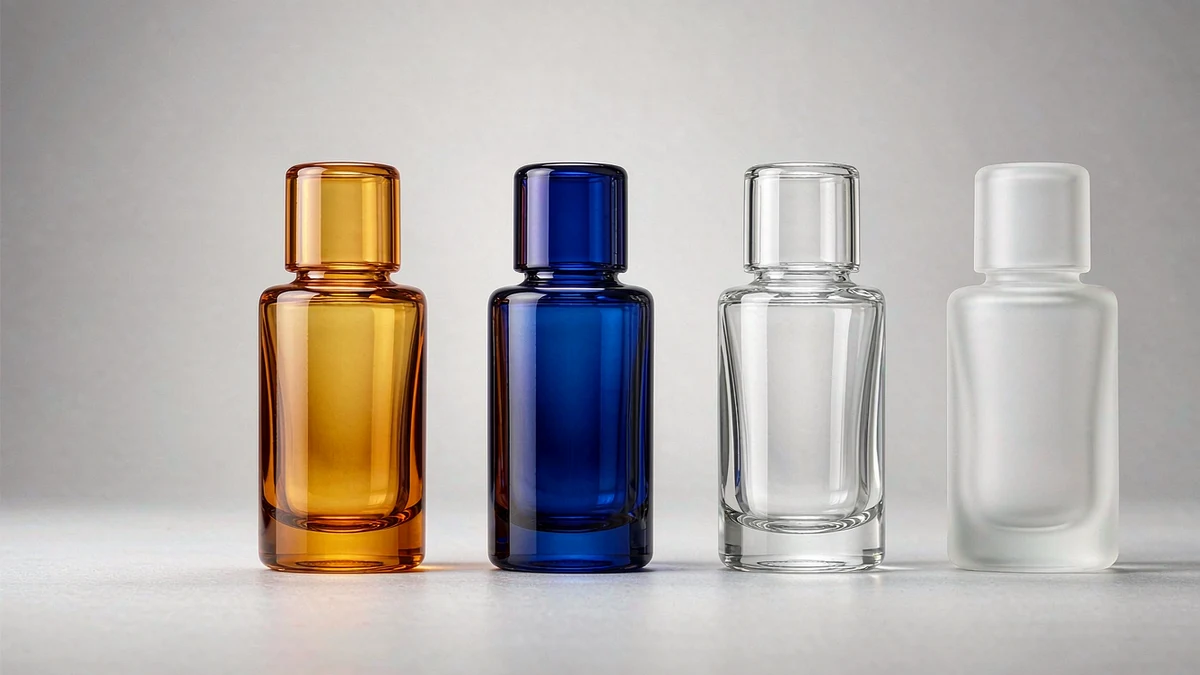
Picking a bottle color feels like a branding decision. For a cosmetic or wellness formula, it is also a stability decision. The tint in the glass changes how much ultraviolet light reaches your actives — and UV is one of the fastest ways to break down vitamin C, retinoids, peptides, and essential-oil constituents. This guide compares the four colors brands ask about most — amber, cobalt, clear, and frosted — on the only axis that matters for shelf life: how much light they actually stop.
Key Takeaways
Choosing bottle color is a photoprotection decision, not just a design one. The short answers buyers actually need:
- Amber blocks the most UV — typically 90–95% of the 290–400 nm band — which is why it is the pharmaceutical default for light-sensitive formulas.
- Cobalt blue blocks roughly 85–90% of UV and reads as premium, so it fits brands that want protection and a distinctive look.
- Clear and frosted glass barely block UV — frosting only scatters light, it does not shield actives; protect the formula another way or use a tinted base.
- Match the color to your weakest active — retinol, vitamin C, and essential oils push you toward amber; stable or UV-filtered formulas can use clear for visibility.
- Validate before you commit — exact protection varies with glass batch, wall thickness, and your real formula, so confirm with stability testing.
Color Is a Stability Decision First
Light does its damage quietly. Ultraviolet radiation (roughly 290–400 nm) drives photoxidation in botanical extracts, bleaches pigments, and accelerates the breakdown of sensitive actives. A formula that tested stable in a clear vial can drift in color, scent, and potency once it sits on a lit shelf or in a window display. The pigment baked into colored glass acts as a wavelength filter: it absorbs specific bands of light before they reach the product. That single property — not the label — is what separates a protective bottle from a decorative one.
For a deeper look at the material baseline, our guide on glass vs plastic cosmetic packaging covers where glass earns its place in a formula-protective stack.
Amber Glass — The Photoprotection Benchmark
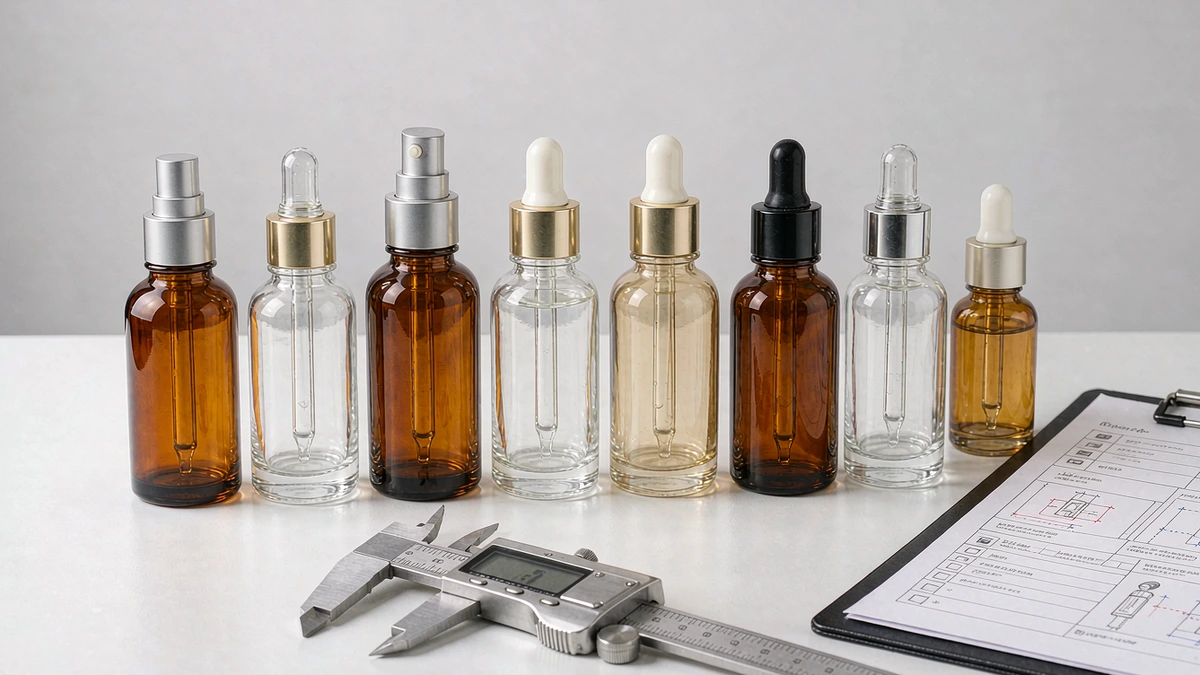
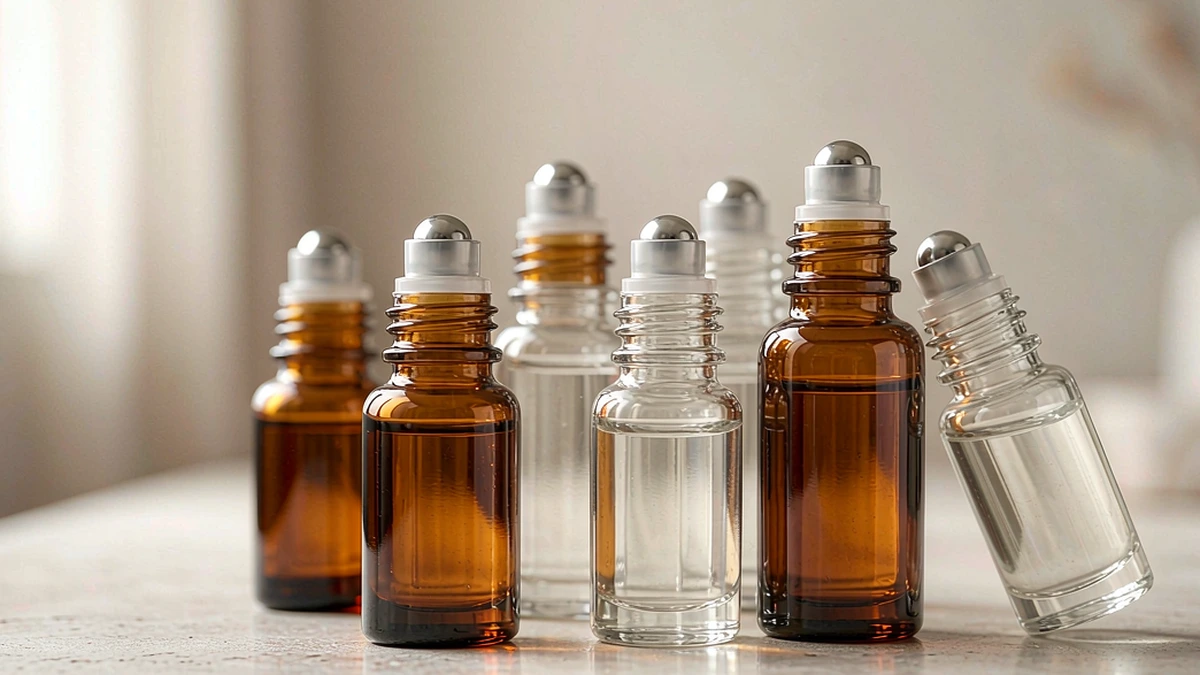
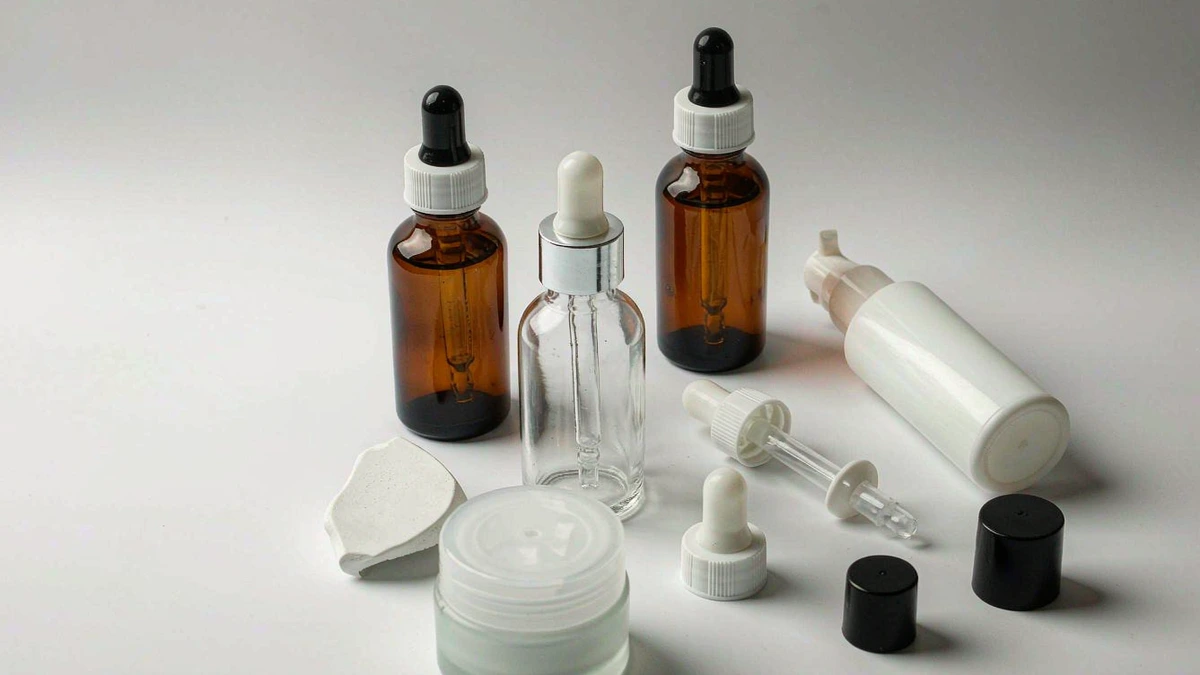
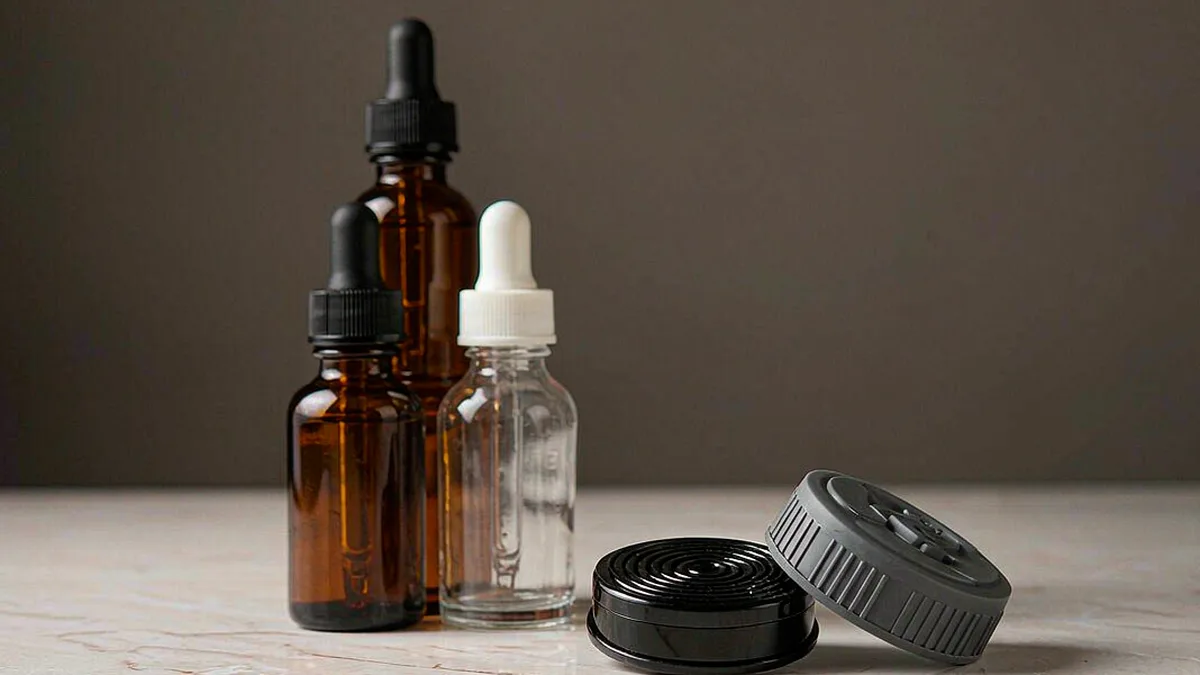
Amber is the standard against which everything else is measured. In transmittance terms it typically lets through less than 5% of light at ~300 nm (UVB) and under 10% at ~400 nm (UVA/violet) — a >90–95% block across the UV band. That performance is why pharmacopeias and pharmaceutical packers reach for amber for light-sensitive medications, and why essential-oil and herbal brands have used it for over a century.
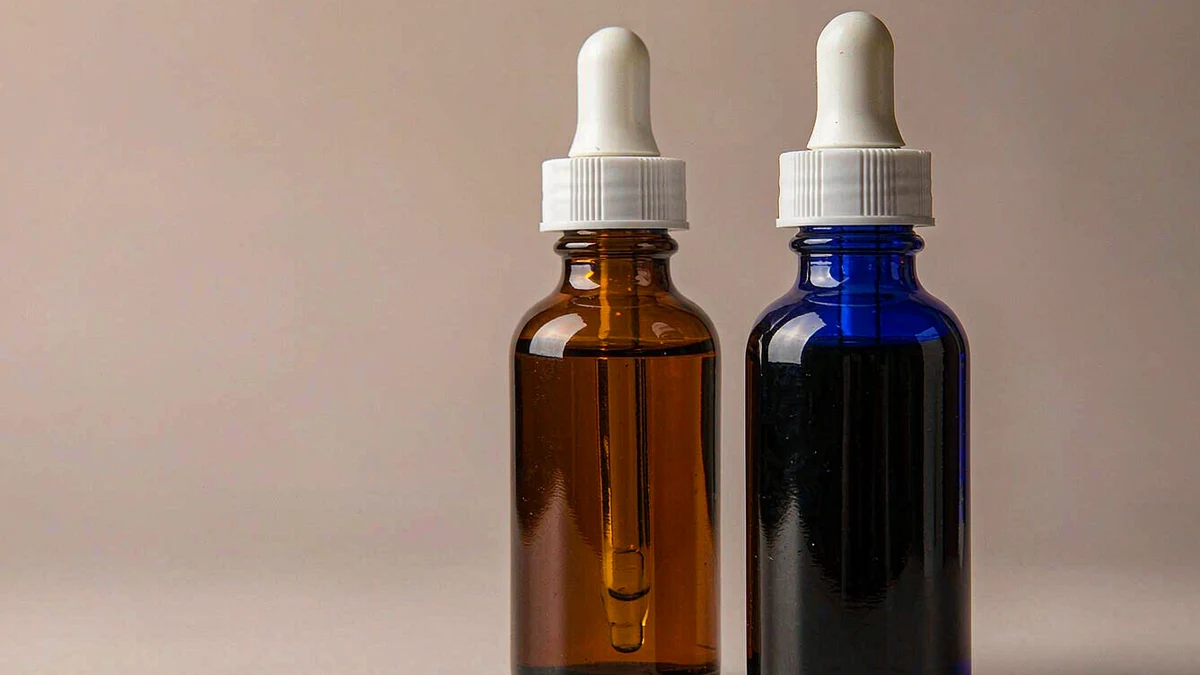
For a cosmetic line, amber is the safe default when the formula carries a fragile active: retinol, vitamin C (L-ascorbic acid), ferulic acid, or unfractionated botanical oils. The trade-off is visibility — amber obscures the product almost completely, so it works best when the formula’s integrity matters more than showing it off.
Our comparison of amber vs clear glass bottles walks through when each is the right call.
Cobalt Blue — Protection With a Premium Persona
Cobalt blue sits close to amber on protection but plays in a different brand register. It transmits under 10% at 300 nm and around 15% at 400 nm — roughly 85–90% UV blocked. It absorbs red-orange and UV while leaving enough visible light through to feel less “medicinal” than amber.
Brands choose cobalt when protection and image carry equal weight: high-end essential oils, aromatherapy blends, homeopathic essences, and boutique fragrances. The deep blue communicates calm and exclusivity, and it differentiates a premium product from the amber-default crowd. It usually costs a bit more than amber because the cobalt oxide batch and narrower availability add up, but for a brand built on shelf presence the premium is often worth it.
Clear and Frosted — Visibility, Not Protection
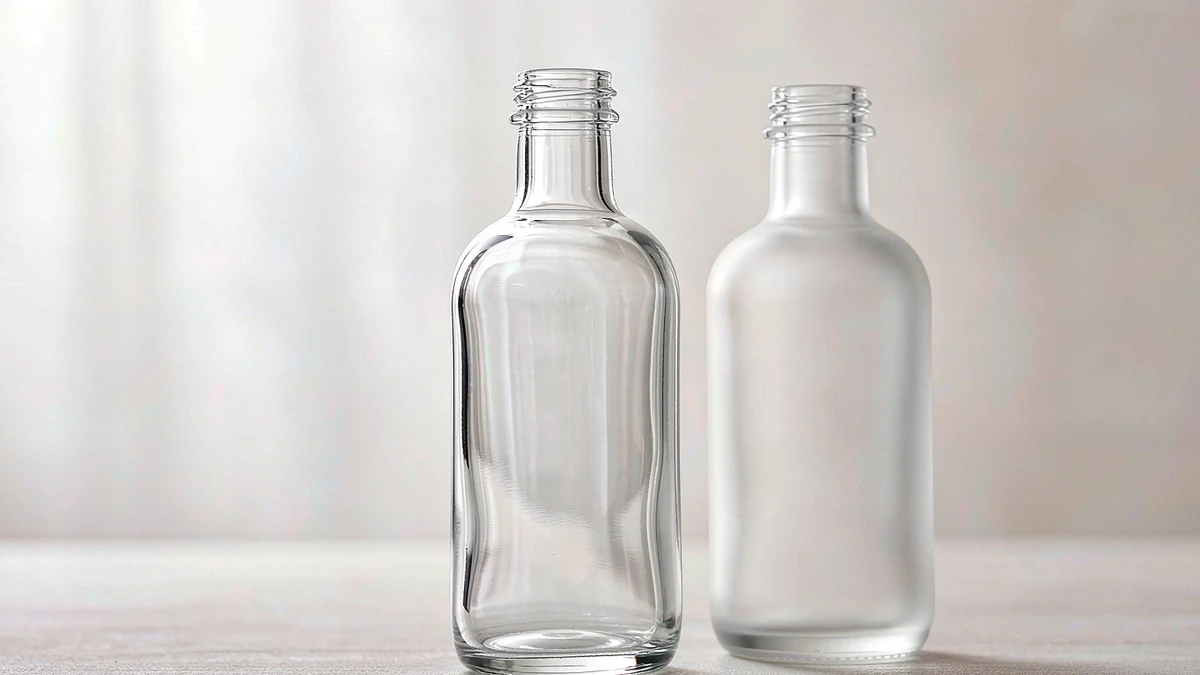
Clear (flint) glass transmits roughly 75% of light at 300 nm and about 90% at 400 nm. In plain terms: it blocks almost no UV. Clear is the right choice when the formula is inherently light-stable — or when it carries its own UV filters and an opaque secondary pack — and when showing the product’s color and texture is part of the sell.
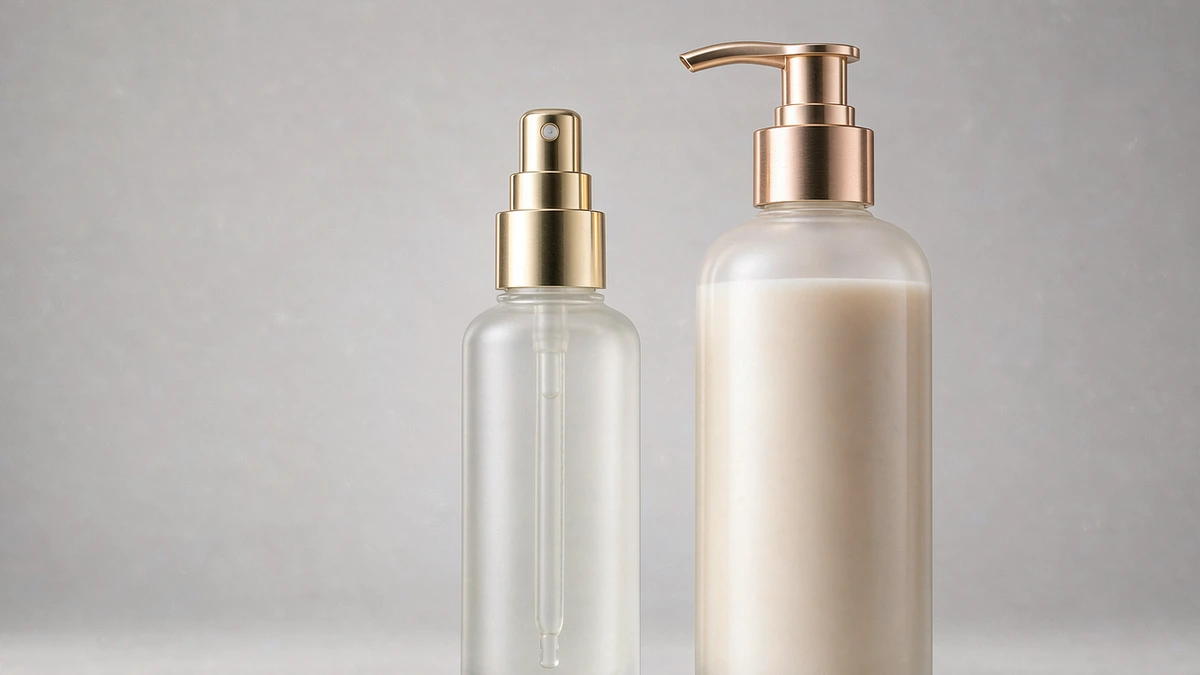
Frosted glass deserves a clear warning. Frosting is a surface treatment — acid etch or sandblast — that scatters and diffuses light for a soft, high-end look. It does not meaningfully block UV. A clear frosted bottle protects about as poorly as a clear bottle. The aesthetic is real; the protection is not, unless the frosted finish sits on top of an amber or cobalt tint or an opaque coating.
If you are weighing frosted for a line, our piece on frosted glass bottles covers the aesthetic and protection trade-offs in detail.
Green and the Middle Ground
Green glass lands between clear and the dark tints: better than flint, weaker than amber or cobalt. It suits products that are only mildly light-sensitive, or brands where green is core to the visual identity. It is a compromise color — fine when protection is secondary, risky when an active is genuinely UV-fragile.
Matching Color to Your Formula
- List your most fragile active. Retinol, vitamin C, peptides, and essential oils push you toward amber for maximum stability.
- Decide how much you need the product visible. If the liquid’s color is part of the brand, cobalt or a UV-stable clear formula keeps it on show.
- Account for the full pack. A clear bottle with an opaque carton, or a tinted bottle with a UV-filtering formula, can both work — the bottle is one layer of a protection strategy, not the whole of it.
- Validate with testing. Exact transmission depends on glass batch, wall thickness, and tint concentration. Run real-time or accelerated stability on your actual formula in the actual bottle before you lock the spec.
For serum lines specifically, our guide to choosing packaging for serum products pairs color choice with the right dispensing format, and our overview of dropper, pump, and airless bottles helps match the closure to the bottle.
Specifying Bottle Color for Your Next Formula?
Match the glass tint to your most light-sensitive active, then validate with stability testing. Our packaging specialists can help you shortlist colors and neck finishes.
FAQ
Does frosted glass protect against UV light?
No. Frosting only diffuses and scatters visible light for an aesthetic effect; it does not absorb UV. To get protection from a frosted bottle, the base glass must be a UV-absorbing tint like amber or cobalt, or carry an opaque coating.
Is cobalt blue as protective as amber?
Close, but below it. Cobalt typically blocks about 85–90% of UV, while amber blocks 90–95% or more across the 290–400 nm band. Amber remains the stronger choice for the most light-sensitive actives.
Which color is best for vitamin C or retinol serums?
Amber, for maximum photoprotection. Both actives degrade quickly under UV and visible light, so the extra block amber provides directly supports shelf life and potency.
Can I keep a clear bottle and still protect the formula?
Yes, if the formula is light-stable, carries UV filters, or sits in an opaque secondary pack. Some suppliers also offer clear glass with a UV-blocking coating — verify the actual transmission specs and test with your formula before committing.
Does bottle color really affect shelf life?
It does, through photodegradation. The right tint slows the breakdown of UV-sensitive actives, which protects color, scent, texture, and efficacy over the product’s claimed shelf life.