
Cosmetic Tube Packaging: Squeeze vs Airless — Pros, Cons & Best Uses

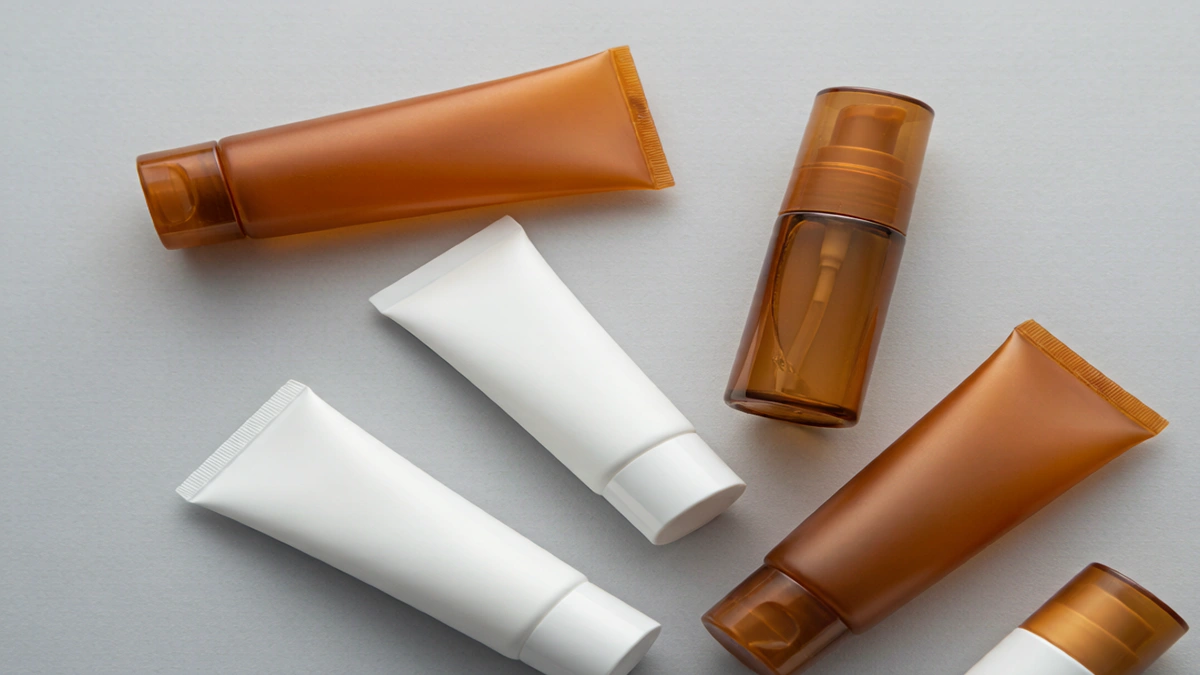
Choosing between a classic squeeze tube and an airless pump tube is one of the first packaging decisions a new skincare or personal-care brand makes — and it quietly shapes formula stability, unit cost, and how the product feels in the customer’s hand. Both formats sit on the same shelf, but they protect the formula differently and signal different things about the brand.
This guide breaks down how each tube works, where each one wins, and how to pick the right one for your formula, your price point, and your fill volume.
How a Squeeze Tube Works
A squeeze tube is the format most people picture: a flexible wall — usually polyethylene (LDPE or HDPE), a laminate, or aluminum — that you compress to push product out through a cap or orifice. Release it and the tube springs back, drawing a little air in behind the formula.
That simplicity is the whole appeal. There are no pumps, pistons, or springs to assemble, so the unit cost stays low and production scales easily. Squeeze tubes also decorate well: silkscreen, hot-stamp, offset, and labeling all work cleanly on a round, stable surface.
The trade-off is exposure. Every time the cap opens, a small amount of air re-enters the tube, and product left near the orifice can pick up contamination if the nozzle touches skin. For a stable, well-preserved formula that is rarely a problem. For an oxygen-sensitive active, it shortens the clock.
How an Airless Pump Tube Works
An airless pump tube replaces manual compression with a sealed dispensing system — a vacuum piston or bag-in-tube mechanism. Press the pump head and a vacuum pulls product upward toward the dispensing orifice; almost no air flows back in. The formula never re-establishes contact with outside air during normal use.
That single mechanical difference drives every benefit airless tubes are known for:
- Protection. Near-zero air exposure means less oxidation and less bacterial ingress — the reason airless is the default for preservative-light, “clean,” or active-heavy formulas (retinol, vitamin C, peptides, acids).
- Evacuation. Airless tubes typically dispense 95–99% of the contents; a squeeze tube leaves roughly 15% behind in the walls and neck.
- Dosing. Each pump stroke delivers a consistent amount. Squeeze output depends on how hard someone grips the tube.
- Experience. The pump feels precise and mess-free, and the near-total evacuation reads as “premium” to the end user.
The cost is structural: more components, tighter tolerances, and a higher per-unit price. Airless also gets mechanically awkward at very large fill sizes, where a simple squeeze tube stays the pragmatic choice.
Material Choice Matters as Much as the Mechanism
The squeeze-vs-airless question is only half the story. Within squeeze tubes, the wall construction sets the barrier performance:
- Mono-layer PE (LDPE/HDPE) — lowest cost, lowest barrier. Right for stable hand creams, body lotions, and simple gels.
- Multi-layer PE + EVOH — an EVOH barrier layer blocks oxygen, moisture, and UV far better. Used for serums, sunscreens, and active creams.
- Aluminum laminate (ABL/PBL) — very high barrier for the most demanding or medicinal formulas, at a higher cost and with harder recycling.
- PCR / sugarcane-PE / bio-plastic — sustainability positioning; recycled content can shift color or clarity and usually costs more.
A useful middle path: a 5-layer EVOH squeeze laminate delivers strong oxygen barrier at a fraction of the cost of a mechanical airless pump. If your formula is oxygen-sensitive but your margin is tight, that hybrid is worth testing before committing to airless.
If your formula carries a high load of essential oils, alcohol, or solvent, single-layer PE can craze, swell, or soften. Step up to an EVOH or aluminum barrier layer and verify compatibility during stability testing.
Squeeze Tube: Pros and Cons
Pros
- Lowest unit cost; fast, scalable production.
- Wide range of sizes (samples around 10 ml up to 200–350 ml full-size), shapes, and cap styles.
- Easy, familiar consumer use; decorates cleanly.
- Mono-material PE/PP/PCR versions recycle where facilities exist.
Cons
- Air re-enters on use; weaker protection for sensitive actives.
- Lower, pressure-dependent dosing accuracy.
- ~15% of product typically remains in the walls and neck.
- Single-layer versions offer limited barrier against oxygen, light, and fragrance migration.
Airless Pump Tube: Pros and Cons
Pros
- Near-zero air exposure; better stability and longer effective shelf life.
- Controlled dosing; near-complete product evacuation.
- Supports preservative-reduced and high-active formulas.
- Premium, hygienic feel that reinforces prestige or clinical positioning.
Cons
- Higher per-unit cost and more complex assembly.
- Less economical at large fill volumes.
- Traditional multi-component airless is harder to recycle (mono-material PP airless is improving this).
- Slightly more to go wrong in the dispensing mechanism.
Which One Should You Choose?
Start from the formula, not the look:
- Stable, preserved formula + cost priority + large volume → squeeze tube. Hand creams, body lotions, cleansers, and mass-market lines are the natural fit.
- Active, oxygen-sensitive, or preservative-light formula → airless pump tube, or a 5-layer EVOH laminate squeeze as the budget alternative.
- Luxury / clinical / “clean” positioning → airless reinforces the story through both protection and feel.
- Samples and travel sizes → either works; airless shines when you want the last drop of an expensive serum to stay potent.
Fill volume is the tie-breaker. Below roughly 50–100 ml, airless is mechanically straightforward and cost-justifiable for premium products. Above that, squeeze tubes stay simpler and cheaper, and very large airless tubes add complexity without much benefit.
Decoration and Sourcing Notes
Both formats take the same decoration toolkit — silkscreen, hot-stamp, offset print, and labeling — so brand expression does not force the mechanism one way or the other. The variables that do move the decision are MOQ, lead time, and whether you need stock tooling or custom shape. Those are supplier-specific: confirm the exact material lineup, closure orifice sizes, decoration options, and minimum order quantities with your packaging partner before locking a formula and a fill line together.
Related reading: our guide to airless pump bottles covers the same vacuum-dispensing logic in bottle form, and glass vs plastic cream jars walks the material trade-off that also applies to tube walls.
Planning Your Tube Packaging Order?
Tell us your formula, fill volume, and target price — we’ll help you choose between squeeze and airless tubes and confirm materials, MOQ, and lead time.
FAQ
What is the main difference between a squeeze tube and an airless tube?
A squeeze tube dispenses by compressing a flexible wall and lets a little air back in each use. An airless tube uses a vacuum/piston pump that keeps air out, protecting oxygen-sensitive formulas and dispensing nearly all the product.
When should I choose an airless tube over a squeeze tube?
Choose airless when your formula is active, oxygen-sensitive, or preservative-light (retinol, vitamin C, peptides, acids), when precise dosing matters, or when you want a premium, hygienic feel. For stable, preserved, high-volume, or budget lines, a squeeze tube is usually enough.
Are airless tubes recyclable?
Traditional multi-component airless tubes are harder to recycle, but newer mono-material PP airless tubes improve this. Simple mono-layer PE, PP, or PCR squeeze tubes recycle where local facilities accept them; multi-layer and aluminum laminates are more difficult.
Can I get strong barrier protection without an airless pump?
Yes. A multi-layer PE + EVOH squeeze laminate blocks oxygen, moisture, and UV at a lower cost than a mechanical airless system, making it a common choice for serums, sunscreens, and essential-oil formulas on a tighter margin.