
Frosted Glass Bottles: Aesthetics, Protection & Branding Value

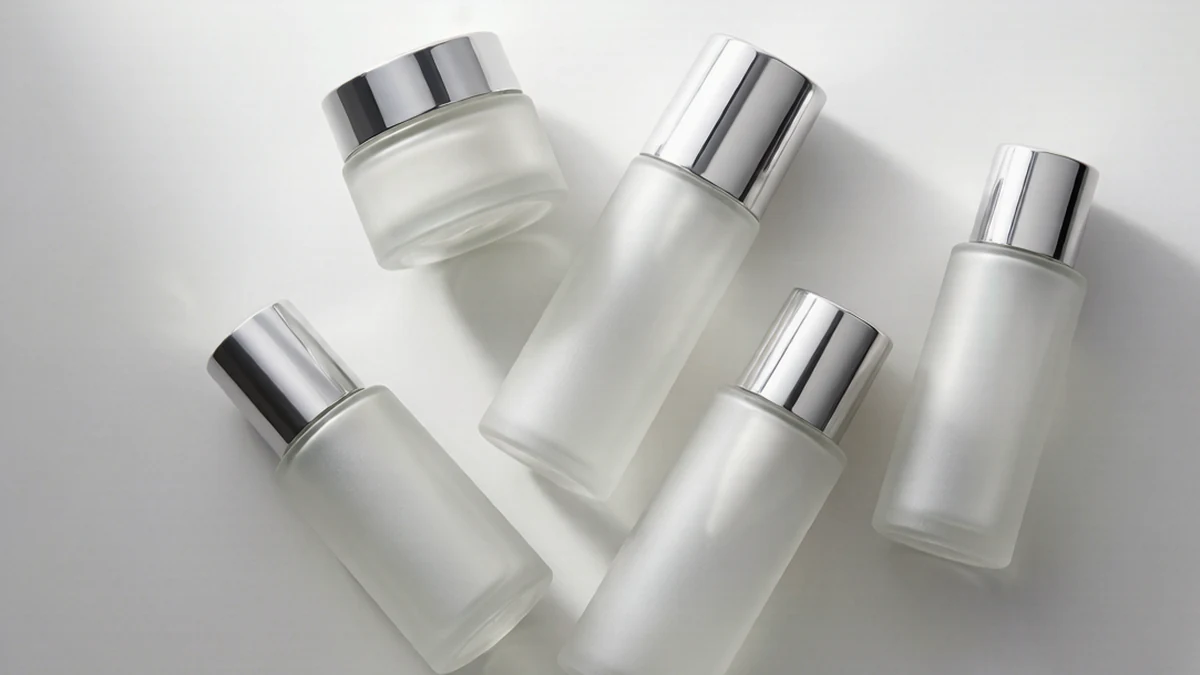
Frosted glass has become the quiet default for premium skincare, fragrance, and K-beauty lines — the kind of bottle you expect to find on a clinic shelf or a minimalist bathroom tray. But “frosted” gets credited with more than it delivers. It is not a color, it is not amber, and it will not single-handedly protect a photosensitive serum. What it does deliver is a specific combination of look, touch, and partial light diffusion that a clear or colored bottle cannot fake.
This guide separates the aesthetic signal from the functional reality, so you can decide whether frosted glass earns its place in your line — and where it quietly falls short.
What “Frosted” Actually Means
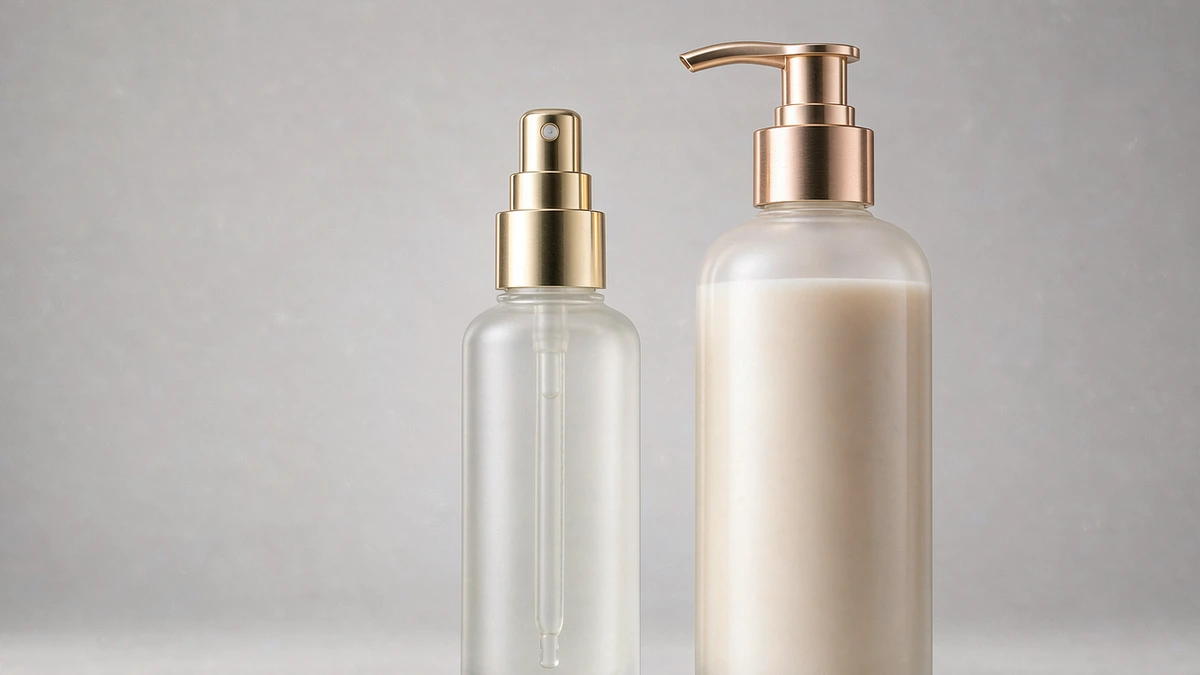
Frosting is a surface treatment, not a change in glass chemistry. A clear bottle is run through acid etching (usually hydrofluoric acid) or physical abrasion/sandblasting that microscopically roughens the outer surface into a matte finish. Light hits that rough surface and scatters instead of passing straight through, which is what gives frosted glass its soft, glowing, non-glare appearance.
Because it sits on top of an ordinary clear or tinted base, frosting leaves the underlying material — and its recyclability — unchanged. An acid-etched frosted bottle still sorts and recycles as the base glass it was made from. That matters if your sustainability claims depend on material honesty rather than surface effect.
Why Brands Reach for Frosted Glass
The pull is mostly tactile and visual. A frosted surface feels expensive in the hand, hides fingerprints and water marks, and photographs cleanly under retail and studio lighting without blowing out into glare. It reads as “soft luxury” — restrained, clinical, or spa-like depending on the rest of the branding.
Frosting also hides the contents. For brands that want a sense of mystery, or simply don’t want a formula’s color doing the talking, that opacity is a feature. The same effect can be split: a frosted body with a clear window is a common hybrid that keeps the premium matte feel while still showing a glimpse of product.
Light Diffusion: Real, but Partial
Here is where the marketing overreaches. Frosting does reduce direct light transmission — industry guidance puts the reduction at roughly 20–40% of the UV that a same-thickness clear bottle would let through. That is meaningful, but it is not protection.
High-energy UVA, the band that degrades retinol, vitamin C, and peptides, still reaches the formula through frosted glass. If your product is genuinely photosensitive, frosted is a complement, not a shield. For real protection you still reach for amber glass or an opaque container. The honest framing: frosted buys you a little breathing room and a lot of shelf appeal, but it does not replace a UV-blocking color.
Branding and Shelf Presence
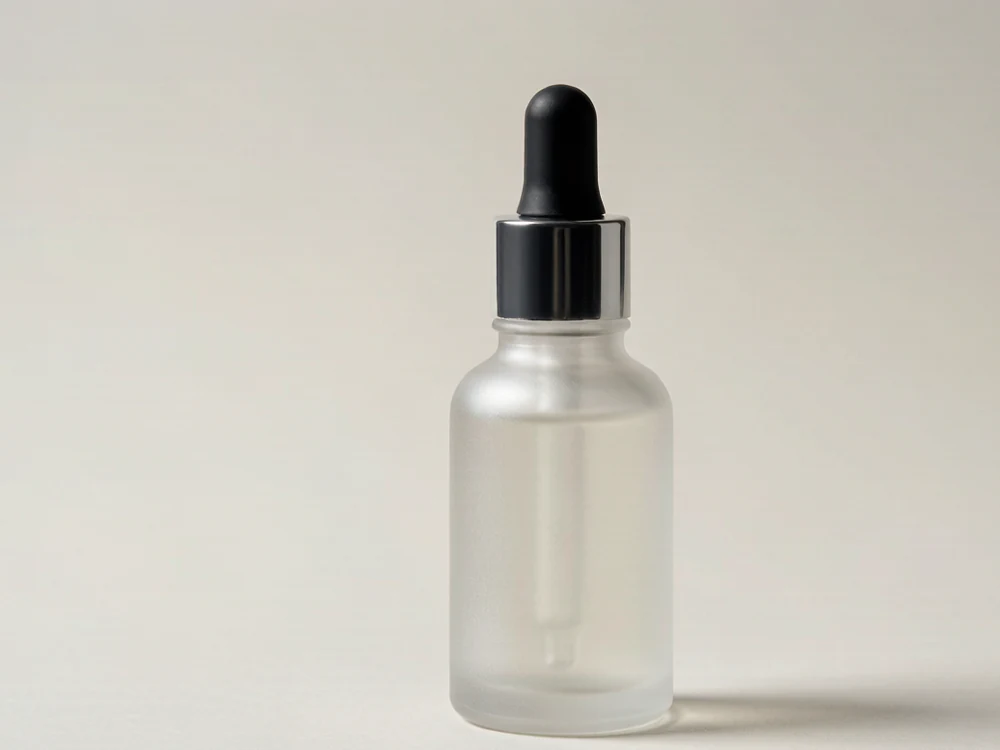
On a crowded shelf, frosted glass does quiet work. It softens the product, makes the bottle feel considered, and pairs well with understated labeling — a debossed logo, a single clean typeface, a kraft or soft-touch carton. It photographs better than clear glass under harsh light and ages better in a customer’s hand than glossy plastic.
It also sets a price expectation. Shoppers consistently read a frosted bottle as more premium than the identical shape in clear glass, which is part of why the finish carries a small cost premium and why brands accept it.
Frosted vs Clear vs Amber
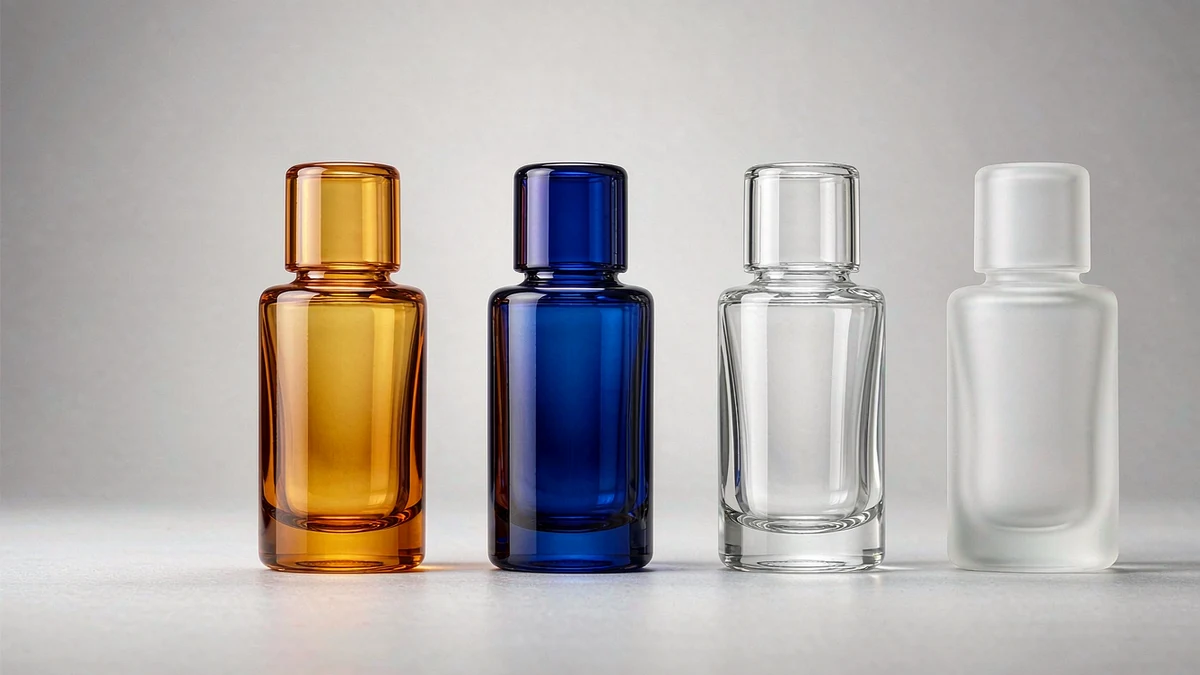
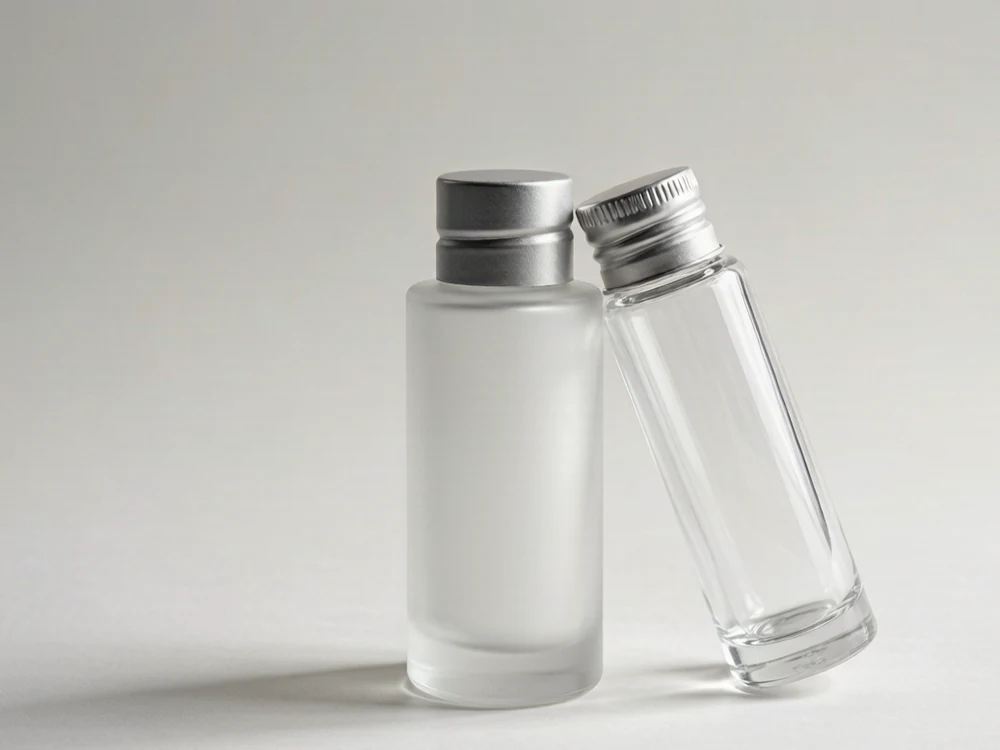
Clear glass — maximum product visibility, brightest look, almost no light protection. Best when the formula’s color is the selling point and it is not light-sensitive.
Frosted glass — matte, premium, fingerprint-resistant; partial light diffusion only. Best for branding-led lines where the formula doesn’t need to be seen or heavily shielded.
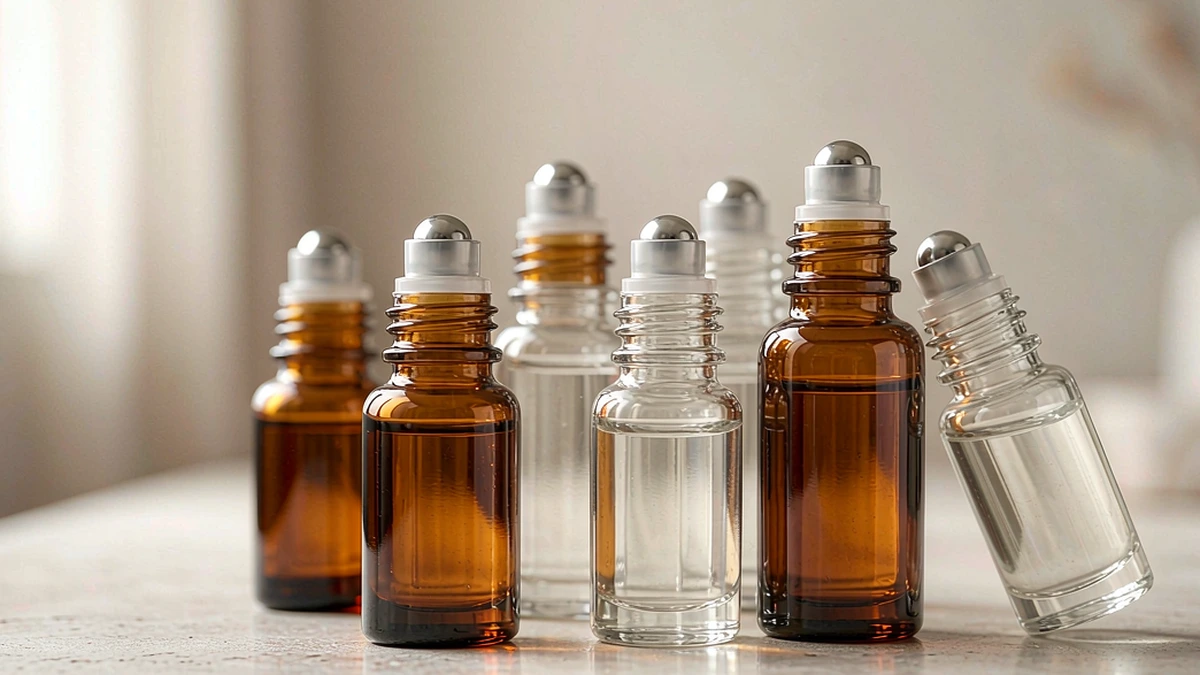
Amber glass — absorbs the vast majority of UV; the right call for retinol, vitamin C, essential oils, and other actives. Less “designed,” more “protected.”
The choice is rarely aesthetic-only. Start from the formula’s light sensitivity, then let brand positioning pick the finish.
Where Frosted Glass Works Best
Frosted suits products where the experience and the image matter more than showing the contents:
- Premium serums, essences, and ampoules where a clinical, restrained look fits the claim.
- Face creams and masks in jars or wide-mouth bottles.
- Fragrances, aromatherapy, and essential-oil blends.
- Salon, spa, and niche “clean” brands building differentiation through feel.
It is a weaker fit for mass-market, cost-first lines, or any formula whose color is the hero — there, clear glass earns its keep.
Pairing Frosted Bottles With the Right Closure
Frosting changes the decoration playbook more than the closure one. Standard dropper, pump, spray, and cap finishes still seat on the same neck dimensions, so your dispensing choice is unaffected. What shifts is marking: a frosted surface needs UV printing, film, or etch-based logos rather than an ordinary paper label, and acid-etched frosting can carry a transparent logo burned into the matte field.
That means the decision to frost should be made alongside the decoration plan, not after — the two move the unit cost and lead time together.
Cost and Sourcing Notes
Expect frosted bottles to run slightly above their clear base because of the extra etching or abrasion step; the gap widens with size, shape complexity, and any custom decoration. Those specifics — MOQ, lead time, which SKUs carry frosting, whether acid-etch or spray coating is used, and whether a frosted-plus-window hybrid is available — are supplier-specific and worth confirming before you lock a formula and a fill line together.
Related reading: our guide to amber vs clear glass bottles covers where each color lands on the UV-protection scale, and decorating cosmetic bottles walks through the marking options that work on a frosted surface. For mist-format products, cosmetic spray bottles often ship in frosted glass for exactly this premium look.
Considering Frosted Glass for Your Line?
Tell us your formula, target price, and branding direction — we’ll help you weigh frosted vs clear vs amber and confirm materials, MOQ, and lead time.
FAQ
What is the difference between frosted and clear glass bottles?
Frosting is a surface treatment — acid etching or abrasion — that roughens the glass into a matte finish, scattering light and hiding the contents. Clear glass is the untreated base: fully transparent, brighter, and with almost no light protection. The underlying glass is the same; only the surface differs.
Do frosted glass bottles protect contents from UV light?
Only partially. Frosting cuts direct UV transmission by roughly 20–40% versus clear glass of the same thickness, but high-energy UVA still reaches the formula. For genuinely photosensitive actives (retinol, vitamin C, peptides, essential oils), frosted is a complement, not a shield — amber or opaque glass remains the right choice.
Are frosted glass bottles recyclable?
Yes. Frosting is a surface treatment that does not change the base material, so an acid-etched frosted bottle recycles with the clear glass it was made from. Prefer acid-etched frosting over spray-on coatings, which can contaminate recycling streams.
Are frosted glass bottles more expensive than clear?
Usually a little. The extra etching or abrasion step adds cost on top of the clear base, and the gap widens with bottle size, shape complexity, and any custom decoration. For many premium lines the small premium is justified by the shelf presence and tactile feel.