
Dropper Bottle Sizes Explained: 10ml, 15ml, 30ml and 50ml

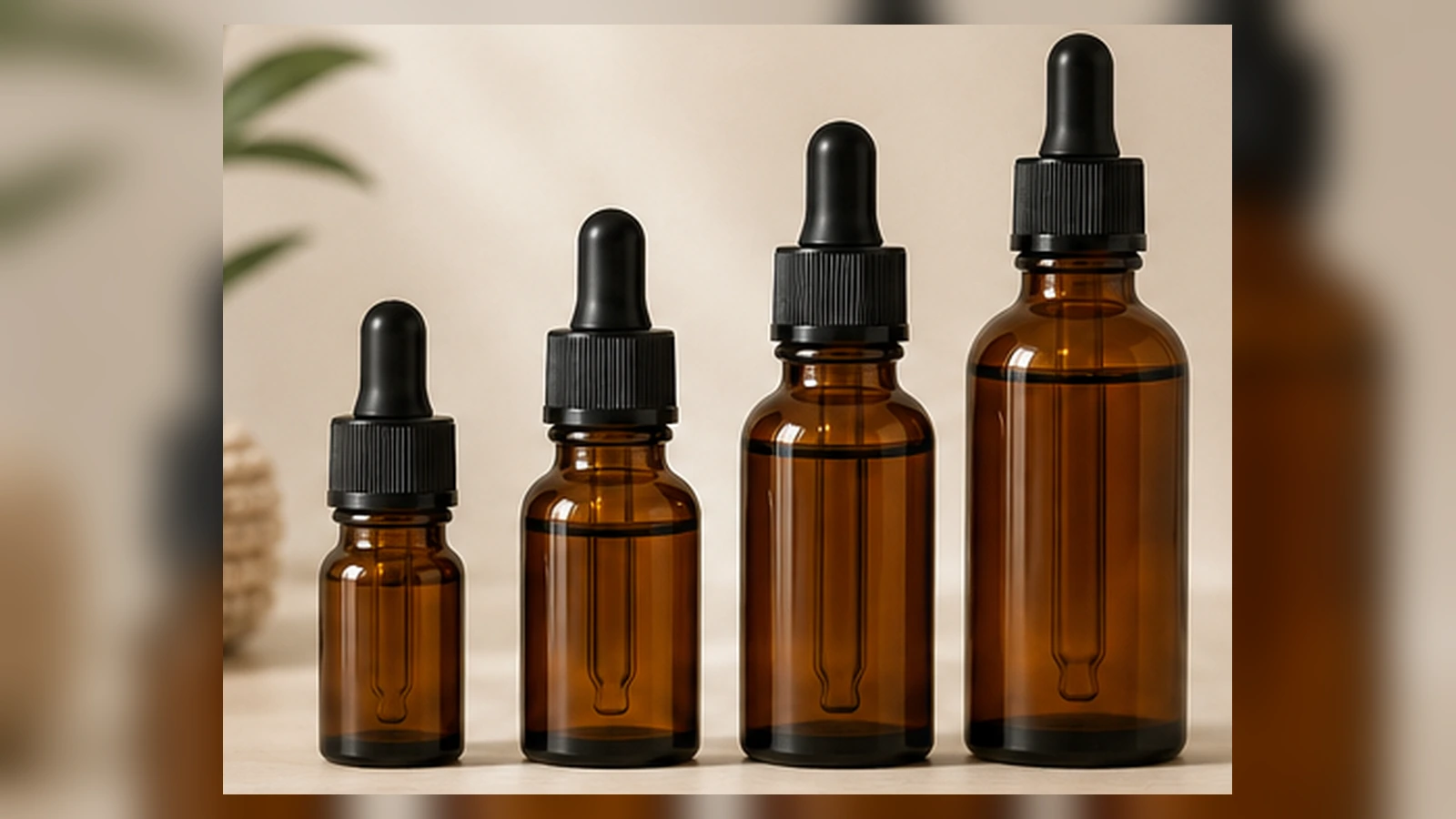
Choosing the right dropper bottle size is more than deciding how much product to sell. A 10ml bottle can support sampling and concentrated formulas, while a 30ml bottle is a familiar retail size for serums and facial oils. A 50ml bottle may offer more product per purchase, but it also increases package weight, extends the time a formula remains open, and can create unnecessary inventory or stability risks.
For skincare brands and B2B buyers, the best size depends on daily product use, formula stability, target price, customer expectations, closure compatibility, shipping requirements and the results of real-package testing.
If you are still deciding whether a dropper is the right dispensing system at all, start with Venturove’s guide to dropper bottles vs pump bottles vs airless bottles. Once the dispensing format is confirmed, the next step is choosing the correct capacity.
Dropper Bottle Sizes at a Glance
| Size | Common Role | Typical Skincare Uses | Main Advantage | Main Watch-Out |
|---|---|---|---|---|
| 10ml | Sample, discovery or concentrated product | Facial oils, essential-oil blends, concentrated treatments, travel sizes | Low trial commitment and compact format | Product residue represents a larger share of the fill |
| 15ml | Trial or premium small-format retail | Eye serums, vitamin C serums, facial serums, concentrated oils | Premium small-size positioning and faster product turnover | Less universal as a retail reference size than 30ml |
| 30ml | Main retail size | Facial serums, facial oils, beard oils and daily treatments | Familiar, versatile and easy to merchandise | Can be oversized for very low-use or unstable formulas |
| 50ml | Value, professional or high-use format | Stable facial oils, hair oils, body oils and professional-use products | More product per purchase | More weight, longer open-use period and higher freight exposure |
These are practical market roles rather than fixed rules. The actual package should always be tested with the intended formula and complete closure system.
1. Why Dropper Bottle Size Matters
Capacity affects several decisions at the same time.
First, it changes how quickly the customer is likely to finish the formula after opening. This matters because some active formulas are more sensitive to oxygen, light or time than others.
Second, size influences price positioning. A smaller bottle can make a high-value concentrated formula easier to trial, while a larger bottle can support a value or professional-use proposition.
Third, the bottle size changes the physical packaging system. Bottle height, pipette length, bulb size, neck finish and carton configuration all need to work together.
Finally, capacity affects shipping. Larger glass bottles take more space per unit and add weight. For international B2B orders, the landed cost can change significantly even when the bottle design looks almost identical.
This is why the best dropper bottle size should be selected from the formula and business model backward, not from appearance alone.
2. 10ml Dropper Bottles: Best for Sampling and Concentrated Products
A 10ml dropper bottle is one of the most practical choices for small-format products.
It is commonly used for essential oils, facial oils, concentrated skincare treatments, fragrance oils, discovery sets and travel-size products. The smaller capacity reduces the amount a new customer needs to purchase, which can make it useful for trials, starter kits and premium formulas with a high value per millilitre.
For brands launching a new formula, 10ml can also reduce the risk of committing too much product to a format before demand is proven.
A smaller bottle may be especially useful when the formula is sensitive and is intended to be used relatively quickly after opening. However, the package itself still needs appropriate light protection and compatibility testing. Small volume does not compensate for unsuitable materials.
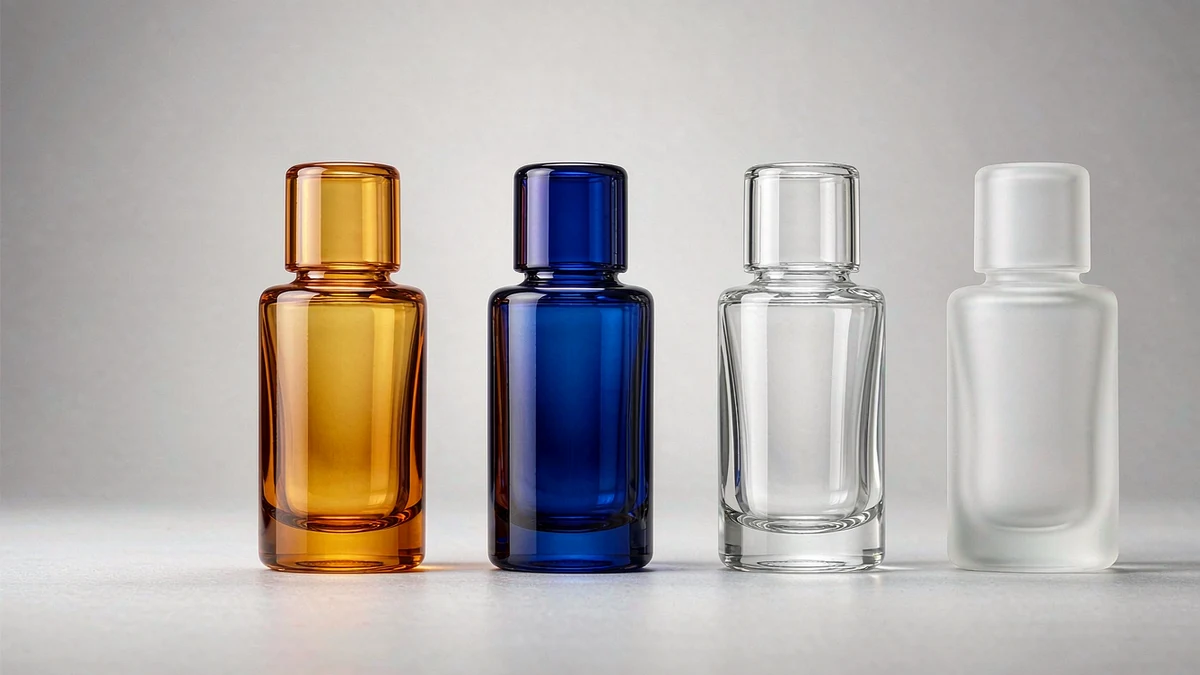
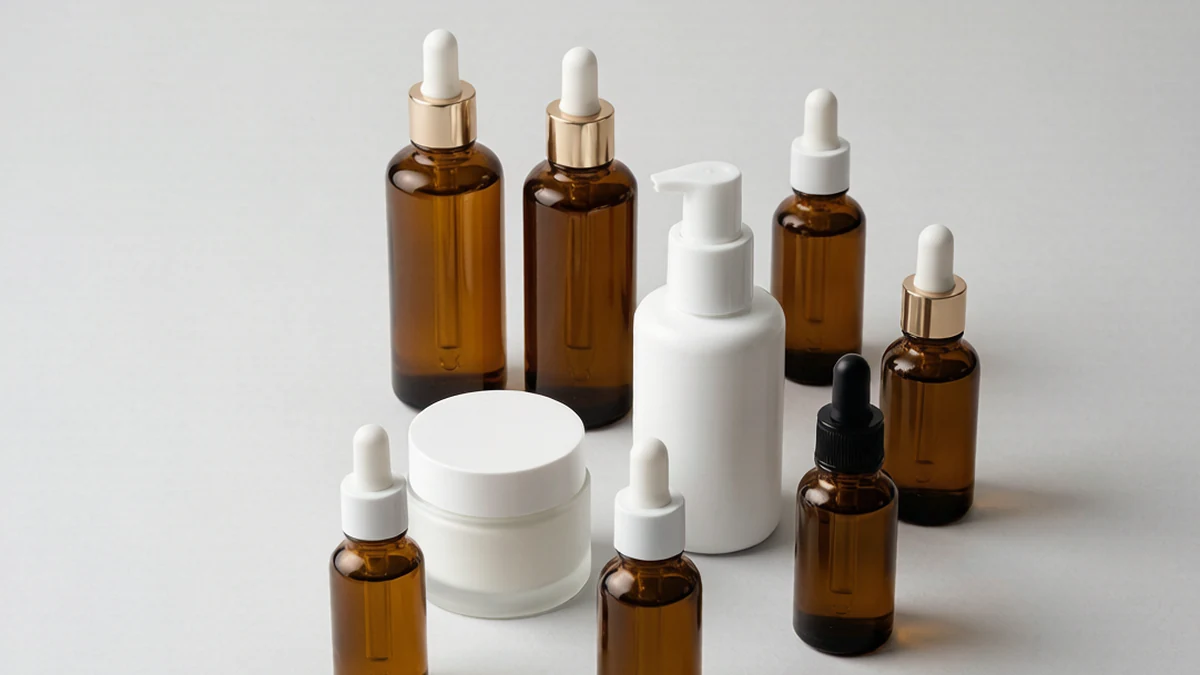
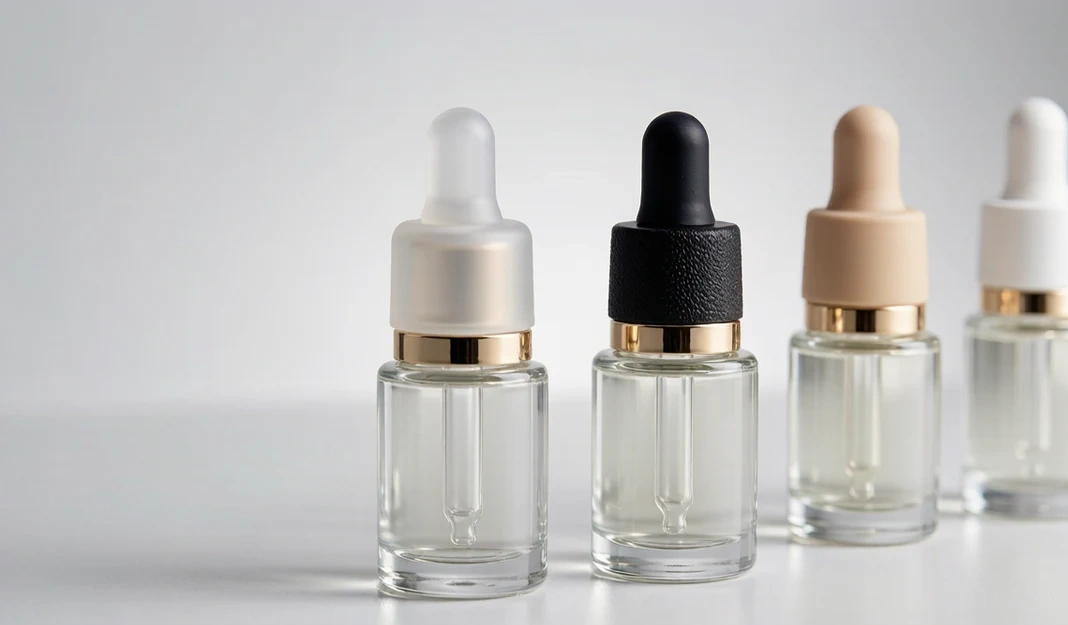
Venturove’s 10ml glass dropper bottles provide examples of amber, clear and matte finish options for compact dropper packaging.
When 10ml makes sense
Consider 10ml when:
- the formula is highly concentrated;
- the product is sold as a sample, discovery size or travel format;
- the target customer uses only a small amount per application;
- the brand wants a lower-entry-price trial format;
- faster product turnover after opening is desirable.
The main limitation is that any product left at the bottom of the bottle represents a larger percentage of the total fill. Pipette length and bottle geometry therefore need to be tested carefully.
3. 15ml Dropper Bottles: A Premium Small-Format Option
A 15ml bottle sits between sample size and standard retail size.
It is commonly considered for eye serums, vitamin C serums, concentrated facial treatments, facial oils and premium small-format products. Compared with 10ml, it provides more product without becoming as large as a 30ml retail bottle.
This makes 15ml useful when a brand wants customers to finish the product within a shorter period while still presenting it as a full skincare item rather than a miniature sample.
It can also work well for formulas with a high price per millilitre, where a smaller package supports a controlled purchase price.
Venturove’s 18mm glass bottle platform from 5ml to 100ml includes a 15ml capacity. This product is supplied as Bottle Only / Closure Not Included, so the compatible dropper or other closure must be selected separately for the 18mm neck.
When 15ml makes sense
Consider 15ml when:
- the formula is concentrated or relatively expensive;
- the product is intended for a targeted area such as the eye area;
- the brand wants a premium compact retail format;
- the expected use rate is too low for a larger bottle;
- the product should ideally be finished sooner after opening.
Do not choose 15ml simply because it looks premium. The expected daily use and formula stability still need to justify the size.
4. 30ml Dropper Bottles: The Most Versatile Retail Size
For facial serums and oils, 30ml is one of the most widely used retail capacities.
It gives brands enough volume for a main retail product without becoming excessively heavy or bulky. It is also familiar to customers, distributors and packaging buyers, which makes it easier to compare pricing, carton dimensions and shelf presentation.
A 30ml bottle can suit facial serums, hyaluronic acid formulas, niacinamide serums, facial oils, beard oils and other products used regularly in small amounts.
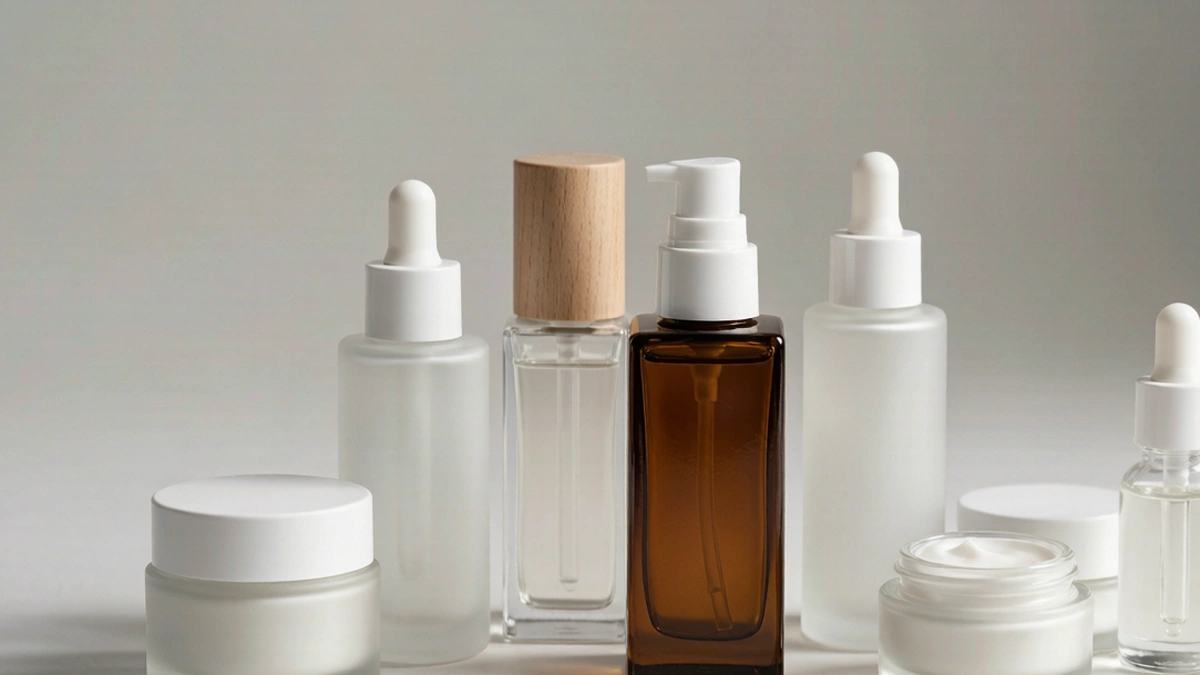
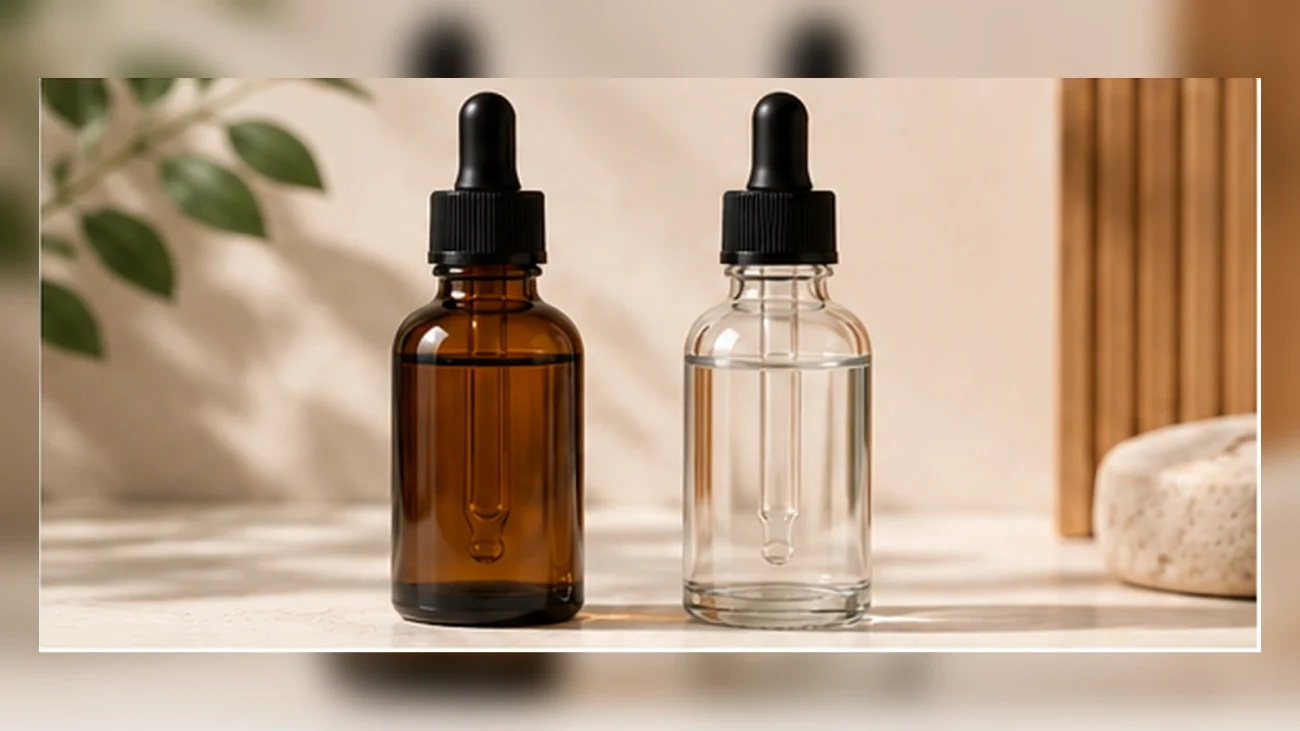
Venturove’s 30ml round glass dropper bottles in amber, frosted and clear finishes show how the same capacity can support different visual positions.
Amber can be considered when reduced light exposure is important. Clear glass emphasizes formula visibility. Frosted glass can create a softer premium appearance and improve grip, but frosting itself should not be treated as a substitute for real light protection.
When 30ml makes sense
Consider 30ml when:
- the product is a main retail serum or facial oil;
- the customer is expected to use it consistently;
- the formula is stable enough for the expected use period;
- the brand wants a familiar market size;
- the package needs to balance perceived value with manageable shipping weight.
A 30ml bottle should not automatically be treated as the default. If the customer uses only a few drops at a time and the formula degrades quickly after opening, a smaller size may be more appropriate.
5. 50ml Dropper Bottles: Better for Stable, Higher-Use Products
A 50ml dropper bottle moves the product into a larger-volume position.
This size can work for stable facial oils, hair oils, body oils, massage oils, professional treatments, refill-oriented concepts and products that customers use relatively quickly.
The benefit is obvious: the customer receives more product per unit, and the brand may reduce packaging material per millilitre compared with selling the same volume in several smaller bottles.
The trade-off is that the formula remains in an opened package for longer. The bottle is also heavier, the pipette is longer and the shipping footprint per unit increases. For an oxidation-sensitive formula used only a few drops at a time, 50ml can be unnecessarily large.
For glass options, Venturove’s amber square essential-oil bottles include a 50ml capacity with dropper options. Brands seeking a lightweight opaque-metal alternative can also review 30ml, 50ml and 100ml aluminum bottles with dropper caps.
When 50ml makes sense
Consider 50ml when:
- the formula is sufficiently stable;
- the customer uses the product frequently or over a larger area;
- the product is positioned for professional, salon or value-oriented use;
- the larger package supports the brand’s pricing strategy;
- the additional shipping weight and carton volume are acceptable.
Do not assume that a larger bottle is automatically more economical. Freight, breakage protection, storage space and slower product turnover can offset part of the apparent packaging saving.
6. Estimate Usage Before Choosing Capacity
A common convention is to estimate approximately 20 drops per millilitre. Under that rough convention:
- 10ml is about 200 drops;
- 15ml is about 300 drops;
- 30ml is about 600 drops;
- 50ml is about 1,000 drops.
These figures are useful only for initial planning.
Actual drop counts can vary substantially with formula viscosity, temperature, pipette opening, surface tension and the way the user squeezes the bulb. Industry references commonly show practical variation around 15–25 drops per millilitre.
For that reason, a brand should not convert bottle volume directly into an absolute claim such as “600 uses.”
A better method is:
- test the real formula in the selected dropper;
- measure the average amount dispensed per intended application;
- estimate daily use;
- compare the expected use period with the formula’s recommended period after opening;
- then choose the capacity.
This approach is more reliable than selecting 10ml, 15ml, 30ml or 50ml from a generic drop-count chart.
7. Match Capacity With Formula Stability
The larger the bottle, the longer the product may remain open before it is finished.
That matters for formulas that are sensitive to oxygen, light or repeated opening. A customer who finishes a 15ml product relatively quickly may expose it to fewer months of normal use than the same customer using a 50ml version.
For sensitive formulas, capacity and package protection should therefore be evaluated together.
Light-sensitive formulas
Amber or opaque packaging can reduce light exposure. Clear glass may still be suitable for stable formulas or products whose appearance is part of the selling point, but secondary cartons, coatings or other protection may be needed when light sensitivity is a concern.
Frosted glass should primarily be treated as a visual and tactile finish. It can diffuse visible light, but it should not be relied on as the main UV-protection strategy.
Oxidation-sensitive formulas
A smaller fill size may help customers finish the product sooner, but dropper bottles are still opened during each use. If limiting repeated air entry is a major packaging requirement, compare the dropper with other dispensing formats before finalizing the design.
For a broader selection process, see Venturove’s guide on how to choose cosmetic packaging for serum products.
8. Bottle Size, Neck Finish and Pipette Length Must Match
Capacity cannot be separated from closure engineering.
Many dropper bottles use an 18mm or DIN18-type neck, but the exact thread specification still matters. Closures with similar nominal diameters are not automatically interchangeable.
The pipette also needs to match the bottle depth. If it is too short, product can remain unreachable at the bottom. If it is too long, it may contact the base improperly or create assembly problems.
Venturove’s 18mm glass bottle platform provides a useful example of how one neck family can cover multiple capacities from 5ml to 100ml. The listed bottle heights increase from approximately 58mm for 10ml to 64.8mm for 15ml, 79.1mm for 30ml and 91.4mm for 50ml.
Those dimensions illustrate why the same pipette length cannot simply be reused across every bottle size.
Before production, test the complete combination:
- bottle;
- dropper closure;
- bulb material;
- pipette length;
- gasket or sealing surface;
- formula viscosity;
- actual draw and drop performance.
For essential oils or other aggressive oil-based formulas, bulb material also needs specific compatibility testing.
9. Do Not Ignore Shipping and Landed Cost
Changing capacity changes logistics.
Public supplier packing tables show the general pattern clearly: larger glass bottles usually reduce the number of units that fit into the same export-carton weight range. A carton that can hold hundreds of 10ml bottles may hold far fewer 50ml bottles.
The exact freight cost depends on the real bottle, carton, route and order quantity, so generic ratios should not be treated as quotations.
For a B2B buyer, the important point is that total packaging cost includes more than the bottle:
- closure and dropper components;
- decoration and labels;
- retail box or insert;
- export carton;
- protective dividers;
- palletization;
- freight;
- breakage exposure;
- warehouse space.
A larger bottle can reduce packaging cost per millilitre while still increasing logistics cost per finished unit.
Glass packaging also requires proper protective packing. For international shipping, the finished package should be tested for leakage, inversion, vibration, impact and temperature changes rather than evaluated only from an empty sample.
For a broader comparison of materials, see Glass vs Plastic Cosmetic Packaging.
10. A Practical B2B Buyer Checklist
Before confirming a dropper bottle size, answer these questions:
- How much formula should the customer use per application?
- How often will the product be used?
- How long should one bottle realistically last?
- Is that use period compatible with the formula’s stability and period after opening?
- Is the formula thin enough to draw and dispense cleanly through a dropper?
- Does the formula need reduced light exposure?
- Which glass, plastic or metal material is appropriate?
- What neck finish and thread specification are required?
- Is the pipette length correct for the selected bottle height?
- Is the bulb material compatible with the formula?
- Does the closure seal reliably during storage and transport?
- How much product remains unreachable at the end of use?
- How does the capacity affect carton quantity, freight and warehouse space?
- Does the size match the intended retail price and brand position?
- Has the final filled package passed compatibility, stability and transport testing?
For startups, it is usually safer to validate demand and package performance with standard bottle platforms before investing heavily in custom tooling or large inventories.
Final Recommendation
There is no single best dropper bottle size for every skincare product.
Choose 10ml for samples, concentrated products, discovery formats and formulas that benefit from faster turnover after opening.
Choose 15ml for premium small-format serums, targeted treatments and products whose expected use rate does not justify a full 30ml bottle.
Choose 30ml when you need a familiar, versatile main retail size for serums and facial oils.
Choose 50ml for stable, higher-use, value or professional products where the customer can realistically finish the formula and the added shipping weight is acceptable.
The final choice should be based on the real formula, the intended dose, the complete dropper assembly and transport testing—not capacity alone.
For a broader packaging framework, review How to Choose the Right Cosmetic Packaging for Your Beauty Product.
Need Help Choosing a Dropper Bottle Size?
Share your formula type, target capacity, preferred material, finish and order requirements with Venturove. We can help you compare suitable packaging options and prepare the next step for evaluation.
FAQ
What is the most common dropper bottle size for facial serum?
30ml is one of the most widely used retail sizes for facial serums and facial oils. However, 15ml may be more suitable for concentrated, premium or faster-turnover formulas, while 10ml works well for samples and discovery formats.
Is 10ml too small for a skincare serum?
Not necessarily. A 10ml bottle can work well for concentrated formulas, samples, travel sizes and products used in very small amounts. The correct capacity depends on the intended dose and expected use period.
Should vitamin C serum use a 15ml or 30ml bottle?
Both can be used, but the decision should be based on formula stability, daily use and the expected period after opening. A smaller bottle may be preferable when the customer would otherwise keep an oxidation-sensitive formula open for too long.
Is a 50ml dropper bottle better value?
It can reduce packaging material per millilitre, but it is not automatically the lowest-cost choice. A 50ml glass bottle is heavier, occupies more shipping space and may remain open longer. Total landed cost and formula stability should be considered together.
How many drops are in a 30ml bottle?
A common planning convention is about 20 drops per millilitre, which would suggest roughly 600 drops in 30ml. Real drop counts can vary significantly with viscosity, pipette design, temperature and user technique, so the actual formula should be tested before making usage claims.
Can the same dropper fit 10ml, 15ml, 30ml and 50ml bottles?
Not automatically. Bottles may share a similar neck diameter, but the exact thread specification and pipette length must match the selected bottle. A pipette that works in a 10ml bottle will normally be too short for a taller 30ml or 50ml bottle.