
Luxury Cosmetic Packaging on a Budget: Glass-Look Finishes

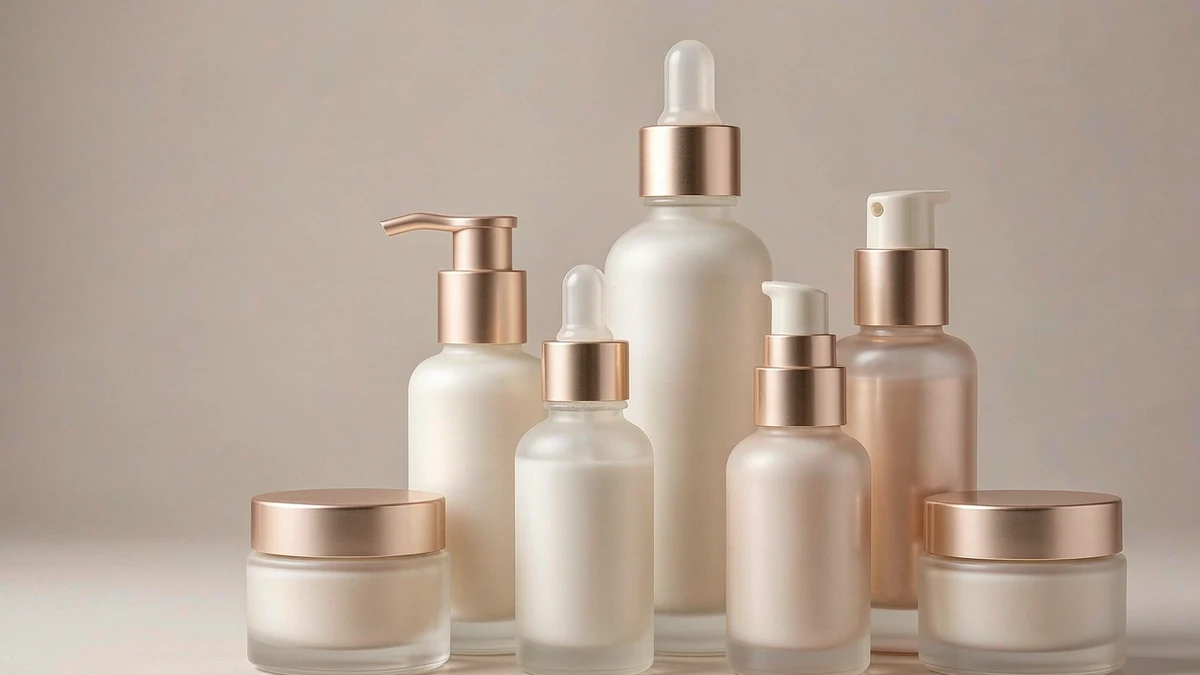
A premium shelf presence used to mean one thing: heavy, costly glass and a finish budget to match. That link has quietly broken. Today a skincare or fragrance brand can land a spa-grade, "expensive in the hand" look on standard plastic or stock glass — by choosing the right finish, not a pricier substrate. The trick is knowing which surface treatment delivers the luxury signal you want, and what each one costs in MOQ, lead time, and per-unit price.
Key Takeaways
If you only remember five things, remember these:
- Cheapest premium look: matte spray coating on a stock mould plus screen-printed branding — no new tooling, low MOQ, immediately "soft-touch premium."
- Real metallic shine needs metallization: vacuum metallization gives a gold/silver/chrome mirror, but it typically requires a 10,000+ MOQ and runs 30–60% cheaper than chrome plating.
- Frosted plastic mimics glass cheaply: a spray or mould-textured matte finish reads as glass, hides fingerprints, and ships lighter and shatterproof.
- The same colour can cost 3–5× more depending on process: "silver" as spray paint is not "silver" as electroplated mirror — define the process, not just the shade.
- Match finish to price tier: budget lines use spray + screen print; hero products justify frosting + metallization + fine hot stamping.
Why "Looks Luxury" and "Costs a Lot" No Longer Mean the Same Thing
For years, perceived value in cosmetics tracked the material: glass felt expensive, plastic felt cheap. Surface finishing changed that equation. A single mould can be transformed with post-processing — frosting, soft-touch coating, selective metallization — so the same plastic bottle can read as a $40 serum or a $5 cleanser depending entirely on the treatment. The finish, not the resin, now carries most of the luxury signal.
The Glass-Look Toolkit: Finishes That Punch Above Their Price
Spray Coating — The Workhorse
Spray coating is the lowest-cost route to a premium look. It lays down a matte or glossy colour across the whole bottle, covers minor mould marks, and supports any Pantone. On its own it lacks metallic depth and can scratch without a topcoat, but paired with a UV or soft-touch clear coat it becomes durable and tactile. This is the foundation of most "looks expensive, isn’t" packaging.
Frosting — The Quiet Premium
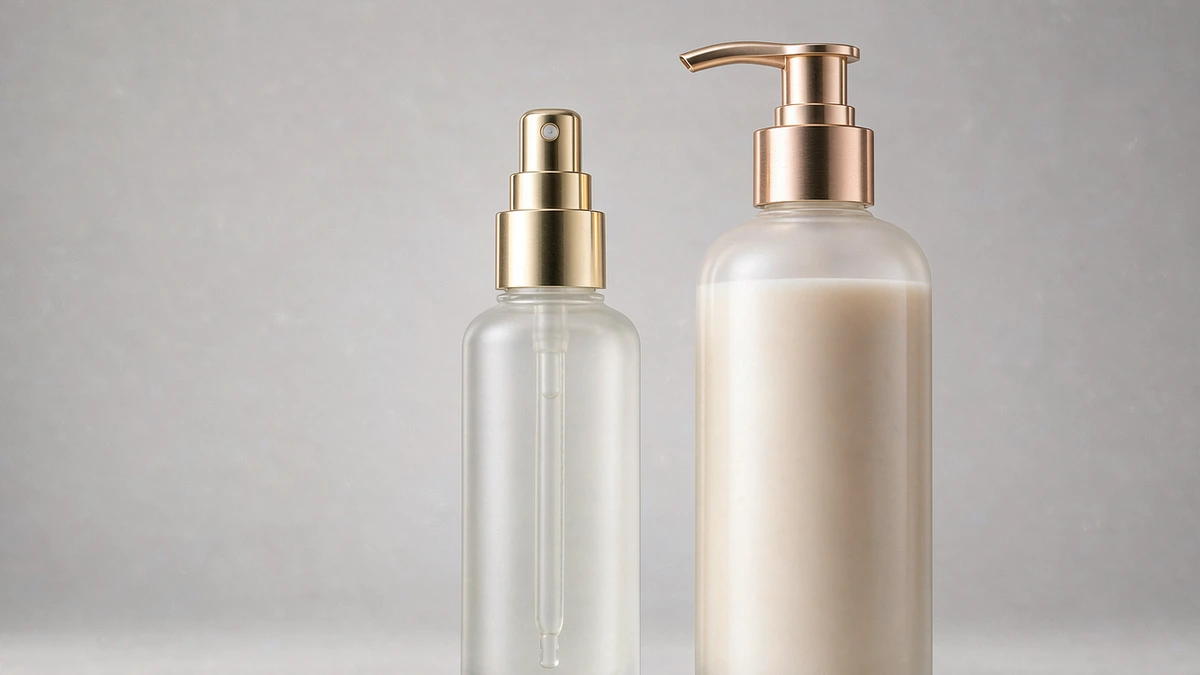
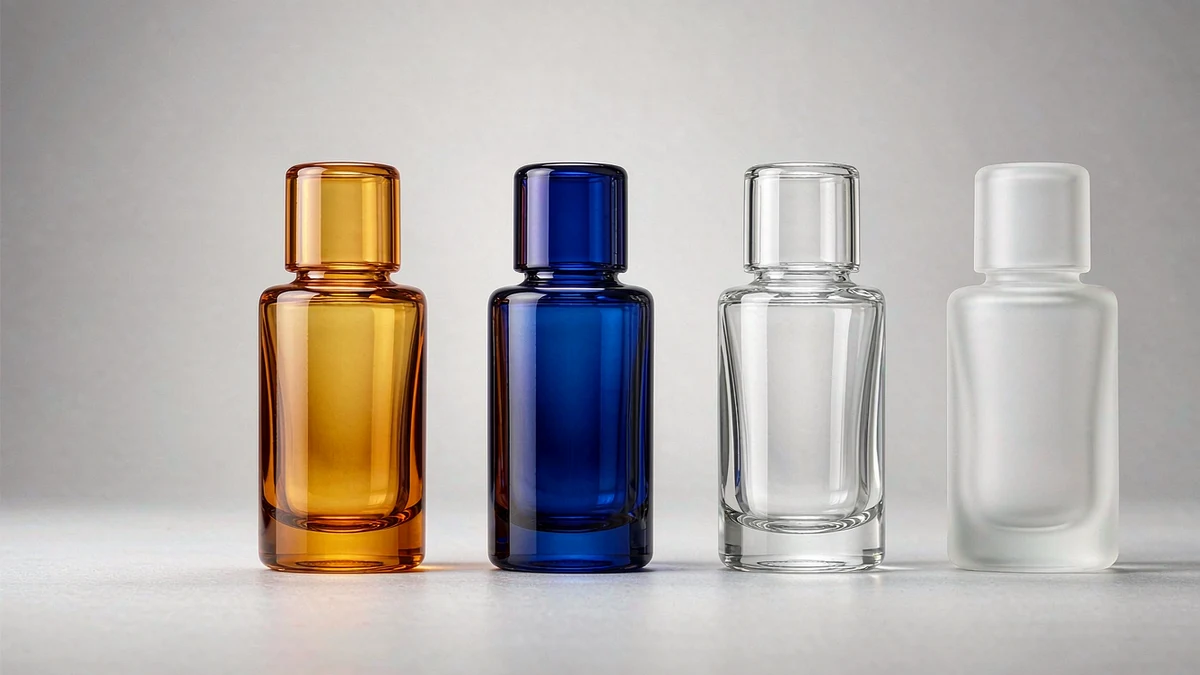
Frosting turns a transparent bottle into a soft, light-diffusing matte. On glass it is achieved by acid etching (silky, uniform, the genuine luxury standard) or sandblasting (textured). On plastic it comes from a matte spray or, most cost-efficiently, a mould texture built directly into the tool — no coating to peel, lowest unit cost at volume. Either way, frosting resists fingerprints and gives that calm, high-end feel. See how it plays out in frosted glass bottles versus their plastic counterparts.
Hot Stamping — Targeted Metallic Accent
Hot stamping presses metallic foil (gold, silver, rose gold, holographic) onto logos and patterns. It adds roughly 10–20% to cost, works on flat areas, and delivers a crisp, raised metallic accent that instantly reads "premium" without metallizing the whole bottle. It is the most economical way to get real metal shine on a budget line.
Vacuum Metallization — The Full Mirror
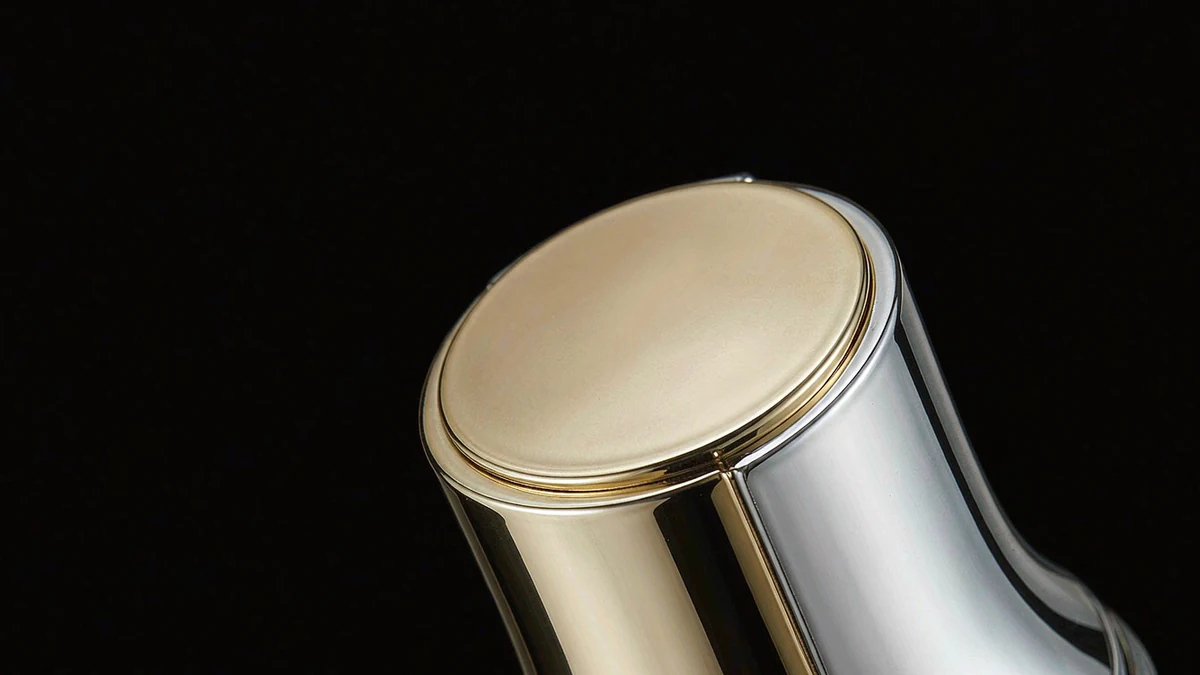
When you want the bottle itself to be gold, chrome, or rose gold, vacuum metallization deposits a micro-thin metal film under vacuum and seals it with a clear topcoat. The result is a durable mirror finish at a fraction of solid-metal or chrome-plating cost — plastic substrate alone saves 80–90% on raw material. The trade-off is MOQ: metallization lines are built for volume, so expect 10,000+ units and longer lead times. For a hero product or gift edition, the shelf impact often justifies it.
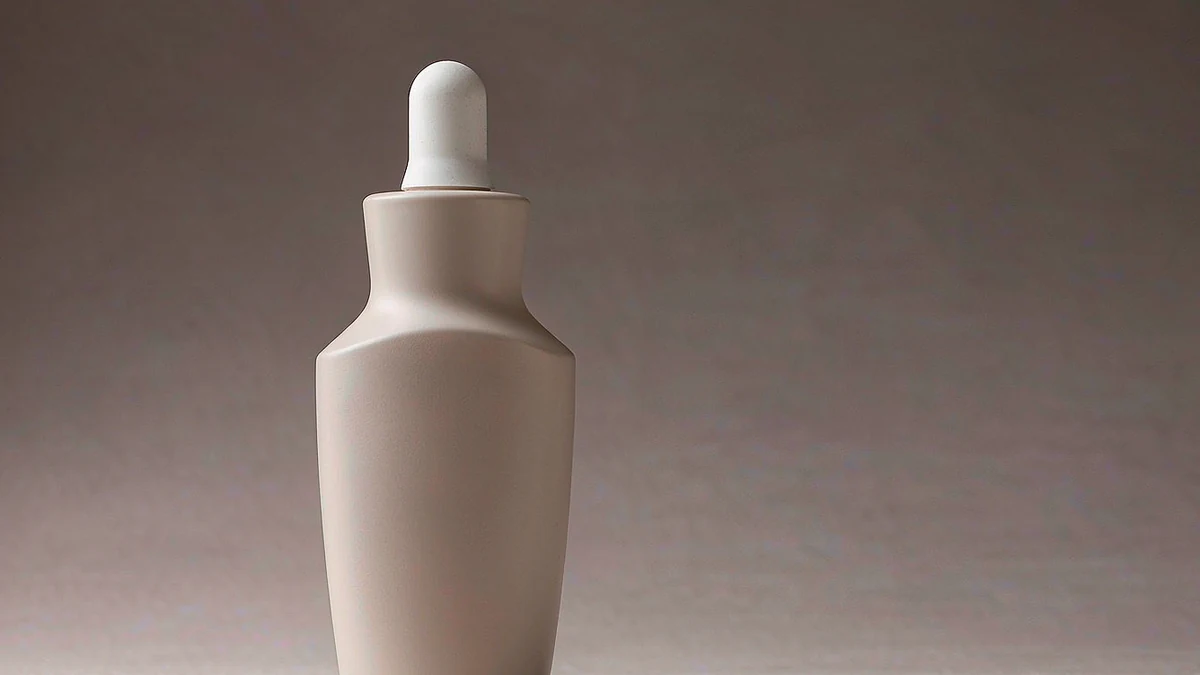
Plastic That Reads as Glass (and Why Buyers Love It)
A frosted PET or PP bottle with a soft-touch coat genuinely looks and feels like glass on the shelf — yet it is lighter, shatterproof, and far cheaper to ship. That matters for travel lines, trial sizes, and e-commerce, where breakage and freight eat margins. The matte surface also hides fingerprints and minor fill-level variations, so the product always looks fresh. If your formula is light-sensitive, amber or tinted plastic still blocks UV far more affordably than specialty glass. For a deeper material comparison, our guide on glass vs plastic cosmetic packaging breaks down the trade-offs.
Matching the Finish to Your Price Tier
The smartest cost control is matching the finish to where the product sits in your range. Over-finishing a mass item wastes budget; under-finishing a hero product wastes the opportunity. A practical mapping:
| Positioning | Finish stack | MOQ signal | Cost tier |
|---|---|---|---|
| Mass / everyday | Stock mould + unified spray colour + screen print | Low (1k–3k) | $ |
| Mid–high | Matte spray + partial hot stamping | Low–mid | $$ |
| Luxury hero / gift | Frosting + vacuum metallization + fine hot stamping | High (10k+) | $$$ |
| Travel / trial | Glossy spray + simple screen print | Low | $ |
Notice the pattern: the premium look is assembled from combinations, not a single expensive material. You escalate only the elements the eye actually lands on — the cap, the logo, the shoulder — and keep the body simple.
How Process Choice Drives 3–5× Cost Variance
The single most common sourcing surprise is cost: two bottles that look "the same silver" can differ three to five times in price because the word "silver" hides three different processes. Spray-silver paint is cheap but low-opacity; electroplated silver is highly reflective and two to three times the cost; mirror silver needs vacuum plating and multi-step processing. The same logic applies to "gold logo" — gold silk print is flat, hot stamping is three-dimensional, and spray-coated gold blocks are notoriously difficult. Defining the process, not the colour word, is what keeps quotes comparable and budgets intact. Our decoration guide covers printing, hot stamping, and labelling options in more detail.
Questions to Ask Your Supplier Before You Commit
Before locking a finish, get clarity on four points so the quote reflects reality:
- MOQ per finish: metallization and embossing carry far higher minimums than spray or screen print — confirm the threshold.
- Colour consistency: metallic and gradient finishes vary between small batches; ask how the supplier holds tolerance across runs.
- Durability and topcoat: matte and metallic surfaces need a protective clear coat for scratch and alcohol resistance — verify it is included.
- Recyclability: some metallic coatings reduce recyclability; if sustainability claims matter, confirm the base material and coating are compatible with your target stream. Our notes on PCR plastic bottles and refillable packaging are useful context.
Also weigh lead time: metallized and frosted runs take longer than plain spray, which affects launch dates. And remember compatibility — certain finishes interact with formula or closure type, so tie the decoration decision to your compatibility testing plan rather than deciding in isolation.
Want a Premium Look Without the Premium Bill?
Tell us your product tier, formula, and target price point. We help skincare, fragrance, and CBD brands stack the right spray, frost, and metallization finishes on stock or custom moulds — and we will flag the MOQ and lead-time trade-offs before you commit.
FAQ
What is the cheapest way to make cosmetic packaging look luxury?
A matte spray coating on a stock mould with screen-printed branding. It needs no new tooling, keeps MOQ low, and the soft-touch matte finish reads as premium the moment it is in the hand.
Can plastic really look like frosted glass?
Yes. A mould-textured or spray-matte plastic bottle diffuses light and hides fingerprints just like frosted glass, but it is lighter, shatterproof, and cheaper to ship — ideal for travel and e-commerce.
Why does metallic packaging need such a high MOQ?
Metallization and electroplating are line-based processes with high fixed setup and strict colour-consistency requirements. Running the line for a few hundred units is inefficient, so suppliers set minimums around 10,000 pieces to keep per-unit cost and colour stable.
Does a "silver" bottle always cost the same?
No. Spray-paint silver, electroplated silver, and vacuum-plated mirror silver can differ three to five times in price for a near-identical look. Always specify the process, not just the colour name, when comparing quotes.
Will a metallic or frosted finish hurt recyclability?
It can. Some metallic coatings and mixed-finish constructions reduce recyclability depending on local streams. Confirm the base resin and coating with your supplier if you plan to make sustainability claims.